

The global energy transition has entered a decisive phase. Solar power is no longer just an alternative energy source — it is rapidly becoming the primary electricity supply for industries worldwide. Yet, one critical question continues to shape boardroom discussions:
How do we make solar power reliable, dispatchable, and aligned with industrial demand cycles?
The answer lies in the integration of a Battery Energy Storage System (BESS) with solar.
For large manufacturing units, commercial complexes, and energy-intensive facilities, a Battery Energy Storage System Solar solution is not merely an upgrade — it is a strategic infrastructure investment that strengthens cost control, resilience, and sustainability performance simultaneously.
Table of Contents
This comprehensive guide explores everything decision-makers need to know about solar + battery energy storage systems in 2025–2026 — from technology and economics to implementation strategy and long-term business value.
Understanding Battery Energy Storage System Solar (BESS + Solar)
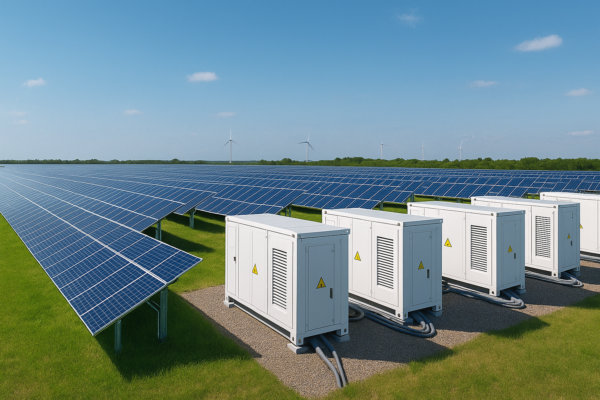
At its core, Battery Energy Storage System Solar (BESS + Solar) refers to the integration of a solar photovoltaic (PV) power plant with an advanced battery energy storage system — creating an energy solution that’s clean, reliable, and controllable. Instead of solar power being limited to the hours when the sun shines, a BESS stores surplus energy and delivers it on demand, smoothing out generation variability and enabling strategic energy use.
This hybrid approach transforms solar from a purely intermittent resource into a dispatchable, resilient power source that can meet industrial demand reliably and economically.
1. How Solar and Battery Energy Storage System Work Together
The document discusses the process of solar power generation and energy management systems. Solar photovoltaic (PV) panels convert sunlight into direct current (DC) electricity, which can be utilized immediately or stored for later use. When production exceeds immediate consumption, a Battery Energy Storage System (BESS) captures the surplus energy, equipped with a Battery Management System (BMS) that oversees essential parameters such as voltage, temperature, and state-of-charge to maintain safety and prolong battery life.
In situations where solar output decreases—such as nighttime, periods of high demand, or grid stress—the stored energy is discharged to meet energy loads. The integration of Intelligent Energy Management Systems (EMS) plays a crucial role in optimizing the discharge process, effectively balancing cost, demand, and performance. This cycle of charging, storing, and discharging significantly enhances the efficiency of solar energy utilization, surpassing what solar power alone can achieve.
2. Why BESS + Solar Matters
The document highlights the limitations of solar energy in providing continuous power due to its intermittent nature, as panels only generate electricity when sunlight is available. It proposes integrating a Battery Energy Storage System (BESS) as a solution, yielding several benefits:
- Reliable 24/7 Power Supply: Battery Energy Storage Systems stores excess solar energy generated during the day and delivers it during periods when solar output declines, ensuring a consistent electricity supply.
- Enhanced Grid Stability: The system helps stabilize the grid by smoothing out the fluctuations in solar energy production, acting as a buffer against potential destabilization.
- Optimized Self-Consumption: Instead of sending surplus energy back to the grid at low tariffs, businesses can store this energy for internal use, leading to reduced energy bills and enhanced energy self-sufficiency.
- Energy Cost Savings: By charging batteries during times of high solar generation or low grid costs and discharging during peak pricing periods, companies can lower their overall energy expenses significantly.
- Backup and Resilience: Battery Energy Storage System provides uninterrupted power during grid outages, thereby safeguarding critical operations and minimizing downtime.
3. Core Components Explained
A typical solar plus Battery Energy Storage System (BESS) configuration consists of several key components:
- Solar PV Arrays: These convert sunlight into electricity.
- Batteries and Battery Management System (BMS): They are used to store excess energy and monitor performance, ensuring safety, reliability, and lifecycle optimization.
- Inverters: These convert direct current (DC) electricity generated from solar panels and batteries into alternating current (AC) electricity, which is required for industrial equipment and for feeding power into the grid.
- Energy Management System (EMS): This intelligent system makes real-time decisions regarding when to charge or discharge the battery, based on factors such as demand, tariffs, and generation forecasts.
- Safety and Protection Systems: These systems ensure adherence to grid codes, maintain power quality standards, and uphold operational safety.
4. What BESS + Solar Solves in Practice
Stand-alone solar systems face challenges related to intermittent energy production, impacting both economic and operational aspects of the industry. Battery Energy Storage Systems (BESS) mitigate these issues through several mechanisms:
- Intermittent Production Smoothing: Battery Energy Storage Systems stores excess solar energy produced during favorable conditions and discharges it when solar output is low, thereby stabilizing energy production.
- Curtailment Elimination: Battery Energy Storage System allows solar projects to capture and utilize energy that would otherwise be wasted due to grid constraints or export limits, ensuring more efficient energy use.
- Peak Load Shaving: By providing stored energy during periods of high demand, Battery Energy Storage Systems helps reduce peak power requirements, resulting in lower demand charges and more stable utility costs.
- Improved Economic Predictability: The integration of battery storage leads to a more reliable energy supply profile, minimizing financial risks for investors and increasing the bankability of solar projects.
5. Strategic Benefits for Industrial Users
Combining solar energy with a Battery Energy Storage System (BESS) is a strategic business decision for manufacturing and commercial operations, offering multiple advantages:
- Energy Cost Optimization: This system allows businesses to reduce reliance on expensive grid power and enhances the use of renewable energy.
- Operational Resilience: Stored energy ensures continuous operation of production lines, even during power outages.
- Grid Interaction and Ancillary Services: Large Battery Energy Storage Systems installations can engage in demand response and contribute to grid stabilization, thereby creating additional revenue opportunities.
- Sustainability and Emission Reduction: By increasing reliance on clean solar energy instead of fossil fuels, businesses can lower their carbon footprint and improve Environmental, Social, and Governance (ESG) performance.
6. Real-World Context and Global Trends
Large solar and battery energy storage systems (BESS) are rapidly becoming integral to modern energy infrastructures. Utility-scale solar projects, equipped with hundreds of megawatt-hours of battery storage, are being established in energy hubs to extend power delivery beyond daylight hours while enhancing grid reliability. Additionally, urban power infrastructure is increasingly incorporating substantial Battery Energy Storage Systems solutions to efficiently manage peak load and facilitate the integration of renewable energy sources, exemplified by significant projects like the 20 MW BESS installation in Delhi, South Asia. These developments illustrate the transition of Battery Energy Storage Systems combined with solar technologies from initial pilot programs to essential components of contemporary energy systems.
Why Solar Alone Is Not Enough for Industrial Loads
As industries scale up renewable energy adoption, solar power remains a leading choice for clean electricity generation. But in real-world industrial settings, solar on its own fails to meet the full spectrum of energy needs — especially when reliability, peak demand, cost optimization, and resilience matter most. That’s where Battery Energy Storage System Solar (BESS + Solar) becomes a strategic necessity.
1. Solar Is Intermittent — and Industrial Loads Are Not
Solar photovoltaic (PV) systems are limited by their ability to generate electricity only during sunlight hours, typically peaking at midday and ceasing production at night. This limitation poses challenges for industrial facilities requiring continuous power for production lines, heavy machinery, HVAC systems, and other critical processes. In the absence of energy storage solutions, solar energy systems can produce excess electricity during periods of low demand, create shortages during peak demand, and necessitate reliance on grid power or backup generators. Battery Energy Storage Systems (BESS) address these issues by capturing surplus solar energy and providing it during periods of high demand, thereby transforming intermittent solar energy generation into reliable, dispatchable power.
2. Solar Generation and Demand Timing Often Don’t Match
Industrial energy demand typically peaks in the mornings and evenings, which does not align with solar generation, primarily occurring at midday. This misalignment leads to challenges: excess energy produced by solar plants may be wasted or sold back to the grid at low tariffs, while facilities still rely on expensive grid power during peak demand. By integrating Battery Energy Storage Systems (BESS) with solar, industries can store energy generated during midday and use it during high-demand periods. This approach enables reduction in peak utility charges and decreases dependence on the grid, thus optimizing energy costs—an essential factor in industrial operations where energy expenses account for a significant portion of overall costs.
3. Solar Alone Cannot Provide Reliable Backup Power
Most grid-tied solar systems are designed to shut down during grid outages to ensure safety, which prevents them from serving as backup power sources, despite generating electricity. In contrast, a Battery Energy Storage System (BESS) solar system has the capability to maintain critical loads during outages, providing seamless continuity of operations and reducing reliance on fossil-fuel generators. This reliability is particularly crucial in industries such as manufacturing, cold storage, data centers, and logistics, where downtime can lead to significant financial losses.
4. Solar Alone Can Lead to Curtailment and Energy Waste
When a solar plant produces more power than can be utilized by the facility or grid, the surplus often faces curtailment or is exported at minimal compensation rates, particularly during midday peak production. The integration of a Battery Energy Storage System (BESS) addresses this issue by allowing excess solar energy to be stored instead of wasted. This enhances self-consumption, improves overall system efficiency, and increases return on investment (ROI). The ability to directly connect power generation with its utilization is a significant economic advantage of Battery Energy Storage Systems.
5. Solar Alone Offers Limited Cost Optimization
Solar energy helps reduce grid consumption; however, it does not address the timing of energy usage, which affects industrial energy bills through demand charges linked to peak power usage. Since solar output may not align with peak demand periods, merely implementing solar solutions is insufficient. With energy storage, midday solar production can be shifted to match peak tariff hours, allowing for a reduction in peak demand charges and enabling more cost-effective energy use. This flexibility empowers industrial users to optimize their energy consumption and cost structures, achieving what solar energy alone cannot provide.
6. Grid and Regulatory Realities Favor Solar + Storage
In contemporary energy markets, utilities and regulators are recognizing the critical importance of energy storage for maintaining grid stability. The lack of storage in the presence of excessive solar output can lead to problems such as voltage fluctuations and grid congestion. To address these issues, some regions are now requiring the installation of energy storage systems in conjunction with solar power capacity, ensuring both stability and reliability of the grid. This shift highlights the changing perception of storage, which is now seen not merely as a backup solution but as a fundamental component of grid-interactive renewable energy systems.
7. Solar + Battery Energy Storage System Improves Sustainability Outcomes
From a sustainability perspective, relying solely on solar energy generation necessitates backup from fossil plants to satisfy demand during evening and night hours, which diminishes the overall emissions impact. The incorporation of battery storage helps transition the use of clean energy to these periods, thereby decreasing dependence on fossil fuel generation and improving the actual carbon reduction benefits associated with solar energy adoption.
Strategic Advantages of Battery Energy Storage System Solar for Manufacturing
Modern manufacturing depends on reliable, affordable, and sustainable energy. Rising electricity costs, peak demand penalties, and increasing pressure to reduce carbon emissions are pushing industries to rethink how they manage power. One of the most effective solutions is the integration of solar power with a Battery Energy Storage System (BESS).
1. Peak Demand Reduction
Industrial electricity tariffs frequently incorporate demand charges based on the highest power consumption within a billing cycle, leading to significant cost increases for manufacturing facilities, particularly during moments of high energy use such as the activation of heavy machinery or simultaneous operation of multiple production lines. Solar energy systems combined with battery energy storage systems (BESS) provide a strategic solution to mitigate these costs.
The operational process involves solar panels generating electricity during daylight hours, excess energy being stored in batteries, and during peak demand periods, the batteries discharging stored energy to reduce grid consumption, a strategy known as peak shaving. This approach results in lower monthly electricity expenses, enhanced cost predictability, diminished stress on the electrical infrastructure, and improved control over energy usage patterns. Consequently, over time, reducing peak demand can yield substantial savings and bolster overall profitability for manufacturers.
2. Time-of-Use Optimization
Many industrial electricity tariffs utilize Time-of-Use (TOU) pricing, which results in fluctuating electricity rates throughout the day. Peak hours incur the highest tariffs, increasing operational costs for manufacturing facilities that operate across multiple shifts and consume substantial energy during these periods. Battery Energy Storage Systems (BESS) play a crucial role in TOU optimization by allowing energy consumption to align with economic efficiency. Solar panels generate electricity during the day, and excess energy is stored in batteries.
During peak tariff periods, the stored energy is utilized, minimizing grid consumption when prices are highest, a practice known as energy arbitrage. The strategic benefits of this approach include reduced electricity costs during peak hours, increased flexibility in production schedules, protection against tariff volatility, and optimized energy usage across shifts. TOU optimization is particularly advantageous for manufacturers engaging in continuous or multi-shift operations.
3. Maximizing Solar Self-Consumption
The document discusses the misalignment between solar energy generation and industrial energy demand, noting that solar output typically peaks around midday while industrial demand can peak at various times throughout the day, including morning, evening, and night. Without energy storage solutions, excess solar energy can lead to low-tariff exports or curtailment, resulting in wasted renewable energy.
The introduction of Battery Energy Storage Systems (BESS) is highlighted as a solution for maximizing solar energy utilization. Through Battery Energy Storage Systems, surplus solar energy generated by panels is captured for later use, allowing facilities to consume immediate needs and store additional energy for evening hours, peak demand periods, and night shifts. The strategic benefits of utilizing Battery Energy Storage System include higher solar self-consumption rates, reduced need for grid electricity, improved returns on solar investments, and a lower reliance on external energy sources, ultimately allowing manufacturers to gain more value from their renewable energy assets.
4. Backup Power & Resilience
The document outlines the challenges faced by manufacturing processes due to power interruptions, including production downtime, equipment damage, material wastage, missed delivery deadlines, and safety hazards. It highlights how Solar-Plus-Battery Energy Storage Systems (BESS) can enhance resilience by providing an instant backup power source. Under normal operation, solar panels supply the facility’s energy, with excess stored in batteries.
In case of a grid outage, batteries can automatically power critical loads, thus ensuring continuous operations. Unlike diesel generators, battery systems offer instant response, require no fuel, emit no emissions, and operate quietly. The strategic benefits include reduced downtime, protection from voltage fluctuations, improved power quality, and decreased dependence on diesel generators, which is particularly advantageous for industries with continuous or precision processes.
5. Renewable Firming for 24/7 Operations
Solar energy faces challenges due to its intermittent nature, as it is only available during daylight and affected by weather conditions. Many manufacturing facilities, operating multiple shifts and continuous production lines 24/7, cannot rely solely on solar energy to meet their energy demands. Battery Energy Storage Systems (BESS) help mitigate this issue by transforming solar energy into a stable, dispatchable power source.
The operational process involves solar panels generating excess energy during the day, which is stored in batteries for later discharge during evening hours, night shifts, or cloudy periods, ensuring a more reliable renewable energy supply. The strategic benefits of Battery Energy Storage System include extending the availability of solar energy beyond daylight, reducing dependence on grid or fossil-fuel power, lowering carbon footprints, and enabling continuous renewable energy operations, thus assisting manufacturers in achieving round-the-clock clean energy usage.
Technology Deep Dive: What Powers Modern Battery Energy Storage Systems?
Modern Battery Energy Storage Systems (BESS) have evolved rapidly between 2023 and 2026. What began as simple lithium-ion battery racks has become a highly integrated digital-electrical ecosystem combining advanced chemistries, power electronics, software intelligence, and grid-responsive controls. Below is a comprehensive, end-to-end explanation of what powers today’s Battery Energy Storage System—covering the core battery technologies, system architecture, control layers, and emerging trends shaping 2025–2026 deployments.
1) Core Battery Chemistries: The Heart of Modern Battery Energy Storage Systems
Lithium-Iron Phosphate (LFP) batteries are projected to be the global standard for grid-scale storage by 2025–2026 due to their superior thermal stability, safety, and longer cycle life of 6,000–10,000+ cycles, alongside a lower cost per kWh and no dependency on cobalt or nickel. Their typical applications include utility-scale solar with storage, peak shaving, load shifting, microgrids, and backup power. In contrast, Nickel-Manganese-Cobalt (NMC) batteries continue to be utilized in projects demanding higher energy density, offering advantages such as a smaller footprint and higher energy per unit volume but facing higher costs, more complex thermal management, and shorter cycle life compared to LFP.
Additionally, sodium-ion batteries are emerging in 2025–2026, characterized by their use of abundant materials and lower cost potential, along with better performance in cold temperatures. However, they are expected to complement rather than replace LFP in the near term, with early utility-scale pilots currently in operation.
2) Cell-to-System Architecture: From Cells to Containers
Modern Battery Energy Storage Systems (BESS) are constructed with a multi-layered structural hierarchy that includes a battery cell, module, rack, battery cluster, and a container or enclosure, culminating in a full Battery Energy Storage System plant. A significant architectural innovation is the shift towards Cell-to-Pack and Cell-to-Container designs, which involves reducing intermediate components to enhance efficiency. This approach offers several advantages, including higher energy density, fewer failure points, lower manufacturing costs, and faster installation processes.
3) Power Conversion System (PCS): The Grid Interface
The Power Conversion System (PCS) functions as the brainstem of the Battery Energy Storage System (BESS), managing the conversion and control of power flow. Its key functions include converting direct current (DC) from batteries into alternating current (AC) suitable for the grid, enabling bidirectional power flow, managing charging and discharging processes, and providing essential grid services. By 2025–2026, typical capabilities of PCS are expected to include fast frequency response in milliseconds, support for reactive power, and grid-forming capabilities in advanced systems.
4) Battery Management System (BMS): Safety and Performance Control
The Battery Management System (BMS) plays a crucial role in monitoring and protecting each cell within the battery system by performing essential functions such as cell voltage monitoring, temperature tracking, state of charge (SOC) estimation, state of health (SOH) tracking, and fault detection along with shutdown capabilities. Looking ahead to advancements for 2025-2026, the BMS is expected to incorporate AI-based degradation prediction, real-time thermal modeling, and cloud-connected diagnostics to enhance its operational effectiveness.
5) Energy Management System (EMS): The Software Brain
If the battery serves as the heart and the Power Conversion System (PCS) acts as the muscle, the Energy Management System (EMS) functions as the brain, crucial for optimizing energy operations. The EMS is responsible for optimizing charge and discharge schedules, forecasting energy load alongside renewable generation, and participating in electricity markets to maximize revenue streams. Typical strategies employed by an EMS include peak shaving, time-of-use arbitrage, frequency regulation, and providing backup power reserve.
6) Thermal Management: Keeping Batteries Safe
Temperature control is essential for the longevity and safety of batteries. The two predominant thermal management systems are liquid cooling, which is widely used in larger setups, and forced air cooling, typically implemented in smaller systems. Effective thermal management is vital as it prevents overheating and thermal runaway, thereby extending battery lifespan and enhancing overall efficiency and performance.
System Configurations: Choosing the Right Architecture
1. AC-Coupled Solar + Battery Energy Storage System Architecture
In an AC-coupled configuration for solar energy systems, solar panels first generate DC electricity, which is then converted to AC power by a solar inverter. A separate inverter is associated with the battery, and both inverters connect to the same AC distribution bus. As energy is stored in the battery, it undergoes multiple conversions: from Solar DC to AC via the PV inverter, then AC to DC for battery charging, and finally DC back to AC during discharge. These conversions lead to efficiency losses, with typical round-trip efficiencies ranging from 85% to 90% for AC-coupled systems.
The strategic advantages of AC-coupled systems include their suitability for retrofitting existing solar installations without replacing the solar inverter, high operational flexibility by allowing the battery to charge from both solar generation and grid power during off-peak times, and independent scaling of solar and battery capacities. However, there are limitations such as reduced efficiency due to the additional conversions and an increased component count.
Best use cases for AC-coupled systems involve existing solar plants that are adding storage, industrial sites with complex tariff structures, and facilities needing flexible energy strategies.
2. DC-Coupled Solar + BESS Architecture
In a DC-coupled solar energy system, solar panels and batteries are connected through a common DC bus managed by a hybrid inverter. This configuration allows solar energy to charge the battery directly in DC form, eliminating the need for initial AC conversion. The energy flow begins with solar panels generating DC power that charges the batteries directly, while the hybrid inverter converts DC power to AC for use in facility loads.
DC-coupled systems demonstrate a typical round-trip efficiency of 90–95%, benefiting from avoiding double conversions, leading to higher overall efficiency in comparison to AC-coupled systems. Strategic advantages include increased efficiency from fewer energy conversions, lower equipment costs by requiring only one hybrid inverter, improved solar energy capture by storing excess energy, and quicker system responses due to direct DC connections.
However, DC-coupled systems are less suited for retrofitting existing solar plants and may necessitate inverter upgrades for expansion. Optimal use cases include new solar-plus-storage installations in greenfield industrial projects and facilities that prioritize maximum efficiency.
3. Hybrid Grid-Interactive Battery Energy Storage Systems Architecture
The hybrid architecture integrates solar photovoltaic (PV) systems, battery storage, a grid connection, and an Intelligent Energy Management System (EMS). The EMS is tasked with making real-time decisions on when to charge or discharge batteries, whether to utilize solar or grid energy, and strategies to minimize operating costs. The architecture offers strategic advantages, including real-time energy optimization that balances solar generation with grid tariffs and load demand, as well as peak shaving and energy arbitrage by storing low-cost energy for use during high-demand peak periods.
Additionally, it provides seamless backup and islanding capabilities, allowing operations to continue independently during grid outages. The best use cases for this hybrid model are smart manufacturing facilities, industrial campuses with variable loads, and plants aiming for energy independence.
4. Centralized Battery Energy Storage System Solar Architecture
In a centralized configuration for energy systems, a large battery system is installed centrally, typically near the main transformer or substation, to serve an entire facility or solar plant. These systems are characterized by large-scale capacity, ranging from hundreds of kWh to multi-MWh, and include centralized power conversion and control. The strategic advantages of such systems include economies of scale, leading to a lower cost per kWh, simplified control and monitoring through a single system managing all energy flows, and the capability to provide grid services such as demand response, frequency regulation, and whole-plant backup.
However, there are limitations, including a single point of failure and the requirement for high-capacity infrastructure. Best use cases for centralized battery systems are in large manufacturing plants, industrial parks, and utility-scale solar-plus-storage installations.
5. Distributed (Modular) Battery Energy Storage Systems Solar Architecture
Multiple smaller battery units are deployed instead of a single large battery, with each unit dedicated to specific loads or zones and managed by a central control system. For example, different batteries can be used for production lines, critical equipment, or auxiliary loads. This system offers strategic advantages, such as higher reliability—since the failure of one module does not affect the whole system—load-specific optimization, and easy scalability, allowing for the addition of new modules as operations grow. However, this approach has limitations, including a more complex installation process and the need for advanced control systems. It is best suited for multi-building industrial sites, facilities with critical process loads, and plants planning phased expansion.
6. Off-Grid or Microgrid Battery Energy Storage System Solar Configuration
In this architecture, solar and battery systems function independently of the utility grid, with the battery providing power during periods of low solar output and often being integrated with backup generators. Battery Energy Storage Systems (BESS) are essential for stabilizing microgrids as they balance solar variability and ensure consistent power output. The strategic advantages include complete energy independence, eliminating reliance on unstable grids; reliable power provision for remote locations where grid infrastructure may be weak or nonexistent; and reduced fuel consumption, as batteries lessen generator runtime. Best applicable scenarios for this system are remote industrial facilities, mining or processing plants, and islanded industrial microgrids.
Financial Modelling for Battery Energy Storage System Solar
Financial modelling for solar-plus-storage projects is the foundation for determining project feasibility, return on investment, and long-term savings. For manufacturing units, where electricity costs form a major portion of operational expenses, a properly structured Battery Energy Storage Systems financial model can unlock significant cost reductions, improve cash flow, and strengthen energy independence.
A robust financial model evaluates capital costs, operating savings, revenue streams, financing structure, and risk factors across the project lifecycle. It converts technical performance into measurable business value.
1) Core Components of a Battery Energy Storage Systems Financial Model
A comprehensive financial model for solar-plus-storage consists of five main components:
- Capital Expenditure (CAPEX): This refers to the upfront costs for installing solar plants and battery systems, including solar PV modules, inverters, battery packs, and installation. Recent data indicates that stationary lithium-ion battery packs cost approximately $70/kWh in 2025, with total project costs around $125/kWh.
- Operational Expenditure (OPEX): These are ongoing costs incurred during the system’s life, such as maintenance, insurance, and software licensing. Solar OPEX typically ranges from 1-2% of CAPEX, while Battery Energy Storage System OPEX is approximately 2-4%.
- System Life and Degradation: Battery performance declines over time due to aging and cycling, typically lasting 8-15 years with a project lifespan of 15-25 years. Proper cycling can extend battery life beyond 16 years.
- Financing Structure: Financial modeling includes various funding models like self-funding, debt-equity financing, and Energy-as-a-Service. Debt ratios range from 60-80%, with interest rates between 8-12% and tenures of 7-12 years.
- Revenue and Savings Streams: A Battery Energy Storage System generates value through peak demand reduction, time-of-use optimization, increased solar self-consumption, and participation in grid services. Industrial systems can significantly reduce net energy costs through load shifting and peak shaving strategies.
2) Key Financial Metrics
The document outlines key financial metrics for evaluating solar investments.
- Payback Period: This metric indicates the time needed to recover the initial investment. For solar installations alone, the typical payback period ranges from 3 to 5 years, whereas for solar systems combined with battery energy storage systems (BESS), it extends to 5 to 8 years.
- Internal Rate of Return (IRR): The IRR measures the investment’s profitability, with typical ranges of 14% to 22% for solar-only projects and 12% to 18% for those paired with Battery Energy Storage System. The IRR is influenced by factors including demand charges, tariff volatility, solar utilization, and financing terms.
- Net Present Value (NPV): NPV assesses the overall financial gain throughout the lifetime of the system, adjusting for the time value of money. A positive NPV indicates the project is financially viable.
- Levelized Cost of Energy (LCOE) / Storage (LCOS): LCOE defines the cost per unit of energy generated, while LCOS refers to the cost per unit of stored energy over the battery’s lifespan. Estimations suggest that lifecycle storage costs could be around $65 per MWh under favorable conditions.
3) Step-by-Step Financial Modelling Process
The document outlines a comprehensive approach for analyzing and optimizing energy systems, specifically focusing on solar and battery energy storage systems (BESS). The analysis consists of six key steps:
- Load and Tariff Analysis: This involves evaluating annual energy consumption, peak demand profiles, time-of-use tariffs, and diesel backup costs to understand the operational landscape.
- System Sizing: Key factors include determining the solar capacity (in kW or MW), battery power rating (kW), and battery energy capacity (kWh or MWh). Sizing strategies are based on peak shaving targets, backup duration, and solar surplus availability.
- CAPEX and OPEX Estimation: This step focuses on calculating the costs associated with the solar system, Battery Energy Storage System, installation, and annual maintenance.
- Savings Calculation: An estimation is made regarding annual savings derived from reduced peak demand charges, lower grid consumption during peak tariffs, increased solar utilization, and avoidance of diesel use.
- Financial Projections: It includes creating long-term projections (15–25 years) encompassing cash flow, debt repayment, potential battery replacement, and the effects of degradation on system performance.
- Financial Metrics: Critical financial metrics such as payback period, internal rate of return (IRR), net present value (NPV), and levelized cost of storage (LCOS) are calculated to assess the project’s viability and return on investment.
Regulatory and Market Trends in 2025–2026
Battery Energy Storage Systems (BESS) combined with solar power are rapidly transforming global and Indian energy markets. In 2025–2026, regulatory frameworks, incentives, and market mechanisms are evolving to support large-scale storage deployment, grid stability, and renewable integration. Below is a comprehensive overview of the most important regulatory and market trends shaping solar-plus-storage.
1) Global Market Growth and Policy Direction
The global Battery Energy Storage System (BESS) market is poised for significant growth, fueled by renewable energy targets, concerns regarding grid reliability, and decreasing battery prices. Key global trends indicate a rapid increase in energy storage installations through 2030. Governments worldwide are implementing measures such as capacity markets, storage-specific incentives, and grid-balancing programs. Additionally, utilities are increasingly opting for solar-plus-storage solutions rather than relying on standalone solar systems. In many areas, energy storage is now recognized as a vital grid asset, rather than merely a backup power source.
2) India: Major Policy and Regulatory Developments
India is rapidly advancing in solar and storage markets driven by ambitious renewable energy targets and modernization of the grid. The nation is working towards a goal of achieving 500 GW of non-fossil energy capacity by 2030. The government emphasizes the importance of energy storage for integrating renewables, managing peak demand, and ensuring grid stability.
Key regulatory initiatives include:
- Viability Gap Funding (VGF): Launched to support large-scale battery energy storage systems (BESS) with an initial target of 4 GWh capacity, providing financial assistance to lower capital costs for developers.
- Energy Storage Obligation (ESO): Aligns with Renewable Purchase Obligations (RPO), mandating DISCOMs to procure a specific percentage of power from storage, thus fostering long-term demand for Battery Energy Storage System.
- Time-of-Day (ToD) tariffs: This pricing structure incentivizes solar-plus-storage integration, with higher prices during peak hours and lower costs during off-peak times, promoting peak shaving and arbitrage.
- Ancillary services market: Storage systems can engage in frequency regulation and grid balancing, creating additional revenue opportunities for Battery Energy Storage System operators.
3) Key International Policy Trends (2025–2026)
Federal incentives are provided in the United States for storage under clean energy legislation, with standalone storage qualifying for investment tax credits. The country is witnessing a rapid increase in utility-scale solar-plus-storage projects. In Europe, a strong emphasis is placed on grid-scale storage as renewable energy penetration rises, leading to the expansion of capacity markets and flexibility services, with energy storage being acknowledged as a distinct asset class. In the Asia-Pacific region, countries such as China, Australia, and Japan are enforcing mandates that require storage to be integrated with renewable projects and are offering subsidies along with payments for grid services.
4) Major Market Trends in Solar + BESS
Many recent tenders in the energy sector are evolving, requiring the integration of storage solutions alongside solar projects. This shift from solar-only to solar-plus-storage offers advantages such as a reliable power supply, the ability to deliver energy during peak times, and the potential for higher tariffs and revenues. As lithium-ion battery prices continue to decrease, storage becomes increasingly financially viable for both commercial and industrial users, as well as for utility-scale projects.
Additionally, there is a growing interest in long-duration storage solutions, including 4–8 hour battery systems, flow batteries, and thermal and mechanical storage, which facilitate overnight renewable energy supply. Moreover, modern storage systems can generate revenue through various channels, including energy arbitrage, capacity payments, ancillary services, and renewable firming contracts.
Sustainability Impact
1. Major Reduction in Carbon Emissions: Solar plus battery energy storage systems (BESS) play a pivotal role in capturing excess clean solar energy, which can then be utilized when demand peaks, effectively substituting fossil-fuel energy generation and lowering CO₂ emissions. Research indicates that these solar-plus-storage setups can lead to substantial reductions in emissions throughout their operational lifespan, attaining a net positive environmental benefit within a short timeframe, often just a few years.
2. Improved Renewable Energy Utilization: BESS (Battery Energy Storage Systems) effectively captures renewable energy that may otherwise be wasted due to curtailment. This capability facilitates a higher integration of solar power into the energy grid while maintaining grid stability. Additionally, storage solutions ensure that renewable energy can be reliably dispatched, especially during periods of low solar generation.
3. Reduced Air Pollution: By lowering dependence on coal and gas plants, Battery Energy Storage Systems solar reduces harmful pollutants such as NOx, SO₂, and particulate matter, improving air quality and public health.
4. Enhanced Grid Efficiency: Local storage reduces transmission losses and decreases stress on grid infrastructure, enhancing overall energy efficiency.
5. Backup Without Polluting Generators: Battery Energy Storage System provides backup power during outages without resorting to diesel or gas generators, which emit toxic pollutants.
6. Stronger Grid Resilience: Batteries can respond quickly to changes in generation and demand, helping balance grids with high solar penetration and reducing the need for fossil peaker plants.
7. Reliable Backup During Extreme Events: In cases of weather disruptions or grid failures, stored solar energy ensures continuity for critical infrastructure without emissions.
8. Encourages Circular Economy Practices: Solar-plus-storage systems are becoming more recyclable, enabling a significant portion of battery materials to be recovered for reuse. This process of battery recycling, along with second-life applications, plays a crucial role in minimizing waste and alleviating the pressures associated with resource extraction.
9. Lifecycle Emissions Offset: Even accounting for manufacturing impacts, integrated systems typically break even on environmental footprint within a few years and deliver net positive sustainability benefits over decades.
10. Energy Access and Decentralization: Solar + BESS enables reliable power in remote or underserved regions without dependence on central grid or fossil fuels.
11. Energy Cost Stability: By reducing peak charges, improving efficiency, and optimizing self-consumption, facilities and communities achieve stable, lower energy costs while contributing to clean energy adoption.
12. Supports Climate and Sustainability Goals: Solar-plus-storage directly contributes to national and global targets for carbon reduction and renewable energy integration.
Implementation Roadmap for Industrial Facilities
1. Assessment and Strategic Planning:
The first step in implementing a Battery Energy Storage System is conducting a comprehensive energy assessment of the industrial facility. This includes analyzing historical electricity consumption data, peak demand patterns, load curves, and seasonal variations to understand where storage can add the most value. A solar feasibility study must also be performed to evaluate rooftop or ground space availability, irradiation levels, and structural capacity. During this phase, clear project objectives are defined—such as peak demand reduction, time-of-use tariff optimization, solar self-consumption maximization, or backup power reliability. A preliminary technical and financial feasibility study ensures the project aligns with business goals and operational needs before moving forward.
2. System Design and Sizing:
Once feasibility is confirmed, the next step is designing and sizing the solar PV and battery storage system appropriately. The solar plant capacity is determined based on available space and energy consumption requirements, while the battery capacity (kWh) and power rating (kW) are sized according to peak shaving targets, backup duration needs, and surplus solar utilization. The facility must choose between AC-coupled, DC-coupled, or hybrid system architecture depending on whether it is a retrofit or a new installation. Integration of an advanced Energy Management System (EMS) and Battery Management System (BMS) is essential to ensure intelligent charge-discharge control, battery health monitoring, and operational optimization.
3. Regulatory Approvals and Financial Structuring:
Before installation, all necessary regulatory approvals and permits must be secured. This includes electrical and safety clearances, grid interconnection permissions (if exporting power), and compliance with fire and environmental regulations. At the same time, a detailed financial model is developed covering capital expenditure, operational costs, projected savings from demand charge reduction and tariff optimization, and estimated payback period. Facilities may explore different financing models such as direct CAPEX investment, third-party ownership, leasing, or Energy-as-a-Service arrangements. Proper financial and regulatory planning ensures risk mitigation and long-term viability.
4. Procurement and Installation:
After approvals and financial closure, procurement of equipment and contractor selection takes place. Vendors for solar modules, battery systems, inverters or power conversion systems (PCS), EMS, and safety infrastructure must be carefully evaluated based on technical expertise, warranty terms, and lifecycle support. Site preparation involves civil works, electrical infrastructure readiness, and safety system installation. The solar panels and battery units are then installed and integrated with the facility’s electrical network and control systems. Proper quality checks, including factory and site acceptance testing, help ensure that the system is installed according to design standards.
5. Commissioning, Monitoring, and Optimization:
The final stage involves system commissioning and long-term operation management. During commissioning, performance tests validate solar generation, battery charging and discharging cycles, EMS dispatch logic, and safety mechanisms. Facility operators receive training on system usage, emergency protocols, and maintenance procedures. Once operational, continuous monitoring through the EMS ensures real-time tracking of performance indicators such as state of charge, energy savings, peak reduction, and battery health. Over time, dispatch strategies can be refined to maximize financial returns and operational efficiency, and the system can be scaled as energy demand grows.
Challenges & Mitigation Strategies
Battery Energy Storage Systems (BESS) enable solar integration, grid flexibility, demand charge management, and backup power—but deploying them at scale involves several technical, economic, environmental, and regulatory challenges. Understanding these challenges and how to address them is crucial for successful, resilient, and sustainable Battery Energy Storage Systems implementation.
1. High Capital Costs and Economic Viability
BESS systems face high initial investment costs despite declining prices. Factors like unclear market structures complicate long-term financial planning. To mitigate these challenges: flexible financing models (e.g., EaaS, leasing) can ease upfront costs, detailed financial modeling can enhance investment certainty, and leveraging government incentives can improve project feasibility. Additionally, advocating for market reforms to acknowledge storage value in ancillary service markets is crucial.
2. Battery Degradation, Lifespan & Operational Limitations
Battery performance deteriorates over time, especially with common chemistries like lithium-ion, leading to reduced capacity and increased lifecycle costs. To mitigate these effects, it is advisable to use robust chemistries such as Lithium Iron Phosphate (LFP) for longer cycle life and safety. Additionally, advanced Battery Management Systems (BMS) should be implemented to better manage discharge depth, charging rates, and temperature. Predictive maintenance and analytics can help identify signs of performance decline early, while exploring second-life battery applications can extend useful life before recycling.
3. Safety Risks (Thermal Runaway & Fire Hazards)
Lithium-ion and chemical batteries pose safety risks like thermal runaway, potentially causing fires or explosions, especially in large systems. To mitigate these risks, it is essential to adhere to strict safety standards (e.g., UL 9540A, NFPA 855), implement fire detection and suppression systems, ensure proper spacing and ventilation, and train staff in emergency protocols.
4. Grid Integration, Interoperability & Control Complexity
Existing power grids, originally designed for conventional loads, face challenges integrating Battery Energy Storage Systems (BESS) with variable solar generation due to the need for advanced controls, interoperability, and accurate forecasting. To mitigate these issues, strategies include deploying smart Energy Management Systems (EMS) for dynamic monitoring, adopting standard communication protocols for compatibility, collaborating with utilities on grid upgrades, and conducting comprehensive grid impact studies during project planning.
5. Regulatory & Policy Barriers
Many existing policies and grid codes are ill-equipped for energy storage, resulting in regulatory challenges, inconsistent standards, and slow deployment that can deter investors. To address these issues, it is crucial to engage proactively with regulatory bodies and utilities, comply with existing regulations, advocate for favorable policies, and utilize industry associations to create standardized best practices.
6. Environmental and Resource Sustainability
The battery manufacturing sector faces challenges due to the environmental and social impacts of critical materials like lithium, cobalt, and nickel. Key issues include the difficulties in battery disposal and recycling, which pose risks of hazardous waste. Mitigation strategies include sourcing materials responsibly, investing in battery recycling infrastructures, exploring alternative chemistries with lower environmental impacts, and incorporating end-of-life management into sustainability plans.
7. Supply Chain & Scalability Constraints
Global Battery Energy Storage System (BESS) deployment faces risks due to dependence on a concentrated battery manufacturing supply chain, affected by geopolitical factors, material shortages, and logistics issues. To mitigate these challenges, strategies include diversifying suppliers with long-term agreements, developing domestic manufacturing capabilities to minimize geopolitical risks, and adopting modular, scalable architectures for incremental expansion as supply availability improves.
The Future Outlook Beyond 2026
The future of industrial energy is defined by intelligence, flexibility, and sustainability, with Solar + Storage at the forefront. Advancements in battery technologies are set to reduce costs and improve energy density, safety, and lifespan, making widespread use more feasible across various industries. The implementation of AI-driven Energy Management Systems (EMS) enables real-time optimization of energy flow based on load patterns, pricing, and grid conditions, while predictive analytics enhance forecasting, reduce operational risks, and improve investment returns.
Solar + Storage systems will provide more than just backup power; they will participate in grid services, demand response initiatives, and energy trading markets. Concurrently, changing policy and regulatory frameworks are recognizing the importance of energy storage. Governments are raising decarbonization targets, introducing carbon pricing, and offering incentives for clean energy to spur adoption. As electricity grids incorporate higher proportions of renewable energy, storage capacity becomes crucial for balancing supply and demand, stabilizing frequency, and ensuring reliability.
The transition towards electrification, including the adoption of electric vehicles, electric boilers, and green hydrogen production, is expected to further increase industrial electricity demand. Solar + Storage will be vital in delivering stable, low-carbon power on-site, transforming it into essential infrastructure for industrial operations. Early investments in these technologies will provide companies with cost stability, enhance energy security, align with regulatory requirements, and improve Environmental, Social, and Governance (ESG) performance. In this evolving energy landscape, Solar + Storage is not just a trend; it is a fundamental component of the future industrial energy ecosystem.
Conclusion
The integration of solar energy with Battery Energy Storage Systems (BESS) has become a defining standard in modern industrial energy management. Amid rising energy price volatility, grid instability, and increasingly ambitious sustainability goals, industries require solutions that are both reliable and future-ready. While solar power significantly reduces dependence on conventional energy sources, pairing it with storage transforms it into a stable, dispatchable, and fully controllable energy asset.
This powerful combination enables industrial facilities to optimize peak demand, lower electricity costs, and maintain uninterrupted operations during grid outages. By enhancing energy independence and improving power quality, solar plus storage strengthens overall operational resilience. At the same time, it accelerates decarbonization efforts by reducing reliance on fossil-fuel-based electricity and cutting carbon emissions.
From a financial standpoint, declining battery costs, improved system efficiencies, and multiple value streams—such as peak shaving, load shifting, and demand charge management—make solar + storage an increasingly compelling investment. Strategic storage implementation shifts energy from being a fixed operational expense to a dynamic, optimized asset that supports both cost control and long-term planning.
As industries evolve toward smarter, cleaner, and more resilient energy ecosystems, solar combined with storage stands out as the most practical and forward-looking solution. Organizations that adopt this integrated approach today not only enhance cost efficiency but also secure long-term energy reliability and strengthen their competitive advantage.
Ready to power your facility with Solar + Storage? Let’s design your energy future today.
