Yearly Archives: 2024

From Sunlight to Hydrogen: The Clean Energy Synergy Shaping Tomorrow

Sunlight to Hydrogen

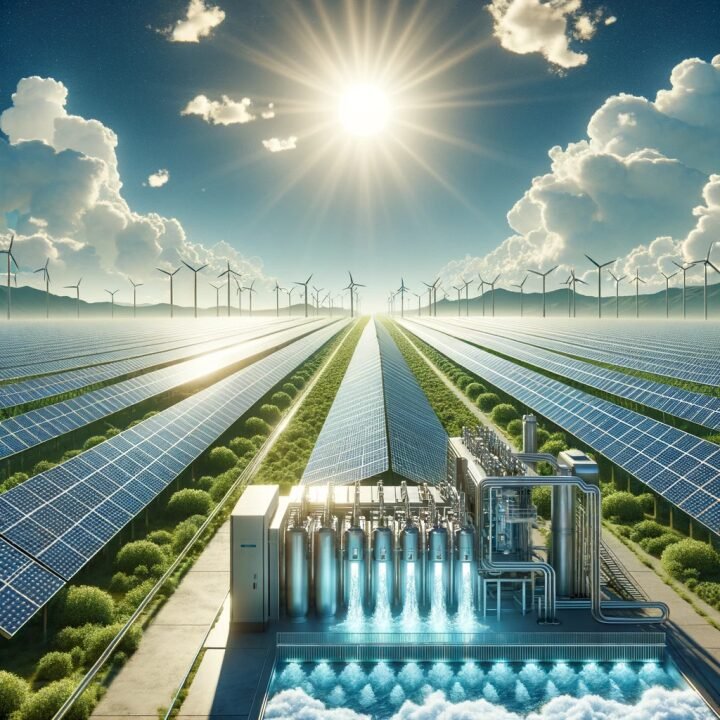
In the quest for a sustainable and clean energy future, the integration of sunlight to hydrogen represents a promising synergy. This combination not only addresses the intermittent nature of solar energy but also paves the way for a versatile and low-carbon energy system. This article explores the transformative potential of coupling sunlight to hydrogen, shedding light on how this synergy is shaping the future of clean energy.

The Basics of Solar Energy and Hydrogen Production

Solar Energy harnesses sunlight to hydrogen through photovoltaic (PV) cells or solar thermal systems to generate electricity or heat. It is a renewable resource with the potential to reduce greenhouse gas emissions and dependency on fossil fuels. Despite its benefits, solar energy faces challenges such as intermittency and variability, which can affect its reliability as a sole energy source.

Hydrogen Production Overview: Hydrogen is the most abundant element in the universe and can be used as a clean energy carrier. When burned or used in fuel cells, it produces only water as a byproduct, making it a zero-emission fuel. Hydrogen is produced through various methods, including steam methane reforming (SMR), electrolysis, and gasification. Electrolysis, which splits water into hydrogen and oxygen using electricity, is especially promising when paired with renewable energy sources, like sunlight to hydrogen.

The Role of Solar Power

Solar power, a proven and expanding source of renewable energy, plays a pivotal role in the production of green hydrogen. The falling costs of solar photovoltaic (PV) systems, coupled with technological advancements, have made solar energy more accessible and efficient than ever before. By harnessing the power of the sun to generate electricity for hydrogen production, we can achieve a truly green and sustainable energy cycle by converting sunlight to hydrogen.

The Synergistic Potential of Sunlight and Hydrogen

The combination of green hydrogen and solar power through sunlight to hydrogen is a match made in heaven for several reasons:

  1. Decarbonization Across Sectors: Green hydrogen can be used in sectors that are challenging to electrify directly, such as heavy industry (steel and cement production) and long-haul transportation (shipping and aviation). This synergy expands the reach of solar power beyond the electric grid, contributing to widespread decarbonization through sunlight to hydrogen.
  2. Energy Storage Solution: Green hydrogen serves as an effective way to store and transport energy. Solar power is intermittent; it’s not always produced when demand is highest. Converting excess solar energy into sunlight to hydrogen provides a way to store this energy for use when needed, enhancing energy security and grid stability.
  3. Leveraging Unused Resources: Vast areas of the world with high solar irradiance, often underutilized lands, can become powerhouses for green hydrogen production. This not only maximizes the use of renewable resources but also stimulates economic development in these regions, optimizing the transition from sunlight to hydrogen.

The Path Forward: Challenges and Opportunities

Despite its promising potential, the path to a solar-powered green hydrogen economy faces several challenges:

  1. Cost and Efficiency: The production cost of green hydrogen, primarily due to electrolyzer technology and renewable energy costs, remains higher than conventional hydrogen production methods. However, with ongoing research, economies of scale, and policy support, these costs are expected to fall significantly, making sunlight to hydrogen more competitive.
  2. Infrastructure Development: Establishing the infrastructure for hydrogen production, storage, distribution, and utilization requires substantial investment and coordination across sectors and borders. The shift from sunlight to hydrogen will necessitate dedicated networks and systems.
  3. Regulatory Framework: Supportive policies, incentives, and international cooperation are essential to accelerate the adoption of green hydrogen and ensure environmental and economic sustainability through sunlight to hydrogen systems.

The Future of Solar and Hydrogen Synergy

1. Technological Innovations

  • Advancements in Electrolysis: Research is focused on improving electrolysis technology, including the development of more efficient and durable electrolyzers, optimizing the efficiency of sunlight to hydrogen production.
  • Hybrid Systems: Innovative hybrid systems that combine solar power with other renewable energy sources, such as wind, are being explored to enhance overall energy production and storage through sunlight to hydrogen systems.

2. Policy and Market Trends

  • Supportive Policies: Governments and organizations are increasingly supporting clean energy technologies through incentives, subsidies, and research funding, which can accelerate the adoption of solar-powered hydrogen through sunlight to hydrogen processes.
  • Market Growth: The market for hydrogen fuel cells and solar technologies is expected to grow significantly, driven by advancements in technology and rising demand for clean energy solutions. The sunlight to hydrogen approach will be at the forefront of this transition.

3. Global Impact

  • Sustainable Development Goals: The integration of solar energy and hydrogen production supports several Sustainable Development Goals (SDGs), including affordable and clean energy, climate action, and sustainable cities and communities. The transition from sunlight to hydrogen plays a critical role in achieving these global goals.
  • Global Collaboration: International cooperation and partnerships will play a vital role in advancing sunlight to hydrogen technologies, sharing best practices, and scaling up solutions to address the world’s energy challenges.

Conclusion: A Sustainable Future Is Within Reach

The integration of green hydrogen production with solar energy through sunlight to hydrogen presents a compelling vision for a sustainable future. It embodies the principles of circular economy and zero-emission energy systems, offering a versatile and clean solution to our energy needs. As we stand at the crossroads of climate crisis and technological innovation, the development and deployment of green hydrogen powered by sunlight to hydrogen emerges as the most viable path to a sustainable, decarbonized future for humanity.

Embracing this vision requires collective effort—governments, industries, and communities must come together to invest in research, develop infrastructure, and implement policies that pave the way for this green revolution. The journey is undoubtedly challenging, but the rewards—a healthier planet, sustainable energy, and a resilient economy—are immeasurable. The future is green, and it’s powered by hydrogen and the sun.
Follow us on LinkedIn for industry updates, project news, and career opportunities: Soleos Solar Energy Pvt. Ltd., Soleos Spain and Soleos Energie GmbH

Contact us today at +91-8320095024 or visit www.soleosenergy.com to learn more about future of solar energy in India. Feel free to reach out with any questions or to start your solar journey!
solarize bharat solar panel

Be part of this solar transformation. Pledge your commitment today to Solarize Bharat through Soleos Solar Energy Pvt. Ltd.. Let’s power our nation sustainably and equitably through homegrown, future-oriented solutions. The future is bright and solar!

Stay solar-powered and environmentally inspired!

P.S.: Share this blog with fellow solar enthusiasts to spread the word about the exciting world of solar energy!


Budget 2024: Free Electricity for 10 Million Homes Under Pradhan Mantri Suryodaya Yojana

Budget 2024 and Pradhanmantri Suryodaya Yojana

Imagine a family in rural India, their faces etched with worry as they watch the electricity meter spin. Its relentless whirring mirrors their rising energy bills. Now, picture the same family, smiles blooming on their faces as sunlight beams down, powering their home through a residential solar panel – a symbol of hope, independence, and a brighter future. This vision, once a dream, is now closer than ever thanks to the Pradhan Mantri Suryodaya Yojana, a game-changing initiative announced in the interim Union Budget 2024/25.

The release of the interim Union Budget 2024/25 comes at a pivotal time for India’s renewable energy goals and climate commitments. With the COP26 Glasgow pact emphasizing accelerated decarbonization globally, India faces mounting urgency to ramp up renewable energy adoption and phase down coal usage. This makes the 2024/25 budget particularly significant as it shapes India’s energy policy priorities for the coming fiscal year.

Against this backdrop, the budget takes on heightened relevance for India’s renewable energy landscape. As of 2022, India had installed just over 63 GW of solar energy capacity. However, to achieve its ambitious target of 500 GW of renewable energy capacity by 2030, the country needs a massive boost in annual capacity addition. This requires strategic policy action and schemes to catalyze growth across the renewable energy value chain.

Pradhanmantri Suryodaya Yojana Announcement

Marking a significant moment for India’s renewable energy push, Finance Minister Nirmala Sitharaman unveiled the Pradhanmantri Suryodaya Yojana in the interim Union Budget 2024/25. This ambitious new scheme aims to catalyze rooftop solar adoption across the country by providing free electricity to millions of households. 

Specifically, the program plans to offer up to 300 units of solar power every month to beneficiaries free of cost. This will allow households not just to meet their own energy needs but also sell back surplus electricity generated through rooftop solar systems. 

The target is to reach 10 million households through the Pradhanmantri Suryodaya Yojana. Considering an average 5 kW rooftop solar system size, this could translate into a massive 50 GW capacity addition under this initiative alone. Essentially, the program can provide the thrust required to ignite substantial growth in the rooftop solar market and bridge the gap in India’s renewable energy ambitions.

Addressing Slow Pace of Rooftop Solar

The Pradhanmantri Suryodaya Yojana comes at an opportune time, as India has struggled to meet its rooftop solar targets despite the vast potential. The country had set an ambitious goal of 40 GW of rooftop solar capacity by 2022. However, the progress has been slow, with less than 15% of the target achieved by mid-2021. 

Budget 2024 and Suryodaya Yojana

As of March 2021, the cumulative rooftop solar installations stood at just around 6.5 GW, well short of the 40 GW mark envisioned. While several policies and schemes have aimed to promote rooftop solar adoption, ranging from subsidies to financial incentives, the results have not matched expectations. 

High upfront costs, lack of consumer awareness, policy uncertainties are some of the key challenges that have inhibited faster rooftop solar deployment. The sluggish growth has been a concern, preventing the country from fully harnessing its enormous rooftop solar potential estimated at about 170 GW.

Boosting Rooftop Solar Adoption 

The Pradhan Mantri Suryodaya Yojana aims to catalyze widespread rooftop solar adoption by offering strong financial incentives to households. Under this scheme, beneficiaries will receive up to 300 units of free electricity per month generated from rooftop solar installations. This effectively subsidizes the cost of going solar, making it an attractive value proposition for households across India.

Additionally, the government has revised the Central Financial Assistance (CFA) provided for residential rooftop solar projects. Homeowners can now avail increased CFA of 40% of the benchmark cost of solar rooftop systems up to 3kW capacity. For systems above 3kW and up to 10kW, the CFA has been enhanced to 20% of the benchmark cost.

These subsidies and grants will help offset the upfront installation expenses for rooftop solar, encouraging more homeowners to adopt clean energy. By easing the financial burden, the Pradhan Mantri Suryodaya Yojana removes a key barrier to large-scale rooftop solar deployment in India. The scheme essentially catalyzes demand, while also stimulating growth across the solar value chain.

Empowering Households with Pradhanmantri Suryodaya Yojana

The Pradhanmantri Suryodaya Yojana promises to bring substantial benefits for households across India by providing up to 300 units of free electricity every month to homes with rooftop solar installations. This will allow millions of households to meet a significant portion of their electricity needs through clean solar power generated from their own roofs. 

For many lower and middle income homes, high electricity bills can be a financial burden. By harnessing the sun’s energy at no cost, households can drastically cut their monthly expenditures on grid electricity. The surplus solar power generated can also be sold back to distribution companies, enabling beneficiaries to earn additional income.

Solar rooftops essentially turn homes into power plants, allowing families to take charge of their own energy production. This promotes energy independence and resilience at the grassroots. Rooftop solar unlocks a sustainable, long-term solution to meet household electricity demand without relying solely on fossil fuels.

The promise of free solar power is a major motivator for homeowners to adopt rooftop installations. With substantial savings on monthly bills, the Pradhanmantri Suryodaya Yojana makes the switch to solar energy highly appealing from a financial perspective. This can drive rapid voluntary adoption of rooftops across urban and rural areas, a key step in realizing India’s renewable energy goals. The scheme empowers households to become active stakeholders in the clean energy transition.

Stimulating the Solar Value Chain

The Pradhanmantri Suryodaya Yojana is expected to have far-reaching positive effects on the solar value chain, from manufacturers to installers. With the aim of reaching 10 million households in the next few years, the demand for solar panels and ancillary equipment will see a significant boost. 

Domestic solar panel manufacturers are likely to ramp up production capacities to cater to the rise in demand. This bodes well for companies invested in India’s manufacturing ecosystem such as Tata Power Solar, Adani Solar, Waaree Energies,  and Vikram Solar. The increased scale of production will drive greater economies of scale, further reducing solar power generation costs.

Likewise, the number of installations is set to exponentially increase across India’s towns and villages. Solar installers and EPC companies like – Fourth Partner Energy, Amplus Solar, CleanMax will need to scale up operations and workforce to deliver on time. The creation of green jobs by the thousands will give a fillip to employment in technical and ancillary services. Companies like Soleos Solar Energy already have a headstart in rooftop solar projects. More players are expected to throw their hats into the ring.

The comprehensive plan also includes upgrading the distribution infrastructure to support solar rooftop connectivity and net metering. This will open up additional opportunities for solar inverter suppliers, distribution and transmission companies to enable seamless grid integration. 

With a clear implementation framework and incentives in place, the Pradhanmantri Suryodaya Yojana promises to unleash a solar revolution across the value chain. The ripple effects on innovation, job creation and economies of scale will be transformational for India’s renewable energy landscape.

Bridging the Renewable Energy Gap

The Pradhan Mantri Suryodaya Yojana, launched recently, is set to provide a significant boost to India’s renewable energy ambitions. The initiative aims to reach 1 crore (10 million) households across India through rooftop solar adoption, potentially adding around 50 GW of decentralized solar capacity. This would represent a major stride towards bridging the renewable energy gap, bringing India closer to achieving its sustainable energy goals.

India had set an ambitious target of 175 GW of renewable energy capacity by 2022, of which 100 GW was earmarked for solar power. However, progress has been slower than desired, with just over 72.31 GW of solar power commissioned by the end of 2023. The rooftop solar segment specifically has languished, accounting for less than 11.08 GW out of the 40 GW target set for 2022.

The Pradhan Mantri Suryodaya Yojana can provide the thrust required for rooftop solar to leapfrog towards its goals. By spurring the installation of solar panels across millions of rooftops, it can contribute significantly to not just the rooftop solar target, but also the overall renewable energy vision. The 50 GW capacity addition expected from this scheme would take India much closer towards its 100 GW solar goal.

Thus, the Pradhan Mantri Suryodaya Yojana promises to reinvigorate India’s renewable energy landscape. Its potential impact stretches beyond households to bridge the gap between India’s sustainable energy ambitions and on-ground realities. The scheme’s effective implementation could well accelerate India’s solar energy adoption and leadership in powering a greener future.

Implementation Framework

The implementation of the Pradhanmantri Suryodaya Yojana will involve coordination between central and state agencies to ensure smooth rollout across the country. 

The Rural Electrification Corporation (REC), a public infrastructure finance company under the Ministry of Power, will serve as the nodal agency for this program. REC will be responsible for overall monitoring and administration of the scheme. This includes finalizing timelines, allocating targets to states, tracking progress, and managing the subsidy disbursement for rooftop solar installations.

At the state level, designated nodal agencies such as the State Nodal Agencies (SNAs) will implement the program. The role of SNAs involves identification of beneficiaries, facilitating rooftop solar system installation, and ensuring timely subsidy disbursal. They will work closely with DISCOMs and other stakeholders within the state to drive adoption.

The involvement of multiple agencies highlights the collaborative approach envisioned to ensure smooth and timely rollout across India’s diverse geography. With clearly defined roles and oversight by REC, the implementation framework sets the stage for expediting rooftop solar adoption among Indian households. The success will depend on seamless coordination between central and state players in taking this vision forward.

Looking Ahead with Pradhanmantri Suryodaya Yojana

The Pradhanmantri Suryodaya Yojana holds tremendous promise for catalyzing rooftop solar adoption in India. If implemented efficiently, it can usher in a new era of decentralized, clean energy access for millions. 

However, some key challenges need to be addressed for the scheme to achieve its ambitious targets.

– Awareness Building: Many households are still unaware of the benefits and financial incentives of rooftop solar. Engaging localized awareness campaigns will be crucial for driving adoption.

– Access to Finance: Upfront costs of rooftop systems remain a barrier for lower-income households. Innovative financing models like solar leasing need focus.

– Grid Integration: With higher rooftop solar penetration, integrating such intermittent power with the grid needs careful planning, especially in terms of net metering policies. 

– Skill Development: Rooftop solar is a new domain and requires trained personnel for installation and maintenance. Vocational skill programs will be essential.

– After-Sales Service: Ensuring quality installation and post-sales servicing will build confidence among households to go solar.

– Monitoring and Evaluation: Robust data collection will be key to track the rollout, identify issues in real-time and undertake course corrections.

With concerted efforts to address these challenges, the Suryodaya Yojana can potentially galvanize India’s rooftop solar segment and deliver affordable, clean power equitably across the country. The future is bright for solar to electrify Indian households sustainably.

Conclusion

The announcement of the Pradhanmantri Suryodaya Yojana in the interim Union Budget 2024/25 marks a watershed moment for India’s renewable energy landscape. This ambitious scheme aims to provide 300 units of free electricity monthly to 10 million households through rooftop solar installations, catalyzing widespread adoption. 

The significance of this initiative cannot be overstated. It promises to inject fresh momentum into India’s lagging rooftop solar sector while empowering households to become prosumers. If successful, it can potentially add 50GW of decentralized solar capacity, delivering a huge boost to India’s renewable energy goals.

Beyond the numbers, the scheme underscores the government’s commitment to democratizing clean energy access for the common citizen. It stimulates growth across the solar value chain, creating jobs and enabling innovation. The complementary state subsidies and revised incentives further sweeten the deal for households eyeing rooftop solar adoption. 

As India strives to bridge its renewable energy gap, the Pradhanmantri Suryodaya Yojana has the potential to emerge as a gamechanger if implemented effectively. It can brighten India’s solar future while taking the country closer to its sustainability objectives. The coming months will reveal the on-ground impact of this visionary initiative.

Disclaimer: This blog is not intended as financial advice. Please consult with a qualified professional before making any investment decisions.

Contact us today at +91-8320095024 or visit www.soleosenergy.com to learn more about future of solar energy in India. Feel free to reach out with any questions or to start your solar journey!

solarize bharat solar panel

Be part of this solar transformation. Pledge your commitment today to Solarize Bharat through Soleos Solar Energy Pvt. Ltd.. Let’s power our nation sustainably and equitably through homegrown, future-oriented solutions. The future is bright and solar!

Stay solar-powered and environmentally inspired!

P.S.: Share this blog with fellow solar enthusiasts to spread the word about the exciting world of solar energy!

How Vertical Solar Panels (Agrivoltaics) Can Boost India’s Agriculture and Energy Sector

How Vertical Solar Panels Agrivoltaics Can Boost Indias Agriculture and Energy Sector

India is a country with a huge potential for agrivoltaics, the innovative practice of combining solar energy and agriculture on the same land. Agrivoltaics can help India overcome the dual challenges of meeting its soaring energy needs and supporting its vital farming sector. India has the third highest energy consumption in the world, with a population of over 1.3 billion people. Yet, its per capita energy use is still much lower than the global average, due to its level of development. India relies heavily on fossil fuels, which cause severe air pollution in urban areas. To achieve its climate targets and ensure universal access to electricity, India is committed to increasing its renewable energy sources. Agrivoltaics can offer a sustainable and efficient solution for India’s energy and food security.

On the agricultural front, India supports about 600 million farmers and farm workers. But farm incomes remain low due to small landholding sizes, low productivity, and an overreliance on monsoons for irrigation. Climate change is projected to adversely impact crop yields in the future. With scarce arable land and a growing population, India needs to boost crop productivity without expanding its agricultural footprint. There is tremendous urgency for India to innovate and find solutions that address its energy and food security challenges.

What is Agrivoltaics?

Agrivoltaics, also known as agri-PV, refers to the co-location of agriculture and solar photovoltaic (PV) systems on the same land. It involves growing crops underneath raised solar panels that are mounted high enough off the ground to allow sunlight to reach the plants below. 

Agrivoltaics provides numerous benefits, including:

– Making efficient use of land by allowing it to be used for both solar power generation and food production. This is especially useful in areas where land availability is limited.

– Increasing overall productivity of the land. The crops benefit from partial shade, which reduces water evaporation from the soil and plant transpiration. This allows certain crops to grow better.

– Providing additional income to farmers through lease fees for the land use by solar developers. The extra income provides financial stability.

– Reducing soil erosion and pest pressure on crops by providing ground cover and limiting weed growth under the panels.

– Providing shelter from rain and hail damage for delicate crops like berries and grapes by elevating the panels sufficiently.

– Improving power output of solar panels which stay cooler due to reduced ambient temperatures under the panels. This increases efficiency.

– Allowing grazing of sheep and cattle to control weeds and reduce grass cutting costs under raised panels.

So in summary, agrivoltaics enables more productive use of agricultural land by simultaneously producing crops and generating solar energy on the same footprint of land.

Vertical Solar Panels

Vertical solar panels, as the name suggests, are solar panels installed vertically rather than at an angle or horizontally on rooftops. They have emerged as an important technology for agrivoltaics or co-locating solar power generation and agriculture. 

Vertical solar panels have the following advantages compared to conventional horizontal photovoltaic panels:

– Higher energy yield: Vertical panels can capture sunlight from sunrise to sunset, generating more energy per square meter than horizontal panels. They work effectively even when the sun is low on the horizon. 

– Dual face functionality: Vertical bifacial panels absorb sunlight from both the front and back side. The albedo or reflection from the ground further increases energy generation.

– Better airflow and cooling: The vertical orientation allows hot air to rise and dissipate easily, keeping the panels cooler. This improves their efficiency and lifespan.

– Less soiling: Dust accumulation is lower on vertical panels due to improved airflow and self-cleaning from rainfall. This maintains optimal performance.

– Space efficiency: Vertical solar panels require a smaller footprint and can be installed in tight spaces between crops. Their slender design provides ample spacing and sunlight for agriculture.

– Shade for crops: The panels can provide useful shade from intense midday sun and heat for crops growing underneath. This can improve yields.

The vertical alignment, dual-side light absorption, and reduced soiling make vertical solar panels ideal for high-density solar power generation with the added benefit of enabling continued farming. Their advantages make them a perfect fit for the agrivoltaics model.

Pioneers of Agrivoltaics

Next2Sun is a German startup that is pioneering vertical solar panels for agrivoltaics. This company has developed a special bifacial solar module that is installed vertically and collects sunlight from both sides. This innovative design allows the panels to produce peak power in the morning and evening, unlike horizontal panels that peak at midday. 

Agrivoltaics
Next2Sun

The vertical alignment also leaves enough space and light for crops to grow underneath or between the panels. Next2Sun has successfully implemented several agrivoltaics projects in Germany, where it has combined its vertical solar panels with crops like potatoes and hay. 

Next2Sun is now planning to install its first agrivoltaics project in the United States, in Vermont. This will be done in collaboration with a local farmer to demonstrate the technology’s feasibility and benefits in the US agricultural context. The German startup aims to showcase agrivoltaics as an innovative solution that allows farmers to simultaneously generate solar power and grow crops on the same land.

Agrivoltaics in India

India has also shown interest in agrivoltaics, as it has the potential to address its land and energy challenges. There are already some examples of vertical solar panels and agrivoltaics in India:

– Tata Power Solar and Dell India have built India’s largest vertical solar farm of 120 kW on Dell’s Bengaluru campus. The 45-meter-long structure provides the dual benefit of producing green energy and insulating the building, thus reducing power consumption.

– U-Solar Clean Energy Solutions Pvt. Ltd. has installed India’s largest building integrated vertical solar system of 1 MW on a data center in Mumbai. The system covers the entire facade of the building and generates enough power to meet 25% of its energy demand. 

– Gro Solar Energy has installed a 7 MW solar project in Maharashtra, where it has integrated solar panels with drip irrigation for crops like sugarcane and banana. The project has increased the crop yield by 15% and reduced the water consumption by 40%.

Soleos Solar Energy Pvt. Ltd. is a global EPC company in the solar energy field, known for its innovation and technology. It has a team of experts who deliver high-quality and sustainable solar power plants across various sectors and locations, including Asia’s largest solar carport at Honda Limited in Tapukara, Rajasthan.

Challenges for Agrivoltaics in India

India faces some key challenges that need to be addressed for agrivoltaics to reach its full potential.

Lack of Awareness

There is limited understanding among farmers and policymakers about the concept and benefits of combining solar power and agriculture. Many are unaware that solar panels can be installed vertically and farming can continue underneath. Raising awareness through educational programs, demonstrations, and field visits will be crucial.

Policy Support 

Currently there are no policies or incentives focused specifically on promoting agrivoltaics. The government will need to provide subsidies, tax credits, and feed-in tariffs to encourage investment by farmers and developers. New standards and guidelines for agrivoltaic system design and installation also need to be established.

Financing 

The high upfront costs of installing solar panels and making structural changes for vertical orientation is a major barrier, especially for smallholder farmers. Making financing more accessible through government funding, loans, and public-private partnerships will help drive adoption. Access to insurance against risks like crop damage is also currently limited.

Overcoming Challenges

To enable the widespread adoption of agrivoltaics in India, the country needs to take steps to overcome existing barriers and create an environment conducive to innovation in this area. Some ways to achieve this include:

Providing Incentives

The government can offer incentives like feed-in tariffs, tax credits, and low-interest loans to encourage farmers and project developers to invest in agrivoltaic systems. This will help offset the relatively high upfront costs and make agrivoltaics more financially viable.

Developing Standards 

Relevant agencies and industry bodies can formulate design, installation and operational standards and guidelines for agrivoltaic projects. This will ensure such systems are engineered optimally for factors like panel orientation, crop selection, maintenance etc.

Investing in R&D

Investment is required in research and development to improve efficiency, durability and crop compatibility of agrivoltaic technologies. This includes innovations like transparent/colored solar panels, optimized panel-to-crop ratios, smart sensors etc.

Creating Awareness

It is important to educate farmers and consumers about the benefits and opportunities of agrivoltaics through workshops, exhibitions, field visits etc. This will drive adoption by raising awareness and social acceptance.

Benefits for India

India stands to gain tremendously by adopting vertical solar panels and agrivoltaics. Here are some of the key benefits:

Renewable Energy

– Agrivoltaics can help India meet its ambitious target of installing 175 GW of renewable energy by 2022. 

– Solar energy generation and agricultural production happen on the same land, optimizing land usage.

– Solar energy can be fed directly into rural grids, providing clean electricity access in remote areas.

Food Security 

– Carefuldesign ensures solar panels do not hinder crop growth. In fact, studies show agrivoltaics can increase yields in hotter climates by providing shade and reducing evaporation.

– More predictable energy access allows farmers to invest in equipment like pumps and cold storage that reduce crop losses.

– Diversified farmer income from solar leasing fees improves economic resilience.

Jobs

– Construction and maintenance of utility-scale agrivoltaic projects creates green jobs, especially in rural areas.

– New skill development opportunities arise in areas like solar technician work tailored to agriculture.

– Increased and diversified agricultural production supports overall growth of agri-business employment.

India’s Potential

India has tremendous potential to become a global leader in agrivoltaics and set an example for other countries to follow. With its abundant sunlight, large agricultural sector, and pressing energy needs, India is an ideal place to scale up vertical solar panels and agrivoltaic systems. 

By adopting agrivoltaics on a national scale, India could:

– Meet its ambitious renewable energy goals of 175 GW by 2022, and potentially even exceed them.

– Optimize its land usage by maximizing both agricultural production and clean energy generation per acre. 

– Enhance incomes and create new green jobs for farmers through the additional revenue from solar power.

– Increase its energy, water, and food security by boosting crop yields, reducing water usage, and generating solar power locally.

– Mitigate climate change by displacing fossil fuels, enhancing carbon sequestration, and promoting climate resilience.  

– Catalyze innovation in solar technology suited for the Indian context, creating valuable intellectual property and exports.

– Serve as a model of sustainable development for other tropical countries with scarce land and high solar insolation.

With the right policies, investments, and political will, India can transition millions of acres into highly productive agrivoltaic systems. This can cement India’s position as a trailblazer in sustainable agriculture and renewable energy integration. Becoming a frontrunner in agrivoltaics can also align with India’s broader goals of Atmanirbhar Bharat, doubling farmer incomes, and meeting its Paris Agreement commitments.

 Conclusion 

Veritcal solar panels and agrivoltaics offer immense potential for India. By combining solar energy generation and agriculture, this innovative technology can help India achieve its renewable energy targets, enhance food security, save scarce land resources, and increase farmer incomes. 

The examples of successful agrivoltaics projects in India demonstrate that this technology can be implemented despite initial barriers like high costs and lack of expertise. With the right incentives and enabling policies from the government, agrivoltaics can be scaled across India.

Research institutions will play a key role in optimizing agrivoltaic systems for the Indian context. They need to develop customized solutions considering factors like crops, climate, soil, etc. Transferring technical know-how to farmers through training and demonstrations will drive adoption.

India is well placed to lead the global agrivoltaics revolution. The sunny climate and massive demand for both energy and food make it an ideal testbed. India can set an example for other developing countries with similar socio-economic conditions. 

To fully realize the potential of agrivoltaics, all stakeholders – government, industry, farmers, and consumers – need to come together. The time for siloed thinking is over. Collaborative action will turn this disruptive innovation into mainstream reality.

Contact us today at +91-8320095024 or visit www.soleosenergy.com to learn more about how to choose the best solar business model for your company! Feel free to reach out with any questions or to start your solar journey!

solarize bharat solar panel

Be part of this solar transformation. Pledge your commitment today to Solarize Bharat through Soleos Solar Energy Pvt. Ltd.. Let’s power our nation sustainably and equitably through homegrown, future-oriented solutions. The future is bright and solar!

Stay solar-powered and environmentally inspired!

P.S.: Share this blog with fellow solar enthusiasts to spread the word about the exciting world of solar energy!

How to Choose the Best Solar Business Model for Your Company

Solar Business Model

India’s Ambitious Solar Energy Goals

The solar business model is crucial for determining how solar power plants function in India’s quest for a solar-powered future. This model specifies how income is earned, either by selling the energy generated or by using the electricity produced on-site and saving money. The solar business model affects many aspects, such as who owns the project, how much investment is needed, how operations and maintenance are handled, and what returns the stakeholders can expect.

As India makes significant strides towards its clean energy targets, currently boasting an impressive 72.31 GW of installed solar energy capacity as of November 2023, the journey is far from over. This is an impressive stride towards the initial target of 100 GW of solar capacity. Though the 100 GW mark has not yet been attained, India is not settling.

The country has set its sights even higher, aiming for a whopping 500 GW of renewable energy capacity by 2030. This includes all forms of renewable energy – solar, wind and more. As R.K. Singh, the Union Minister for Power and New & Renewable Energy succinctly put it: “We’ll hit that 500 GW well before 2030.

This bold target reflects not only a numerical success but also India’s leadership in the global shift towards clean energy.

For businesses in India, the solar business model paves the way for financial incentives and opportunities, aligning seamlessly with the nation’s dedication to a sustainable and brighter future for all.

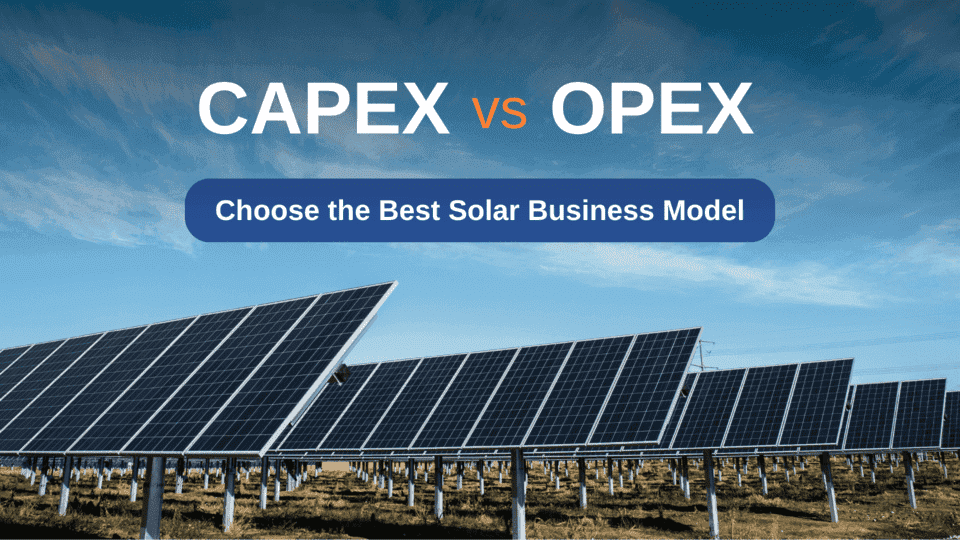
There are two main types of solar business models in India: the CAPEX model and the RESCO model. Each of these models has its own advantages and disadvantages, depending on the specific needs and preferences of the business owner.

CAPEX Model Explained

The CAPEX model involves the business taking full ownership and responsibility for the solar power system. This means the business purchases the solar panels, inverters, and other equipment upfront to install on their property. 

CAPEX Solar Business Model

The main elements of the CAPEX model include:

– High Upfront Investment: The business must pay the full capital expenditure (CAPEX) costs to purchase and install the solar system. This requires significant funds upfront but provides complete ownership.

– Long Term Savings: By owning the solar system, the business enjoys lowered electricity bills for decades. Once the upfront investment is recouped, the “free” energy from the sun provides excellent long-term savings.

– Full Control: The business has complete control over the solar system, panels, and maintenance. There is no third-party involvement.

– Tax Breaks: Government incentives like accelerated depreciation and tax credits provide financial benefits that improve ROI on the solar investment.

Overall, the CAPEX model is ideal for businesses focused on long-term savings, full control, and leveraging tax incentives. The major barrier is the large upfront investment required. But for some, owning their own power plant is worth it for decades of nearly free solar energy from the sun.

 Pros of CAPEX Model

Ownership of your own solar power system through the CAPEX model provides some key advantages:

– Long-term Savings: By owning your own solar system, you can lock in low electricity rates for decades to come, insulating your business from ever-escalating grid tariffs and securing decades of free sunshine-fueled electricity. This gives you price stability and reduces your operating costs over the long run.

Tax Breaks & Incentives: The government offers incentives like accelerated depreciation and tax credits to make solar power investments more lucrative. These can significantly boost your return on investment.

– Property Value Boost: Properties with solar power systems installed have higher valuation and fetch higher rents or sale prices. Going solar can directly increase the value of your business property.

– Control over the System: As the owner, you have full control over the solar power system installed on your property. You control all operations and maintenance and are not bound to any external party.

 Cons of CAPEX Model

The CAPEX model requires a substantial upfront investment to purchase and install the solar power system. This can put a major dent in your capital expenditure budget. You’ll need to self-finance or take out a loan to cover these initial costs.  

As the owner of the solar power system, you are also responsible for all maintenance and repairs. This includes regular cleaning of the panels, inverter checks, and any fixes needed over the 20-30 year lifespan of the system. Proper maintenance is essential to keep your system performing optimally.

There are performance risks associated with owning your own system. Factors like shading, soiling, inverter failure etc. can impact energy generation. You’ll have to shoulder these production and revenue losses when issues arise.

As solar technology improves over time, your system may become outdated earlier than expected. Upgrading to newer, higher efficiency panels down the line will add to your CAPEX costs.

So while the CAPEX model provides long-term savings and control, the burden of upfront expenses, maintenance, and upgrade costs rests squarely on your shoulders.

 OPEX/PPA/RESCO Model Explained

The OPEX/PPA/RESCO model allows businesses to benefit from solar power without the major upfront investment required of the CAPEX model.

OPEX Solar Business Model

In this model, a third party such as a solar energy provider or RESCO (renewable energy service company) will finance, install, operate and maintain the solar power system on your property. As the business owner, you simply pay for the electricity generated by the solar panels based on a predetermined rate and term length outlined in a power purchase agreement (PPA).

Some key aspects of the OPEX/PPA/RESCO model:

– Third party ownership – The solar system is owned and operated by the service provider, not your business. This eliminates the need for any major upfront investment.

– Power Purchase Agreement (PPA) – A long-term contract to purchase the electricity generated by the solar power system, usually 10-15 years. The rate is lower than your utility but may be slightly higher than the CAPEX model.

– Operation, maintenance and performance – All responsibilities for operating, maintaining and ensuring optimal performance of the solar system lies with the service provider.

– Scalability – Businesses can easily scale solar capacity up or down through their PPA.

The OPEX model offers an accessible path to solar energy for businesses unwilling or unable to make major upfront investments. While you don’t own the system, it provides cost savings with minimal hassle.

 Pros of OPEX/PPA/RESCO Model

The OPEX/PPA/RESCO model offers several key advantages that make it an attractive option for many businesses looking to adopt solar power:

 No Upfront Costs

One of the biggest pros of the OPEX model is that there are zero upfront costs for the business owner. The RESCO handles the entire initial investment for purchasing and installing the solar panels and equipment. This allows businesses to avoid the huge capital expenditure required to buy their own solar power system. The business simply pays for the electricity generated by the system on a per unit basis. This predictable electricity bill each month is the only cost.

 Low Maintenance 

With an OPEX contract, the RESCO is responsible for all maintenance and repairs related to the solar power system. So the panels, inverters, wiring etc. are all looked after by the RESCO. The business owner does not have to worry about system upkeep or finding technicians to service the equipment as needed. This makes it a hassle-free arrangement.

 Easy to Scale Over Time

A major advantage of the OPEX model is the flexibility it offers in system sizing. If the business grows and energy needs increase, it’s easy to adjust the PPA and add more solar panels to scale up power generation. There’s no need for the business to make additional capital investments to expand the system. The RESCO handles upgrading the equipment as required. This scalability makes it easy to right-size the solar system for current energy needs.

 Cons of OPEX/PPA/RESCO Model

The OPEX/PPA/RESCO model isn’t without its downsides. Here are some potential cons to consider:

– Less control over the system: Since you don’t own the solar power system, you have less control over it. You can’t make changes or upgrades without approval from the RESCO.

– Potentially higher electricity costs: While you avoid the upfront investment, the electricity rates per unit could end up costing more over the long run compared to owning your own system. The RESCO needs to recover their initial investment and make a profit.

– Locked into a long term contract: OPEX/PPA/RESCO contracts typically range from 10-15 years – that’s a long-term commitment with little flexibility to change providers. It’s like signing up for a marriage to sunshine where divorce is not an option. Make sure you’re comfortable being tied to one RESCO for decades.

 Choosing the Right Solar Business Model

When selecting a solar business model, it’s important to reflect on your budget constraints, risk tolerance, and long-term goals. 

The CAPEX model may be the best fit if you want more control over your energy source along with tax deductions and incentives. Since you own the system under CAPEX, you benefit directly from government solar subsidies and accelerated depreciation. This allows you to maximize savings over the lifespan of the panels. Just keep in mind that the upfront costs will be higher and you take on more maintenance responsibility.

For businesses that want to avoid high initial investments, the OPEX model is very appealing. The third party finance provider shoulders the upfront panel and installation costs, so you can start benefiting from solar right away. However, electricity rates are slightly higher than the CAPEX model over the long run. And maintenance becomes the responsibility of the RESCO, not you.

Ultimately, choosing between CAPEX and OPEX depends on your budget, tolerance for risk, and goals for long-term savings or low initial outlay. Analyze your specific business needs to determine if the benefits of control and tax incentives outweigh the convenience and low startup costs. With the right solar model powering your company, you’ll be well on your way to joining India’s renewable energy revolution!

 Investing in a Sustainable Future

With India’s ambitious solar energy goals, businesses have an incredible opportunity to invest in a more sustainable future. Going solar doesn’t just make economic sense; it benefits the environment and allows companies to demonstrate social responsibility.

Solar energy generates power without any air or water pollution, reducing dependence on fossil fuels. Widespread adoption of solar can significantly lower India’s carbon emissions and improve air quality. Businesses that install solar panels lead by example and show that profitability and sustainability can go hand in hand.

India is also demonstrating global leadership in clean energy through its massive push for solar power capacity. The country’s commitment to adding 500 GW of renewable energy by 2030 sets an example for nations worldwide. When Indian companies adopt solar, they become part of this clean energy success story.

By choosing solar, businesses can power their operations sustainably for decades to come. The sun provides an endless, clean energy source. Investing in solar technology allows companies to reduce their environmental impact and become stewards of a greener future.

Going solar makes sense financially and ethically. With two attractive models to choose from, every forward-thinking business can find a way to profit from the power of the sun while advancing India’s renewable energy revolution. Leading this sustainability drive will enable the country to shine bright as a beacon of climate action and progressive vision.

Contact us today at +91-8320095024 or visit www.soleosenergy.com to learn more about how to choose the best solar business model for your company! Feel free to reach out with any questions or to start your solar journey!

solarize bharat solar panel

Take the next step in renewable energy by joining the Solarize Bharat pledge. Imagine your business not just as an entity benefiting from solar power but as a contributor to a nationwide movement, shaping the future of energy in our incredible nation.

Stay solar-powered and environmentally inspired!

P.S.: Share this blog with fellow solar enthusiasts to spread the word about the exciting world of solar energy!