

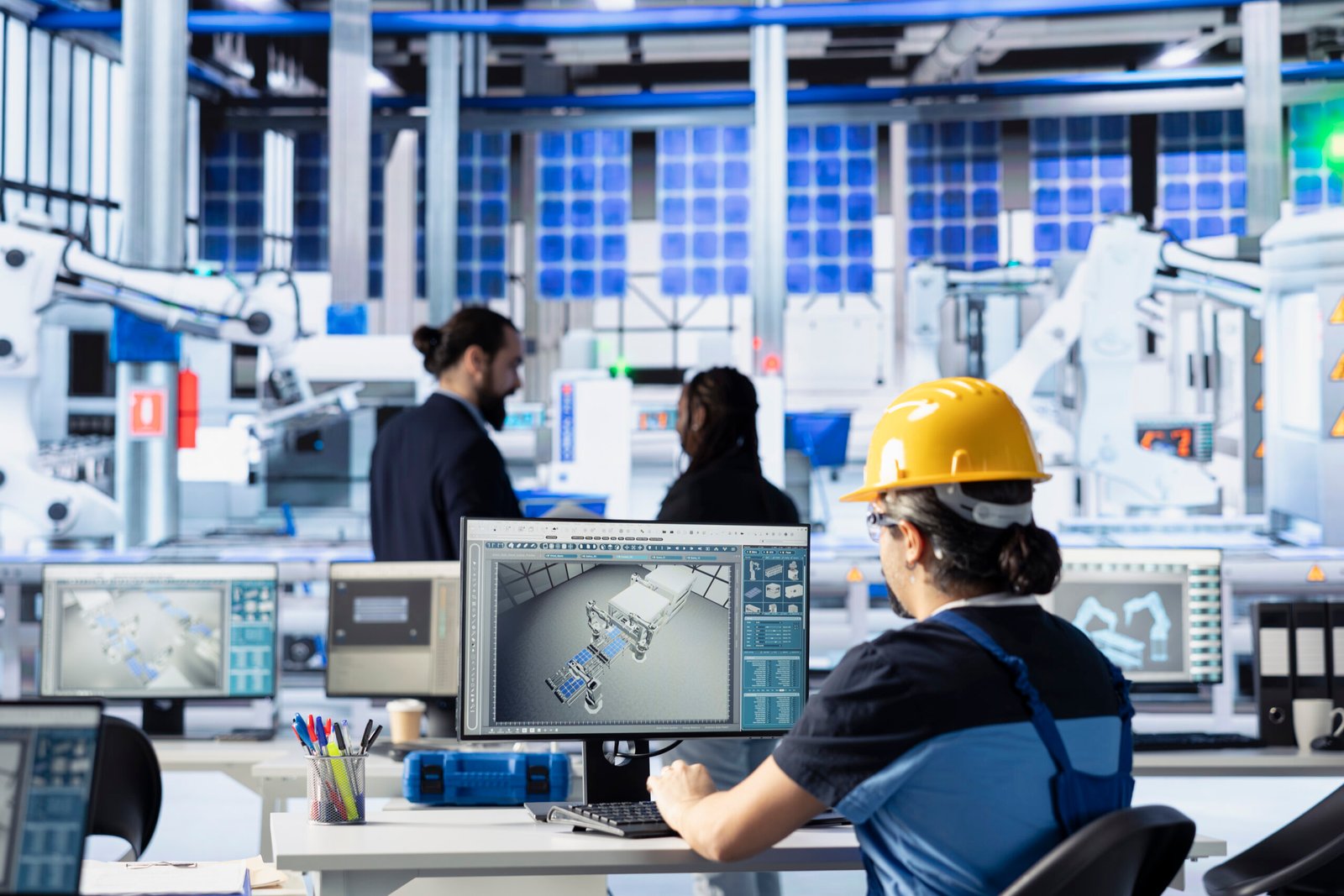
The global energy landscape is evolving rapidly as industries face rising electricity costs, stricter sustainability targets, and increasing pressure to build resilient operations. In this shift, solar power energy has emerged as one of the most reliable and cost-effective solutions, enabling manufacturers to generate clean power while gaining long-term control over energy expenses.
For today’s industrial leaders, solar energy is more than a green initiative—it is a strategic investment that delivers predictable savings, energy security, and compliance with ESG and regulatory frameworks. From rooftop installations to large ground-mounted projects, solar power is reshaping how manufacturing units meet their energy needs.
Table of Contents
At Soleos Energy Private Limited, we help industries unlock the full potential of solar power. With 12+ years of experience, 450+ MW delivered, and 160+ projects executed across India, Europe, the Middle East, and Africa, Soleos Energy is a trusted global solar EPC partner—driving the transition toward clean, reliable, and future-ready energy.
What Is Solar Power Energy?
Solar power energy is generated by converting sunlight into usable electricity primarily through solar photovoltaic (PV) systems. These systems utilize semiconducting materials that absorb photons from sunlight, freeing electrons and creating an electric current. As a clean, abundant, and sustainable energy source, solar power significantly aids in reducing greenhouse gas emissions and lessens dependence on fossil fuels. This attribute makes it particularly advantageous for manufacturers and industrial users who seek environmentally responsible energy solutions that bolster operational continuity and sustainability.
Solar power, recognized as one of the cleanest forms of energy, is ideal for commercial and industrial applications. The PV systems allow for immediate use of electricity to support manufacturing processes, the option to export power to the grid, or store it for future use through energy storage systems. Its advantages include long-term cost savings, energy reliability, and a reduction in carbon emissions without reliance on fuel sources. As a result, manufacturers can benefit from predictable electricity costs, decreased grid dependence, and progress toward sustainability and ESG goals, facilitating uninterrupted business growth.
How Solar Power Systems Work?
Solar power systems generate electricity by capturing sunlight and converting it into usable power through a seamless, proven process. This technology is reliable, efficient, and perfectly suited for commercial and industrial applications.
Here’s how it works—step by step:
- Sunlight Is Captured by Solar Panels
Solar panels are made up of photovoltaic (PV) cells, typically composed of silicon-based semiconductor materials. When sunlight falls on these cells, it releases electrons and generates direct current (DC) electricity through the photovoltaic effect. - DC Electricity Flows to the Inverter
The electricity produced by solar panels is DC, which cannot be directly used by most industrial equipment. This DC power is sent to an inverter, a critical component that converts it into alternating current (AC)—the standard form of electricity used in factories and facilities. - Electricity Powers On-Site Operations
The converted AC electricity is first used to meet the facility’s real-time energy demand. This reduces dependence on grid power and immediately lowers electricity costs. - Excess Power Is Exported to the Grid
If the solar system generates more power than required, the surplus electricity is fed back into the utility grid through net metering or similar mechanisms. When solar generation is low, power can be drawn from the grid as needed. - Monitoring Ensures Optimal Performance
Modern solar power systems are equipped with advanced monitoring tools that track energy generation, system health, and efficiency in real time—ensuring consistent performance and long-term reliability. - Optional Energy Storage for Added Resilience
When paired with battery energy storage systems, excess solar energy can be stored and used during non-sunlight hours or power outages, further enhancing energy security.
Why Solar Power Energy Matters Today
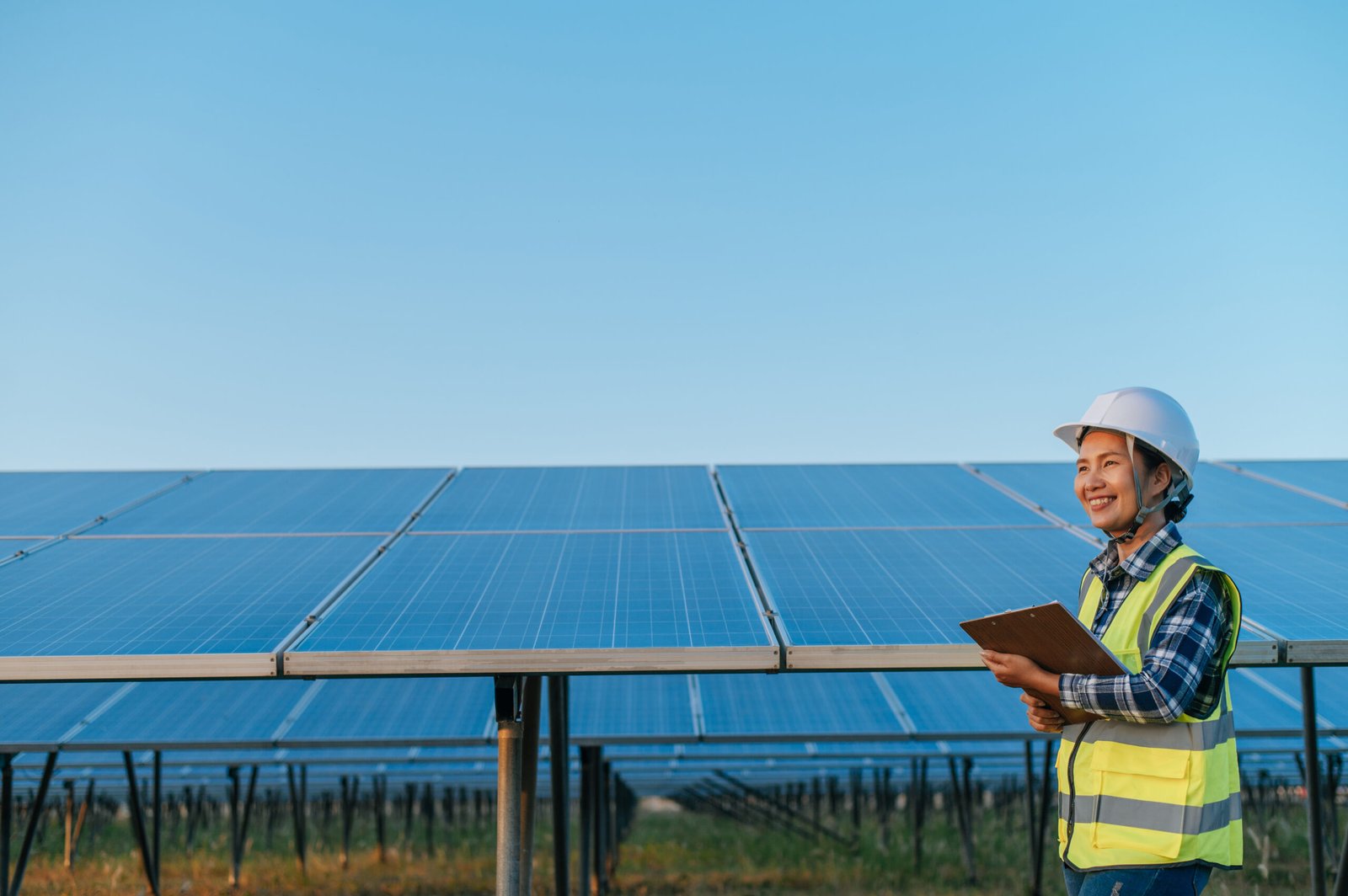
Solar power energy has moved far beyond being a clean-energy alternative—it is now a core pillar of modern industrial strategy. As the global energy ecosystem undergoes rapid change, manufacturers and large commercial enterprises are rethinking how they source, manage, and secure power. In this context, solar energy stands out as a solution that addresses today’s most pressing economic, environmental, and operational challenges.
1. Escalating Energy Costs and Price Uncertainty
One of the most pressing challenges manufacturers face today is the continuous rise in electricity tariffs and fuel prices. Energy expenses account for a significant share of operational costs, particularly in energy-intensive sectors such as manufacturing, FMCG, automotive, textiles, pharmaceuticals, and heavy engineering. Solar power energy enables industries to generate electricity at a fixed and predictable cost for 25 years or more. By adopting solar power energy, businesses significantly reduce dependence on grid electricity and shield themselves from tariff hikes and fuel price volatility. This long-term cost certainty offered by solar power energy improves budgeting accuracy, strengthens financial planning, and enhances overall profitability.
2. Sustainability, ESG, and Carbon Reduction Goals
Sustainability has evolved from a corporate responsibility initiative into a core business requirement. Governments, investors, customers, and global supply chains increasingly expect companies to demonstrate measurable progress toward decarbonization and ESG goals. Solar power energy generates electricity with zero emissions during operation, directly lowering a company’s carbon footprint. By integrating solar power energy into their operations, manufacturers can meet renewable energy targets, comply with environmental regulations, and strengthen ESG disclosures. The adoption of solar power energy also enhances brand credibility and builds long-term stakeholder trust.
3. Energy Security and Operational Resilience
Grid instability, power outages, and supply disruptions can lead to production losses and operational inefficiencies. As power demand continues to grow, reliance solely on centralized grids poses increasing risks. On-site solar power energy systems improve energy independence by enabling facilities to generate electricity at the point of consumption. When combined with energy storage, solar power energy can provide backup power, manage peak demand, and ensure business continuity during grid failures—making industrial operations more resilient and reliable.
4. Strong Policy Support and Regulatory Push
Across global markets—including India, Europe, the Middle East, and Africa—governments are actively promoting solar power energy adoption through supportive policies, incentives, and renewable mandates. Regulations such as Renewable Purchase Obligations (RPOs), carbon compliance norms, and sustainability disclosures are becoming more stringent. Early adoption of solar power energy allows manufacturers to stay ahead of regulatory requirements, reduce compliance risks, and benefit from incentives while they are available. Proactively investing in solar power energy positions businesses as responsible, future-ready industry leaders.
5. Competitive Advantage in a Global Market
Energy efficiency and sustainability are increasingly influencing procurement and supplier selection decisions, particularly within global supply chains. Many multinational corporations now prioritize suppliers that actively use solar power energy and demonstrate lower carbon footprints. By adopting solar power energy, manufacturers gain a competitive edge through lower production costs, improved sustainability credentials, and stronger positioning in international markets. The strategic use of solar power energy also supports long-term resilience as industries transition toward cleaner and smarter energy models.
6. Technological Maturity and Scalability
Advancements in solar technology—such as high-efficiency modules, smart inverters, digital monitoring, and energy storage—have made solar power more reliable and scalable than ever before. Whether it’s rooftop systems, ground-mounted plants, solar carports, or hybrid solutions, solar can be tailored to diverse industrial needs and site conditions. This maturity ensures consistent performance, minimal maintenance, and strong returns on investment over the system’s lifecycle.
Solar Power for Commercial & Industrial Consumers
Solar power has become a strategic energy solution for commercial and industrial (C&I) consumers, particularly large manufacturing units with high and consistent power requirements. As electricity tariffs rise, sustainability expectations grow, and energy reliability becomes critical, solar energy offers businesses a smart, scalable, and future-ready way to meet their power needs.
Unlike residential systems, C&I solar installations are engineered to handle large energy loads, often ranging from hundreds of kilowatts to several megawatts. These systems are custom-designed based on a facility’s energy consumption patterns, available space, and long-term business objectives—ensuring maximum efficiency and financial returns.
Why Solar Power Is Ideal for C&I Consumers
For commercial buildings and industrial facilities, energy is a major operating expense. Solar power allows businesses to generate electricity at the point of consumption, significantly reducing reliance on grid power and protecting against tariff volatility. With system lifespans of 25 years or more, solar provides long-term cost predictability and improved financial planning.
In addition, on-site solar generation strengthens energy security by reducing dependence on centralized power infrastructure—an increasingly important factor for uninterrupted manufacturing operations.
Key Solar Solutions for Commercial & Industrial Applications
1. Rooftop Solar Systems
Industrial rooftops offer vast, underutilized spaces ideal for solar installations. Rooftop systems enable factories, warehouses, and commercial buildings to maximize self-consumption, minimize transmission losses, and achieve faster payback periods.
2. Ground-Mounted Solar Plants
Facilities with available land can deploy large-capacity ground-mounted solar plants to offset a significant portion of their electricity demand. These systems are particularly suitable for energy-intensive industries seeking substantial cost savings and scalability.
3. Solar Carports and Canopies
Solar carports transform parking areas into power-generating assets while providing shaded parking for employees and visitors. They enhance land utilization while contributing to sustainability goals.
4. Hybrid Solar Systems with Energy Storage
By integrating battery energy storage systems, businesses can store excess solar power for use during peak demand periods or grid outages. This improves energy reliability, peak load management, and operational resilience.
5. Agrivoltaic Solutions
Agrivoltaics allow solar installations and agricultural activities to coexist on the same land. This innovative approach is especially valuable in land-constrained regions, maximizing land productivity while generating clean energy.
Economic Benefits of Solar Power Energy
Solar power energy has emerged as one of the most financially sound investments for commercial and industrial consumers. Beyond its environmental advantages, solar power energy delivers strong economic value by reducing operational costs, improving financial predictability, and strengthening long-term business resilience. For manufacturers and large enterprises, the shift to solar power energy is increasingly driven by economics as much as sustainability.
1. Substantial Reduction in Electricity Costs
Electricity is a major operating expense for manufacturing and industrial facilities. Solar power energy allows businesses to generate electricity at the point of consumption, significantly reducing dependence on grid power. By offsetting daytime energy usage, solar power energy can lower electricity bills by 40–70%, depending on system size and consumption patterns. Over the life of the system, these savings translate into substantial cost reductions and improved profit margins.
2. Long-Term Price Certainty and Cost Stability
One of the most valuable economic benefits of solar power energy is protection against rising electricity tariffs and fuel price volatility. Grid electricity prices are influenced by fuel costs, inflation, and regulatory changes, all of which create uncertainty. Solar power energy, once installed, delivers power at a fixed and predictable cost for 25 years or more. This price certainty enables better budgeting, accurate forecasting, and long-term financial planning for industrial operations.
3. Strong Return on Investment (ROI) and Fast Payback
Advances in technology and declining equipment costs have made solar power energy highly cost-effective. Commercial and industrial solar projects often achieve payback periods of 3–6 years, after which the electricity generated is essentially free. Over its lifetime, a solar power energy system delivers high internal rates of return, making it one of the most attractive infrastructure investments for businesses seeking stable, low-risk returns.
4. Reduced Peak Demand Charges
Many utilities levy demand charges based on peak power consumption. Solar power energy generates maximum output during daytime hours—when industrial energy demand is typically highest. This alignment helps reduce peak demand, lowering demand charges on electricity bills and creating additional operational savings.
5. Enhanced Asset Value and Financial Strength
Facilities powered by solar power energy are more energy-efficient, future-ready, and resilient to energy price fluctuations. As a result, solar installations enhance the long-term value of industrial and commercial assets. Buildings with solar power energy systems are often viewed more favorably by investors, lenders, and tenants, improving access to financing and strengthening overall financial positioning.
6. Lower Operational Risk and Improved Energy Security
Power outages and grid instability can cause production losses and financial setbacks. Solar power energy systems—especially when combined with energy storage—reduce reliance on centralized grids and improve operational continuity. By minimizing downtime and energy-related disruptions, solar power energy protects revenue streams and reduces hidden operational costs.
7. Competitive Advantage Through Cost Leadership
Lower and predictable energy costs directly impact production costs. By adopting solar power energy, manufacturers can operate more efficiently and competitively in both domestic and international markets. Many global buyers now prefer suppliers that use renewable energy, making solar power energy a strategic advantage in supply chain positioning.
8. Long-Term Financial Resilience
Solar power energy is a hedge against future energy risks, regulatory changes, and carbon-related costs. As carbon pricing, sustainability mandates, and energy regulations become more stringent, businesses powered by solar power energy are better prepared financially. This resilience supports sustainable growth and long-term profitability.
Environmental Impact of Solar Power
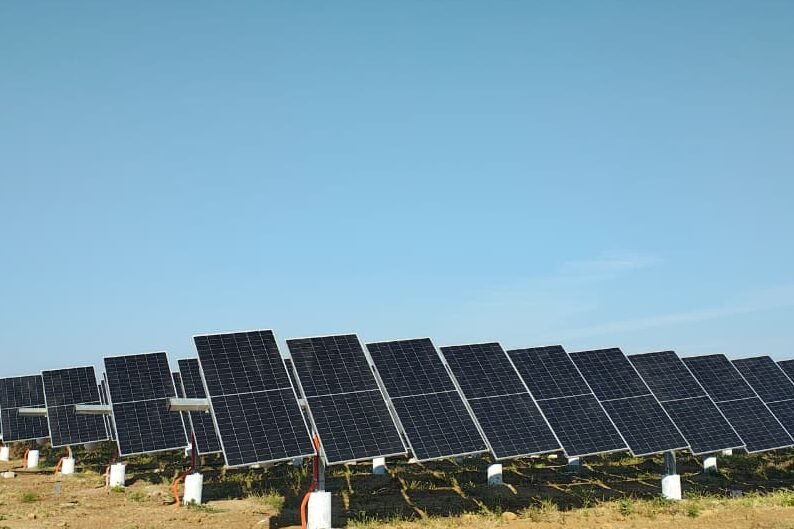
Solar power energy has become a cornerstone of the global transition toward cleaner, more sustainable energy systems. As environmental concerns such as climate change, air pollution, and resource depletion intensify, solar power energy offers a proven and scalable solution that significantly reduces the environmental footprint of electricity generation—especially for commercial and industrial consumers.
1. Reduction in Greenhouse Gas Emissions
One of the most critical environmental benefits of solar power energy is its ability to generate electricity without emitting greenhouse gases during operation. Conventional power generation relies heavily on fossil fuels, which release large volumes of carbon dioxide and other pollutants into the atmosphere. By replacing grid electricity with solar power energy, industries can reduce their carbon emissions substantially. Over a system lifespan of 25 years or more, a single industrial solar installation can prevent thousands of tons of CO₂ emissions, directly supporting global climate action goals.
2. Improved Air Quality and Health Benefits
Fossil fuel–based power plants are a major source of air pollutants such as sulfur dioxide, nitrogen oxides, and particulate matter. These pollutants contribute to smog, acid rain, and serious health issues, particularly in industrial zones. Solar power energy generates electricity without producing air pollutants, leading to cleaner air and healthier communities. Large-scale adoption of solar power energy plays a vital role in improving environmental quality around manufacturing hubs and urban centers.
3. Water Conservation
Traditional thermal power plants consume vast amounts of water for cooling and steam generation. In contrast, solar power energy requires very little water, mainly for occasional panel cleaning. This makes solar power energy especially valuable in water-scarce regions, where industrial water use is already under pressure. By shifting to solar power energy, industries can reduce their indirect water footprint and contribute to more sustainable water resource management.
4. Reduced Dependence on Fossil Fuels and Resource Protection
Solar power energy relies on sunlight—an abundant and renewable resource—rather than finite fossil fuels. This reduces the environmental damage associated with mining, drilling, fuel transportation, and combustion. Increased adoption of solar power energy helps preserve natural ecosystems, limits land and water contamination, and reduces the long-term environmental risks linked to fossil fuel extraction.
5. Support for Climate and Sustainability Goals
Governments and global institutions are enforcing stricter climate regulations, carbon reduction targets, and sustainability disclosures. Solar power energy is central to achieving these objectives. For businesses, adopting solar power energy helps meet renewable energy targets, comply with environmental regulations, and align with national and international climate commitments—while also strengthening ESG performance and reporting.
6. Sustainable Use of Land and Infrastructure
Modern solar power energy solutions are designed to minimize environmental disruption. Rooftop solar systems, solar carports, and industrial canopies utilize existing structures without additional land use. Even large ground-mounted solar plants can be developed responsibly, and innovative models like agrivoltaics allow solar power energy generation and agriculture to coexist. These approaches maximize clean energy output while preserving natural landscapes.
7. Low Environmental Impact Across the System Lifecycle
While manufacturing solar components requires energy and materials, solar power energy systems quickly offset this impact. Most systems achieve energy payback within a few years and then continue to generate clean electricity for decades. Over their full lifecycle, solar power energy systems have one of the lowest environmental footprints among all power generation technologies.
Technology Advancements in Solar Power Energy
1. Next‑Generation Photovoltaic (PV) Materials & Higher Efficiency Cells
Perovskite and tandem solar cells represent a significant advancement in solar technology, achieving efficiencies above 30–35% through the integration of newer materials with traditional silicon, thereby capturing a broader spectrum of sunlight. This technology is poised for commercial scale, significantly surpassing standard silicon panels. In parallel, lead-free tin-based perovskite cells, which offer greater environmental benefits, have reached efficiencies exceeding ~16% and show stability under continuous illumination, fostering their potential for sustainable commercial use.
Furthermore, quantum dot solar cells, which utilize nano-scale semiconductor crystals, promise high conversion efficiencies, theoretically up to ~66%, and are being integrated with existing solar module technology to enhance practical performance. The push for higher-efficiency cells is particularly crucial for maximizing energy output in space-limited installations, such as rooftops and manufacturing sites, where every square meter is valuable.
2. Smarter Panel Designs & Deployments
Bifacial solar panels enhance energy generation by capturing sunlight from both sides, leading to an increase of 15–30%, particularly effective when installed over reflective surfaces or with tracking systems. Building-Integrated Photovoltaics (BIPV) have advanced the solar landscape by integrating solar technology into building materials such as facades, windows, and roof tiles, transforming buildings into power-generating assets while maintaining aesthetic appeal—ideal for corporate and industrial settings. Additionally, floating solar arrays installed on water bodies like reservoirs and lakes conserve land space and benefit from natural cooling, with innovations such as vertical floating photovoltaics (VFPV) further optimizing energy production through improved orientation and exposure.
3. Digital Intelligence, AI & Smart Systems
Solar systems are evolving into digital-native energy assets through several innovative advancements. AI-driven monitoring and optimization utilize real-time data on weather, shading, panel health, and production output to enhance operational efficiency and proactively identify issues. Predictive maintenance employs smart diagnostics to forecast potential faults and suggest servicing, which minimizes downtime and reduces overall lifecycle costs. AI-optimized design tools leverage machine learning and satellite data for effective system design and site planning, ensuring optimal panel placement and yield forecasts prior to installation.
Additionally, blockchain technology is emerging to facilitate secure and transparent energy transactions, which may support the development of virtual power plants and peer-to-peer energy markets. Collectively, these digital innovations transform solar arrays into optimized, resilient, and data-driven assets that align perfectly with energy management systems utilized in manufacturing environments.
4. Energy Storage & Dispatchable Solar
Advanced Battery Systems are evolving, with lithium-ion technologies achieving higher energy density and longevity. Future solid-state batteries are expected to enhance safety and durability. Initiatives combining solar PV with extensive storage systems aim to deliver continuous renewable energy, significantly impacting sectors reliant on uninterrupted power. The RayGen PV-Ultra Thermal-Hydro Storage Plant exemplifies hybrid energy solutions, converting solar energy into heat for on-demand release, ensuring clean energy availability beyond sunset. Reliable energy storage mitigates power intermittency, aids in peak shaving, and reduces reliance on expensive grid energy or backup generators, thus minimizing operational risks for major electricity consumers.
5. System Integration & Grid Interaction
Smart Grid Compatibility highlights the capability of solar systems to engage in two-way interaction with the grid, functioning as virtual power plants that contribute excess energy back to the grid while also aiding in grid stabilization and demand response. Furthermore, the section on Solar + EV Charging & Industrial Loads discusses the growing integration of solar power with electric vehicle (EV) charging infrastructure and industrial load management systems. This combination allows for the synchronization of power generation with consumption in industrial settings, resulting in enhanced operational efficiency.
6. Emerging & Future Innovations
Space-Based Solar Power (SBSP) represents a long-term vision for harnessing solar energy by capturing sunlight in orbit and transmitting it back to Earth, potentially revolutionizing the global renewable energy supply. Additionally, experimental innovations in thermoelectric devices, such as laser-etched “black metal” systems, promise significant improvements in heat-to-electricity conversion, paving the way for new applications beyond traditional photovoltaic (PV) technologies.
Soleos Energy: Your Trusted Solar EPC Partner
At Soleos Solar Energy Private Limited, we offer end-to-end EPC (Engineering, Procurement, and Construction) services tailored to the needs of industrial and commercial clients.
Our Capabilities
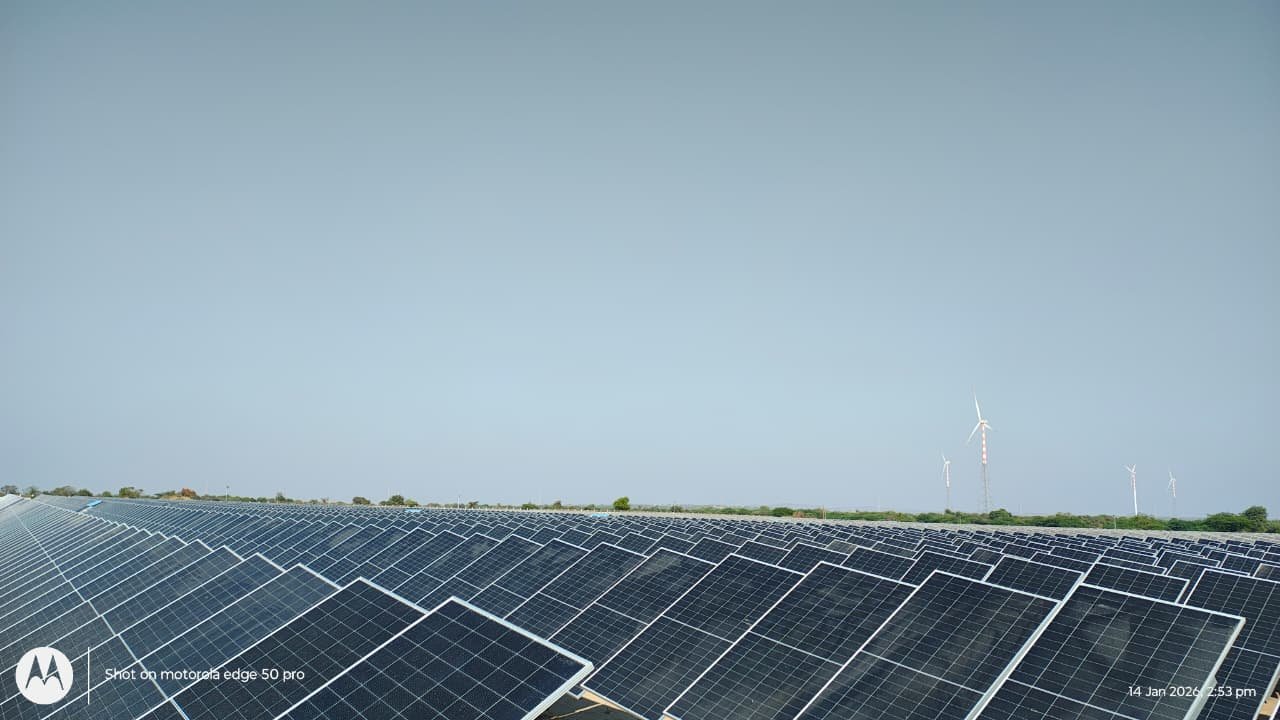
Soleos Energy delivers end-to-end solar EPC solutions designed for performance, reliability, and long-term value. Our capabilities span the complete project lifecycle—from feasibility studies, engineering design, and technology selection to procurement, construction, commissioning, and operations & maintenance. We specialize in C&I rooftop solar, ground-mounted projects, solar parks, agrivoltaics, and solar carports, tailoring each solution to site conditions, energy demand, and financial objectives. With a strong focus on quality, safety, and optimization, we ensure every solar asset delivers maximum generation and predictable returns throughout its lifespan.
Our Global Footprint
With a strong international presence, Soleos Energy operates across India, Spain, Portugal, the UK, UAE, Germany, and Kenya, with active expansion into new global markets. Our cross-border experience allows us to combine global best practices with local regulatory and execution expertise, ensuring seamless project delivery in diverse environments. This global footprint enables us to support multinational clients with consistent standards, scalable solutions, and dependable execution wherever they operate.
Our Proven Track Record
Backed by over 12 years of industry experience, Soleos Energy has successfully delivered 450 MW+ of solar capacity across 160+ projects. Our portfolio reflects consistent execution excellence across commercial, industrial, and utility-scale installations. Trusted by leading manufacturing and industrial clients, our projects are built to perform—meeting timelines, budgets, and performance benchmarks while helping businesses reduce energy costs, strengthen ESG commitments, and move confidently toward energy independence.
The Future of Solar Power Energy
The future of solar power energy is defined by scale, intelligence, and integration, as solar evolves from an alternative power source into a core driver of industrial energy strategy. Advances in high-efficiency modules, bifacial and next-generation cell technologies, along with the rapid adoption of battery energy storage systems, are making solar more reliable, flexible, and dispatchable than ever before. As energy costs rise and ESG expectations strengthen, businesses are increasingly turning to solar for long-term price stability, energy security, and carbon reduction, supported by digital monitoring, AI-driven performance optimization, and smart grid integration.
With supportive policies, declining technology costs, and hybrid solar-storage solutions enabling round-the-clock power, solar energy is no longer just about sustainability—it is about resilience, competitiveness, and building future-ready operations for a rapidly changing global energy landscape.
Conclusion: Powering Progress with Soleos Energy
Solar power energy is rapidly emerging as a cornerstone of the global energy transition, combining environmental stewardship with economic resilience. By harnessing abundant sunlight, solar systems significantly reduce greenhouse gas emissions and air pollution while cutting long-term energy costs and enhancing energy independence for businesses and communities alike. As solar technologies become more efficient and affordable and integration with energy storage and smart grids improves, solar power energy will play an even greater role in shaping sustainable, reliable, and future-ready energy systems worldwide. With continued innovation and adoption, solar power energy isn’t just an environmental choice—it’s a strategic advantage that drives cleaner growth, economic opportunity, and a resilient energy future for industries and nations alike.
Ready to unlock the full potential of solar power energy? Connect with our experts to design a solar solution that delivers long-term savings, energy security, and sustainability for your business.
