


Solar Panel Government Scheme: Driving 18–22% IRR for Industrial Solar Projects Across India

Solar Panel Government Scheme

The solar revolution in India is no longer a distant vision—it is actively reshaping the industrial energy landscape today. What was once considered mainly an environmental or CSR initiative has now emerged as a high-impact financial strategy for industries. Backed by the Solar Panel Government Scheme, along with supportive tax benefits, capital incentives, and progressive policy frameworks, industrial solar projects are delivering returns that compete with—and often outperform—traditional investments, achieving 18–22% IRR in many cases.

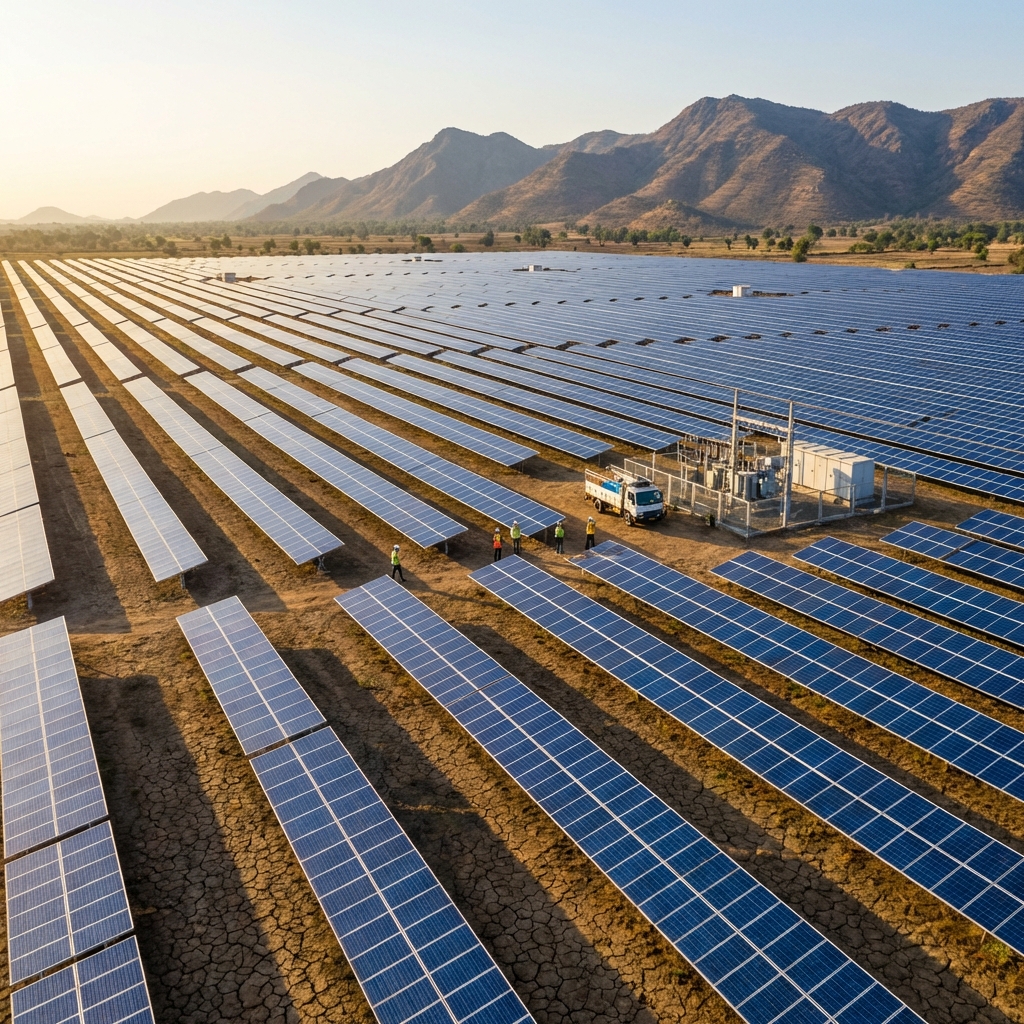
This blog explores how the Solar Panel Government Scheme and allied policies make this transformation possible, and how industrial solar projects—from rooftop systems on manufacturing facilities to large ground-mounted solar parks—are unlocking long-term value, improved profitability, and sustainable growth for businesses across India.

The Business Imperative: Why the Solar Panel Government Scheme Makes Solar Financially Sense for Industries

India’s industrial sector now views energy as a strategic asset crucial for profitability and competitiveness. Rising power costs and sustainability demands are prompting a shift in electricity sourcing, with solar power emerging as a financially beneficial choice. For industrial leaders, investing in solar energy means realizing substantial financial returns, managing risks, and enhancing competitiveness, turning energy expenses into high-return investments.

1. Protection Against Rising Energy Costs
Electricity constitutes a significant expense for industrial units, often accounting for 40–60% of total operating costs. Solar energy can fundamentally alter this situation by reducing electricity costs to ₹3–₹4 per kWh compared to state utility tariffs of ₹7–₹12 per kWh, resulting in a 60–70% savings. The alignment of large daytime industrial loads with solar generation means most energy produced is consumed on-site, further enhancing savings. As industrial tariffs continue to rise due to various economic factors, solar power offers fixed, predictable pricing for over 25 years, providing long-term cost stability and improved profit margins for energy-intensive manufacturers.

2. Predictable Long-Term Energy Costs
Solar energy systems provide long-term cost stability, with lifespans exceeding 25 years, in contrast to traditional grid tariffs that increase annually. This long-term predictability shields businesses from utility price inflation, which has historically surpassed general inflation rates. As a result, companies can enjoy enhanced financial planning and improved cash flow stability, particularly beneficial for industries operating on narrow margins and extended investment timelines.

3. Strong Returns & Fast Payback
Solar energy is notable for its high return on investment (ROI) and short payback period, with many industrial projects achieving break-even within 3 to 5 years, leading to energy savings as a net benefit. Sector analyses indicate that the internal rates of return (IRRs) for commercial and industrial solar installations typically range between 18% and 25%, with potential for higher returns based on tariff assumptions and incentive structures. This performance frequently surpasses that of traditional capital investments, positioning solar as a compelling component of strategic energy portfolios.

4. Tax & Regulatory Incentives That Improve Cash Flows
Solar projects in India are supported by significant fiscal incentives that enhance project economics. Key among these incentives are:

  1. Accelerated Depreciation (AD): Industrial companies can claim up to 40% depreciation in the first year per the Income Tax Act, effectively lowering taxable income and boosting cash flows in the initial years.
  2. Concessional GST: Solar equipment is subject to a reduced GST rate, typically around 5%, which decreases upfront project expenses.
  3. Net Metering: This allows surplus solar generation to be fed into the grid, offsetting future electricity bills and increasing the overall value of energy.

These incentives are particularly advantageous for industrial users as they speed up capital recovery and enhance early-year profitability, which is essential for calculating the Internal Rate of Return (IRR).

5. Reduced Demand Charges & Peak Load Costs
Industrial tariffs frequently incorporate demand charges based on peak load usage, constituting a substantial part of electricity expenses. Solar energy generation reduces peak draw from the grid, especially during the day, leading to decreased peak demand charges, load factor penalties, and fixed demand-related costs. This reduction in charges not only improves overall savings but also expedites the payback period for solar investments.

6. Lower Reliance on Backup Fuels & Energy Security
Heavy industries frequently use diesel generators as a backup during grid outages, which are both expensive and carbon-intensive. Incorporating solar energy, along with optional storage solutions, mitigates reliance on costly diesel and related fuel logistics, thus minimizing operational risks and associated costs. Furthermore, the combination of solar energy and storage not only enhances energy security but also promotes operational continuity. This approach is not only cost-effective but also safeguards production lines from the unreliability of the power grid.

7. Competitive Advantage Through Sustainability
Solar energy is emerging as a key strategic asset for industries amidst tightening environmental standards in global supply chains. Enhanced environmental, social, and governance (ESG) scores derived from renewable energy adoption can attract both investors and consumers. Additionally, utilizing renewable energy may lead to better financing options, including low-interest green loans. Industries can also benefit by engaging in carbon credit markets and green certification schemes, which offer alternative value streams. For businesses focused on exports, the demonstration of renewable energy usage serves as a competitive advantage in international markets.

8. Minimal Operational Costs and High Durability
Solar systems, once installed, necessitate minimal maintenance due to several factors: there are no fuel costs, no moving parts which lead to fewer breakdowns, and only simple annual inspections and panel cleanings are required. As a result, the ongoing operational costs are significantly lower than those of conventional energy systems, contributing to a high lifetime value.

How Government Schemes Fuel Solar Economics

Government backing in India has reshaped solar from a compliance-driven initiative into a high-performance financial asset. Through a combination of fiscal incentives, tax advantages, regulatory support, and manufacturing reforms, the solar panel government scheme ecosystem reduces upfront costs while strengthening long-term returns for commercial and industrial investors.

Here’s how each component works together to make solar a compelling investment proposition:

a) Capital Subsidies & Direct Financial Assistance

The solar panel government scheme framework—driven by the Ministry of New and Renewable Energy (MNRE)—focuses on accelerating distributed solar deployment across India.

For residential and institutional rooftop systems, capital subsidies can reach:

  • Up to 40% for systems up to 3 kW
  • Up to 20% for systems up to 10 kW

While large industrial projects generally do not receive central subsidies under the solar panel government scheme, several state-level programs significantly improve viability. For example:

  • Tamil Nadu offers subsidies of up to 15%
  • Karnataka provides incentives of around 20% on eligible system costs

These state-led solar panel government scheme benefits directly reduce capital expenditure (CapEx), shorten payback periods, enhance project bankability, and strengthen IRR outcomes—making large-scale industrial solar more financially accessible.

b) Accelerated Depreciation (AD) Benefits

Accelerated Depreciation remains one of the most powerful financial levers within the broader solar panel government scheme ecosystem. Under the Income Tax Act 1961, industrial entities can claim up to 40% depreciation in the first year on solar assets.

This front-loaded depreciation provides:

  • Significant tax savings in Year 1
  • Stronger early-stage cash flows
  • Faster capital recovery
  • Higher Internal Rate of Return (IRR)

For profit-making manufacturing units, this element of the solar panel government scheme often transforms solar from a steady-return asset into a high-yield investment. The initial tax shield accelerates returns—crucial for achieving 18–22% IRR—while continued depreciation in subsequent years maintains long-term tax efficiency.

c) Net Metering & Power Sale Opportunities

A key pillar of the solar panel government scheme is ensuring that every generated unit of electricity carries measurable financial value.

Net metering policies—implemented by State Electricity Regulatory Commissions—allow industries to export surplus solar energy to the grid and receive credits against future consumption. This is particularly beneficial for facilities with:

  • Fluctuating production schedules
  • Daytime generation surplus
  • Weekend or shift-based operations

Beyond net metering, the solar panel government scheme framework also supports:

  • Open access models
  • Group captive solar structures
  • Power wheeling and third-party sale arrangements

When paired with well-structured Power Purchase Agreements (PPAs) and rising grid tariffs, these mechanisms significantly enhance long-term project savings. In many cases, optimized utilization under the solar panel government scheme helps industrial projects consistently achieve 18–22% IRR.

d) GST & Customs Duty Benefits

Tax policies embedded within the solar panel government scheme further improve solar economics. Solar components—including PV modules, inverters, and balance-of-system equipment—attract concessional GST rates (typically around 12%, depending on prevailing policy).

Industries can also claim Input Tax Credit (ITC), reducing effective project cost and improving return metrics. Compared to conventional power infrastructure, solar benefits from a more favorable tax structure under the solar panel government scheme.

Customs duty policies are structured to:

  • Encourage domestic manufacturing
  • Support supply chain stability
  • Reduce exposure to global pricing volatility

This predictable regulatory environment ensures that solar remains competitive and financially resilient for industrial-scale adoption.

e) Production Linked Incentive (PLI) Schemes for Solar Manufacturing

The Production Linked Incentive Scheme is another strategic component of the broader solar panel government scheme ecosystem. While it does not directly subsidize installations, it strengthens the domestic manufacturing base.

Under the scheme, manufacturers receive incentives based on:

  • Production volumes
  • Module efficiency standards
  • Domestic value addition

The impact of this solar panel government scheme initiative includes:

  • Expansion of Indian manufacturing capacity
  • Adoption of advanced module technologies
  • Economies of scale
  • Reduced import dependency

For industrial solar investors, this translates into improved module quality, better price stability, and stronger supply chain reliability—ultimately lowering CapEx and enhancing long-term project performance.

Schemes That Impact Industrial Solar Investment Outcomes

Below are some of the major policy frameworks and schemes that industrial players should know:

a) PM Surya Ghar Muft Bijli Yojana

The Pradhan Mantri Surya Ghar: Muft Bijli Yojana, launched in February 2024 by the Government of India with a budget of approximately ₹75,021 crore, aims to scale rooftop solar installations significantly. It offers Central Financial Assistance with fixed subsidies for systems up to 3 kW and provides up to 300 units of free electricity monthly per household. While primarily targeting residential consumers, the scheme also bolsters the solar supply chain and improves net-metering infrastructure, indirectly fostering industrial solar investments.

The program has already resulted in millions of installations, enhancing domestic solar ecosystems and stabilizing costs across the market. Overall, this initiative not only promotes residential solar but also positively impacts industrial outcomes by lowering costs and creating a favorable investment climate.

b) Grid-Connected Rooftop Solar Programme (Phase II)

The Grid-Connected Rooftop Solar Programme (Phase II), initiated by the Ministry of New and Renewable Energy (MNRE), aims to enhance grid-connected solar installations, with a primary focus on residential systems. It provides Central Financial Assistance (CFA) and offers incentives to DISCOMs to facilitate quicker approvals and improved grid connectivity. This scheme aims to streamline regulations and reduce risks for larger industrial solar projects, thus lowering project timelines and increasing investor confidence through enhanced grid integration. The framework also integrates with the PM Surya Ghar initiative, ensuring effective support across various solar sectors.

c) State Solar Policies & Industrial Incentives

Many Indian states enhance central support for solar energy through state-level schemes targeting commercial and industrial users, offering subsidies, reduced duties, and preferential tariffs. Gujarat leads in rooftop installations with attractive incentives, while states like Uttar Pradesh, Delhi, and Uttarakhand provide cost reductions and performance guarantees. These policies lower barriers, improve project viability, and foster private sector engagement in renewable energy. States such as Rajasthan, Maharashtra, Tamil Nadu, and Karnataka further encourage industrial solar through customized incentives and favorable banking mechanisms, resulting in lower operating costs and potential IRRs of 18–22% for well-structured projects.

d) GST and Tax Incentives

Tax benefits play a crucial role in the solar panel government scheme, significantly affecting project economics. Concessional GST rates lower the upfront capital expenditure for industrial solar installations, while Input Tax Credit (ITC) enhances cost efficiency for eligible entities. Accelerated depreciation and income-tax-linked benefits improve post-tax returns, making solar more financially advantageous than conventional power options. Consequently, this leads to reduced CapEx, stronger cash flows, shorter payback periods, and enhanced project IRRs, positioning solar as a highly tax-efficient investment. GST reforms further reduce project costs, making key solar components more affordable and improving overall return metrics on investments.

A Closer Look at Economics: Achieving 18–22% IRR

For industrial and C&I consumers in India, solar power has evolved into a high-return financial instrument, not just a sustainability upgrade. When aligned with the right solar panel government scheme, tax structures, and project design, industrial solar installations consistently deliver 18–22% Internal Rate of Return (IRR). Below is a detailed, point-wise breakdown of the economic drivers behind these strong returns.

1. High Differential Between Grid Tariff and Solar Power Cost

Industrial electricity tariffs in India are generally between ₹8 and ₹12+ per unit, comprising demand charges, fuel adjustment costs, and cross-subsidies. In contrast, solar power systems, once installed, can provide electricity at a levelized cost of ₹3–₹5 per unit over a 25-year period. This significant difference in tariffs allows for immediate and ongoing savings from the first day of operation. Economically, the reduction in grid costs results in substantial annual cash savings, which underpin a robust internal rate of return (IRR) of 18–22%.

2. Long-Term Fixed Energy Cost vs Rising Grid Tariffs

Grid electricity prices have traditionally increased by 4–6% each year, attributed to fluctuations in fuel costs and the expenses associated with infrastructure. In contrast, solar energy provides a stable cost for power over extended periods, thereby serving as a natural safeguard against inflation and rising tariffs. The economic implications of this are significant: as grid tariffs continue to rise, the savings generated from solar energy accumulate over the years, substantially enhancing the lifetime returns of solar projects and their internal rate of return (IRR).

3. Optimized Capital Cost Through Policy & Market Maturity

Declining prices of solar modules, enhanced inverter efficiencies, and economies of scale among Engineering, Procurement, and Construction (EPC) companies have led to a substantial reduction in capital expenditure (CapEx) for solar projects. Additionally, the introduction of concessional Goods and Services Tax (GST) rates and more efficient approvals under the government’s solar panel scheme have further decreased upfront costs. The acceleration of project execution minimizes interest during the construction phase and facilitates quicker cash flow generation. Overall, these factors contribute to improved economic metrics, including better Net Present Value (NPV), shorter payback periods, and increased Internal Rate of Return (IRR).

4. Accelerated Depreciation & Tax Efficiency

Industrial entities can leverage Accelerated Depreciation (AD) benefits, permitting significant depreciation of project costs in the initial years. This practice offers immediate tax savings post-commissioning, resulting in reduced taxable income and enhanced post-tax cash flows during crucial early years. The economic impact is notable, as front-loaded tax benefits significantly contribute to achieving Internal Rates of Return (IRRs) between 18% and 22%.

5. High Self-Consumption Ratios in Industrial Facilities

Manufacturing units, warehouses, and processing plants generally operate during daylight hours, which allows for 70–95% self-consumption of the solar power they generate, leading to substantial direct savings. Net metering policies included in various government solar panel schemes ensure that any surplus energy generated is credited, thereby preventing waste. The economic impact of this setup is significant; increased utilization of generated power not only enhances overall revenue realization but also boosts project profitability.

6. Net Metering, Banking & Power Export Benefits

Net metering is a system that enables excess solar energy generation to be sent to the electrical grid, which can then be credited against future energy consumption. In certain states, additional provisions such as banking and rollover options augment the benefits of surplus energy, thereby enhancing the overall value of each unit generated. The economic implications of net metering include increased revenue capture and improved lifetime savings, contributing to a higher internal rate of return (IRR).

7. Low Operating & Maintenance Costs

Solar plants are characterized by their minimal moving parts, resulting in significantly lower operations and maintenance (O&M) costs when compared to traditional power sources. This predictability in maintenance expenses contributes to stable cash flows that are easy to forecast. Additionally, modern monitoring systems enhance performance and ensure consistent energy generation. Economically, the lower operating costs help maintain profit margins throughout the project’s lifespan, thereby strengthening long-term financial returns.

8. Short Payback Periods Create Long-Term Upside

Most industrial solar projects typically achieve a payback period within 3 to 5 years. Once the payback is achieved, the solar system can produce electricity at a nearly zero marginal cost for over 20 years. Economically, this results in a substantial and ongoing savings, which significantly enhances the Internal Rate of Return (IRR) throughout the asset’s lifespan.

9. Strong Asset Life & Residual Value

Solar systems are engineered for a typical operational lifespan of 25 to 30 years, exhibiting minimal degradation over that period. Even after the advantages of depreciation decline, these systems remain capable of providing steady savings. Economically, the prolonged generation of cash flow enhances lifetime value, thereby improving financial return metrics.

10. Flexible Financing & CAPEX-Light Models

Industries have the option to select from various financing models including CAPEX (capital expenditures), OPEX (operational expenditures), RESCO (Renewable Energy Service Company), or a hybrid approach. The availability of green financing along with competitive interest rates leads to a reduction in the cost of capital. These financing structures are integrated with government solar panel schemes to enhance project feasibility. The economic implications include improved equity returns and overall Internal Rate of Return (IRR) due to optimized financing strategies.

Government Incentives and Support

Industry decision-makers can leverage diverse government schemes to lower the effective cost of solar installations:

Direct subsidies/grants

Many countries provide capital subsidies for commercial solar. India’s MNRE offers 40% capital subsidy on rooftop solar up to 3 kW (20% for 3–10 kW), plus a 15% subsidy under the CLCSS program for energy-efficient upgrades. In Kenya, solar equipment imports are VAT‑exempt. Some Indian states even offer 20–50% subsidies for larger projects (e.g. Uttarakhand’s 20–50% subsidy for 20–200 kW systems).

Tax credits and allowances

Tax incentives let companies write off most solar investment. In the U.S. and Canada, a federal Investment Tax Credit of 30% applies to commercial solar projects (for systems built by 2026–2034). The UK classifies solar PV as “special rate” capital assets, enabling accelerated depreciation and enhanced capital allowances. These incentives can effectively cut the capital cost by one-third or more, shortening payback.

Feed-in tariffs & rebates

Some governments guarantee a premium price for power sold to the grid. Germany’s recent Solarpaket I raises feed-in tariffs for industrial installations, making solar projects more economically appealing. Locally, utilities or industry associations often run rebate programs (e.g. Ontario’s DER program) that top-up government funding.

Regulatory support

Beyond money, policies like net-metering (credit for excess generation) and streamlined permitting reduce barriers. Many states and countries offer net-metering or time-of-use rate structures so businesses can sell surplus solar energy back to the grid. These improve project economics by adding revenue streams.

Industry development funds

Some programs invest in local supply chains. For example, Spain’s Ministry for Ecological Transition has earmarked €750 million to boost domestic solar PV and renewables manufacturing, securing long-term access to technology and stabilizing industry costs.

Combined, these incentives mean an industrial solar project can often recover 30–50% (or more) of its capital cost from subsidies/tax breaks, significantly improving the financial case.

Implementation Best Practices for Industrial Solar Projects

Implementing an industrial solar project under a solar panel government scheme is not simply about installing panels—it is about aligning policy benefits, engineering precision, financial structuring, and long-term operational strategy into one integrated execution plan. When approached systematically, these projects can deliver predictable energy savings, accelerated payback, and strong double-digit IRR over 20–25 years.

Below is a comprehensive and detailed framework to ensure successful implementation.

1. Strategic Energy Assessment & Feasibility Planning

Every successful solar panel government scheme project begins with data-driven decision-making. A structured feasibility assessment should include analyzing 12–24 months of electricity bills, evaluating sanctioned load, contract demand, and peak demand charges, reviewing seasonal and shift-wise consumption trends, assessing available rooftop or ground space, examining shadow impact and structural s trength, and factoring in future expansion or load growth plans.Accurate system sizing under the solar panel government scheme ensures optimal net metering utilization, prevents oversizing beyond regulatory limits, maximizes self-consumption ratios, and strengthens financial modeling accuracy. Poor sizing, even within a favorable solar panel government scheme framework, can significantly reduce projected returns despite government incentives.

2. Regulatory & Policy Alignment (Central + State)

India’s renewable ecosystem operates under a combination of central direction and state-level implementation, making regulatory alignment essential for any solar panel government scheme project. The Ministry of New and Renewable Energy provides national policy guidance, while individual states such as Gujarat, Maharashtra, and Tamil Nadu implement their own regulatory structures. Key considerations include eligibility for net metering versus gross metering, rooftop capacity limits, open access and cross-subsidy charges, banking provisions, and DISCOM interconnection procedures. Successful execution of a solar panel government scheme requires securing all statutory approvals before procurement and installation to avoid costly delays and ensure smooth commissioning.

3. Financial Structuring & Investment Model Selection

Financial structuring directly impacts IRR, cash flow stability, and risk exposure in a solar panel government scheme project. Selecting the right investment model is critical for maximizing financial performance.

  • CAPEX Model (Self-Owned):
    This model offers complete asset ownership and eligibility for accelerated depreciation under the Income Tax Act 1961, which allows up to 40% depreciation in the first year. For profitable manufacturing units, this significantly enhances early cash flow and improves overall IRR under the solar panel government scheme.
  • OPEX / RESCO Model:
    This structure requires no upfront capital investment. Companies pay only for energy consumed, making it ideal for preserving capital while still benefiting from the solar panel government scheme.
  • Group Captive / Open Access Model:
    With shared ownership structures, this model reduces exposure to grid tariff volatility and is particularly effective for large energy-intensive consumers optimizing long-term energy costs within the solar panel government scheme ecosystem.

Choosing the appropriate financial structure ensures long-term value creation and risk mitigation.

4. High-Quality Engineering & Component Selection

Government incentives alone do not guarantee returns; performance quality is equally critical in a solar panel government scheme project. Best practices include selecting ALMM-compliant high-efficiency modules, deploying advanced inverters with intelligent monitoring systems, optimizing DC/AC ratios, conducting detailed shadow analysis, and ensuring compliance with wind load and structural certification standards. Proper earthing and lightning protection are also mandatory. Adhering to strict engineering standards ensures that investments under the solar panel government scheme deliver stable and consistent generation over a 25-year lifecycle.

5. Approval Management & Grid Integration Planning

Administrative delays remain one of the most common risks in industrial solar execution. To ensure timely implementation under the solar panel government scheme, proactive approval management is essential. Recommended actions include early application for net metering approval, securing DISCOM feasibility clearance, confirming transformer capacity availability, obtaining synchronization approval before commissioning, and ensuring full documentation compliance with state nodal agencies. Efficient approval coordination accelerates commissioning and enables faster revenue realization within the solar panel government scheme structure.

6. Smart Contracting & Risk Mitigation

For OPEX or group captive projects, contractual clarity is vital to safeguard financial returns under the solar panel government scheme. Power Purchase Agreements (PPAs) must clearly define tariff structures and escalation terms, minimum offtake commitments, payment security mechanisms, change-in-law clauses, and exit or termination provisions. Robust legal structuring reduces regulatory and commercial risks, ensuring stable long-term returns within the solar panel government scheme environment.

7. Long-Term Operations & Maintenance (O&M)

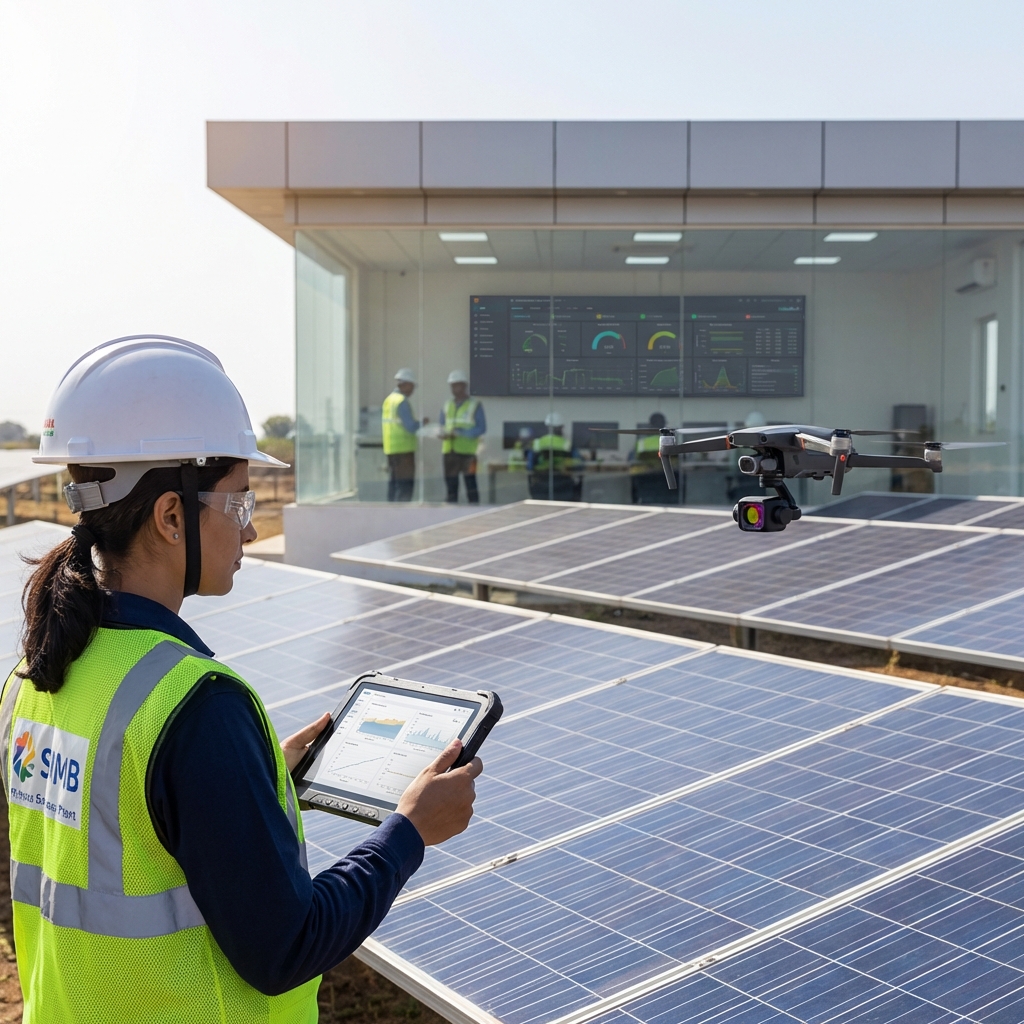
The long-term value of a solar panel government scheme investment depends heavily on disciplined Operations and Maintenance practices. Key measures include scheduled preventive maintenance, module cleaning based on dust accumulation patterns, thermal scanning for hotspot detection, deployment of real-time digital monitoring dashboards, and annual performance audits. Benchmarking the Performance Ratio (PR) annually is essential, as even a 2–3% generation drop can materially impact long-term IRR. A structured O&M strategy ensures that government incentives under the solar panel government scheme translate into sustained financial savings.

8. Future-Proofing the Investment

Industrial energy demand is evolving rapidly, requiring flexible and scalable infrastructure. A forward-looking solar panel government scheme project should consider integration of Battery Energy Storage Systems (BESS), EV charging infrastructure, additional rooftop expansion capacity, smart energy management systems, and carbon credit or sustainability reporting mechanisms. Embedding flexibility into project design ensures that the solar panel government scheme investment remains relevant and financially viable for decades.

9. Risk Assessment & Performance Monitoring

Professional execution requires comprehensive risk planning. This includes asset and business interruption insurance coverage, generation guarantee clauses, sensitivity analysis within financial modeling, and scenario planning for tariff changes. Deploying robust digital monitoring tools enhances transparency, enabling management to track real-time generation, savings, and ROI performance. Continuous performance oversight ensures that the solar panel government scheme delivers expected returns while minimizing exposure to operational and regulatory uncertainties.

Challenges & How to Overcome Them

Solar adoption under the solar panel government scheme framework has accelerated across India, particularly across commercial and industrial sectors. Strong policy backing, improved regulatory clarity, and attractive financial returns have made large-scale solar investments increasingly viable. However, despite these advantages, implementing a project under the solar panel government scheme can involve operational, financial, regulatory, and technical complexities.

The key to maximizing the benefits of a solar panel government scheme project lies in identifying risks early and embedding structured mitigation strategies into the execution roadmap. Below is a detailed and combined overview of major challenges and practical solutions.

1. Regulatory Complexity & State-Level Variations

The implementation of the solar panel government scheme in India varies significantly from state to state. Differences in net metering limits, open access charges, banking provisions, grid connectivity approvals, and documentation requirements can directly impact project feasibility and projected IRR. To strengthen outcomes under the solar panel government scheme, industries must conduct state-specific regulatory due diligence before financial closure, closely track updates issued by State Electricity Regulatory Commissions, collaborate with experienced EPC and policy advisors, and secure all required approvals before initiating procurement. Proactive regulatory alignment ensures smoother implementation and protects expected Internal Rate of Return (IRR).

2. Approval Delays & DISCOM Bottlenecks

Industrial solar projects often face delays due to slow net metering approvals, backlog in feasibility clearances, transformer capacity constraints, and synchronization approval timelines. Such bottlenecks can delay commissioning and revenue realization under a solar panel government scheme structure. To mitigate these challenges, companies should initiate grid feasibility applications early during the planning stage, conduct internal transformer and load assessments, maintain complete documentation to prevent rejection, and establish a dedicated liaison team to coordinate with DISCOM authorities. Early and structured engagement with utilities significantly reduces project execution timelines within the solar panel government scheme framework.

3. High Upfront Capital Requirement

Large industrial systems under the solar panel government scheme require significant upfront capital investment, which may create liquidity concerns for management teams. To address this, businesses should compare CAPEX and OPEX structures such as RESCO and group captive models. Leveraging accelerated depreciation benefits under the Income Tax Act 1961 can improve first-year cash flows. Additionally, green financing, sustainability-linked loans, and structured debt solutions can optimize funding. Preparing detailed IRR and payback models for stakeholders helps demonstrate how a solar panel government scheme investment can become a high-performing long-term asset.

4. Policy Uncertainty & Changing Tariff Structures

Changes in net metering regulations, banking provisions, open access charges, or policy amendments may influence financial projections linked to the solar panel government scheme. To minimize risk, industries should prioritize higher self-consumption ratios to reduce export dependency, include change-in-law clauses within Power Purchase Agreements (PPAs), conduct sensitivity analysis within financial models, and diversify structuring approaches to avoid reliance on a single regulatory mechanism. Conservative financial planning enhances resilience against policy shifts affecting the solar panel government scheme.

5. Grid Infrastructure & Curtailment Risks

In certain industrial zones, insufficient grid infrastructure may lead to energy curtailment, synchronization delays, or limited net metering credits, impacting performance under the solar panel government scheme. Mitigation measures include conducting grid capacity assessments before finalizing system sizing, optimizing on-site energy consumption, exploring hybrid systems or battery integration to reduce export reliance, and coordinating early with DISCOM engineers. Maximizing internal consumption helps safeguard returns within the solar panel government scheme model.

6. Technical & Performance Risks

Poor component selection or improper installation can lead to lower generation output, reduced Performance Ratio (PR), increased maintenance costs, and diminished IRR under the solar panel government scheme. To avoid such risks, industries should use ALMM-compliant, high-efficiency modules, deploy advanced inverters with intelligent monitoring capabilities, perform detailed shadow and yield simulations, enforce strict quality control during EPC execution, and implement preventive maintenance along with periodic performance audits. Strong engineering practices are essential to fully capitalize on the financial benefits offered by the solar panel government scheme.

7. Structural & Space Constraints

Many industrial facilities face constraints such as limited rooftop area, aging roof structures, load-bearing capacity issues, or complex layouts that restrict system design under the solar panel government scheme. Solutions include conducting structural audits before design finalization, utilizing lightweight mounting systems, exploring elevated solar carports or ground-mounted alternatives, and distributing installations across multiple facility buildings. Flexible design approaches enhance feasibility, safety, and scalability.

8. Supply Chain & Cost Fluctuations

Global module pricing volatility, customs duties, and logistics disruptions can affect budgeting and financial assumptions under the solar panel government scheme. To manage these risks, companies should secure pricing through early procurement contracts, diversify supplier networks, maintain buffer timelines in project schedules, and incorporate price variation clauses within EPC agreements. Structured procurement planning enhances financial predictability within the solar panel government scheme ecosystem.

9. O&M & Long-Term Performance Degradation

Over a 20–25 year lifecycle, factors such as dust accumulation, hotspots, loose connections, and equipment wear can reduce energy generation, affecting long-term projections under the solar panel government scheme. To ensure sustained performance, industries should implement quarterly preventive maintenance programs, deploy real-time monitoring platforms, conduct annual thermal scanning and performance audits, and benchmark actual generation against projected models. Disciplined operations and maintenance are critical to preserving long-term financial returns under the solar panel government scheme.

The Road Ahead for Industrial Solar in India

As India approaches 2026, industrial solar is transitioning from a sustainability-driven initiative to a core strategic and financial decision, strongly supported by the solar panel government scheme. Rising grid tariffs, increasing ESG compliance requirements, and the need for long-term cost predictability are encouraging manufacturing units to accelerate renewable adoption. Backed by progressive policies from the Ministry of New and Renewable Energy, the solar panel government scheme is streamlining approvals, strengthening regulatory clarity, and enhancing overall project bankability. As a result, many industrial projects are now achieving attractive returns in the range of 18–22% IRR.

A growing number of industries, including textiles, automotive, and heavy manufacturing, are shifting from being pure power consumers to becoming partial energy producers through rooftop, captive, and hybrid solar models. The solar panel government scheme improves feasibility and financial confidence, enabling companies to lock in stable electricity costs for 20–25 years. At the same time, India’s clean energy ambitions under the National Green Hydrogen Mission are expected to further accelerate solar integration within energy-intensive sectors.

The adoption of energy storage systems will enhance peak demand management and improve grid reliability, while digital monitoring and smart energy management technologies will enable manufacturers to track generation performance and carbon metrics in real time. Strengthened domestic solar manufacturing, supported by policy incentives, is also contributing to greater supply chain stability and cost predictability. Overall, the future of industrial solar in India is defined by policy clarity, financial innovation, and technological advancement, positioning solar as a strategic asset for manufacturers seeking sustained cost advantages and stronger ESG alignment.

Conclusion

As India advances toward 2026, industrial solar is no longer a future consideration—it is a present-day business imperative. Supported by evolving policies, financial incentives, and regulatory clarity, the solar panel government scheme has transformed solar adoption into a high-impact strategic investment for industries. From delivering stable, long-term power costs and attractive IRRs to strengthening ESG performance and global competitiveness, industrial solar now sits at the intersection of profitability, resilience, and sustainability. Manufacturers that proactively align their energy strategy with the solar panel government scheme will not only safeguard themselves against rising tariffs but also position their operations for long-term growth in an increasingly carbon-conscious global market.

Now is the time to act. Evaluate your facility’s energy profile, assess the benefits available under the solar panel government scheme, and transition from grid dependency to energy ownership. Partner with an experienced solar EPC provider to design a future-ready solution that maximizes savings, ensures compliance, and delivers measurable returns. The shift to solar today is the competitive advantage your business will rely on tomorrow.