
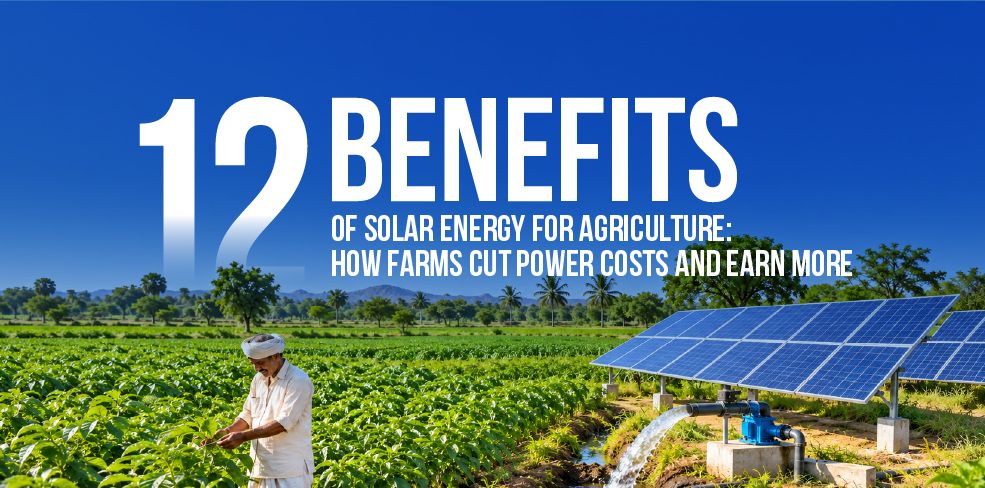
If you run diesel pumps or pay a heavy farm power bill, you already know how much energy costs. The benefits of solar energy for agriculture begin with a simple fact: sunlight is free, and a solar system turns it into pumping power, cooling and income.
This guide covers 12 benefits in plain language, with a worked savings example. Solar energy in agriculture works for pump owners, dairy and poultry farms, cold storage and food processors.
What Is Solar Energy for Agriculture?
Solar energy for agriculture means using sunlight to power farm work. Panels make electricity that runs pumps, cold rooms, dryers, fans and farm buildings. You can run it off the grid, with the grid, or with batteries.
-
Panels work in daylight, which is when pumps work hardest.
-
Batteries or the grid cover nights and cloudy days.
-
Common uses: pumps, cold storage, dryers, poultry fans.
-
Systems scale from one pump to a whole farm.
The 12 Benefits of Solar Energy for Agriculture at a Glance
-
Lower diesel and electricity bills
-
Reliable power in remote areas
-
Smarter irrigation and water savings
-
Cleaner farming and a smaller carbon footprint
-
No more diesel hassle
-
Less crop waste after harvest
-
Cooling for livestock, poultry and greenhouses
-
Higher productivity with less manual work
-
Strong long-term return on investment
-
Subsidies and easy financing
-
Local jobs and rural growth
-
Extra income from land and surplus power
1. Lower Diesel and Electricity Bills:
Fuel and power are among the biggest running costs on a farm. Solar replaces most of that spend with free sunlight. After the system pays for itself, each unit of power costs almost nothing. That money can go into seed, equipment or more land.
-
Removes monthly diesel purchases for pumps.
-
Cuts grid electricity charges.
-
Shields you from fuel and tariff hikes.
-
Frees cash for farm growth.
A Worked Example: What a 5 HP Pump Could Save
The numbers below are an illustration, not a quote. Your savings depend on your pump, hours and local prices.
| Item | Diesel Pump (Assumed) | Solar Pump (Assumed) |
|---|---|---|
| Pump size | 5 HP | 5 HP |
| Running time | 6 hrs/day, 250 days/year | Same |
| Fuel use | About 1.2 litres/hour | None |
| Yearly fuel cost at ₹90/litre | About ₹1,62,000 | ₹0 |
| Yearly repairs | About ₹15,000 | About ₹3,000–₹5,000 |
| System cost before subsidy | N/A | About ₹2,20,000–₹2,60,000* |
At these assumed numbers, the diesel pump costs about ₹1.77 lakh a year to run. A solar system of about ₹2.5 lakh could pay back in about 1.5 years, before any subsidy. Subsidies would shorten that further.
2. Reliable Power in Remote Areas:
Many farms sit far from a strong grid, where outages are common and new power lines are costly. Solar on your own land gives you power whenever the sun shines. Your pump or cold room stops being at the mercy of the village feeder.
-
Works where grid power is weak or missing.
-
Avoids the cost of long line extensions.
-
Pairs with batteries for evening use.
-
Keeps irrigation on schedule during outages.
3. Smarter Irrigation and Water Savings:
Water is the most valuable input in farming, and solar-powered irrigation helps you use it better. Pumps run in full sun, when crops need water most. With timers and sensors, you water only when needed.
-
Daytime pumping at no fuel cost.
-
Timers and sensors reduce over-watering.
-
Works with drip and sprinkler systems.
-
Steady watering supports healthier crops.
4. Cleaner Farming and a Smaller Carbon Footprint:
Diesel pumps release smoke and greenhouse gases. Solar panels produce no emissions while they generate power. Switching shows buyers, exporters and neighbors that your farm protects the land.
-
Zero emissions while generating power.
-
No diesel spills near crops or water.
-
Supports sustainability goals of food buyers.
-
Helps you prepare for tighter standards.
5. No More Diesel Hassle:
Diesel means trips to the pump, storage, theft risk and engine repairs. Solar removes all of that. Your pump starts with the sun instead of a fuel run, which saves money and a lot of effort during busy weeks.
-
No fuel trips or storage tanks.
-
Fewer engine repairs and oil changes.
-
Quieter operation than a diesel set.
-
Easier yearly budgeting.
6. Less Crop Waste After Harvest:
Produce spoils fast without cooling or drying. Solar-powered cold rooms keep fruit, vegetables and dairy fresh longer. Solar dryers preserve grains and spices. Better storage lets you wait for a fair price instead of selling in a hurry.
-
Cold storage extends shelf life.
-
Dryers protect grains, fruit and spices.
-
Better quality earns better prices.
-
Lower spoilage raises profit per harvest.
7. Cooling for Livestock, Poultry and Greenhouses:
Heat stress lowers milk output, egg production and plant growth. Solar can run fans, coolers and ventilation through the hottest hours, when the sun is strongest. Animals stay comfortable and plants grow in steadier conditions.
-
Powers fans and coolers at peak heat.
-
Keeps barns and poultry sheds comfortable.
-
Holds greenhouse temperatures steady.
-
Supports animal health and steady output.
8. Higher Productivity with Less Manual Work:
Solar equipment can run on timers and automatic controls. You spend less time starting engines and hauling fuel, and more time on work that earns money. Solar can also run feed mills, grain cleaners and small processing units.
-
Automatic pumps save daily labor.
-
Power for feed mills and processors.
-
More hours for planning and sales.
-
Steady output on busy days.
9. Strong Long-Term Return on Investment:
A solar system costs money up front but keeps working for decades with little upkeep. Panels commonly last 25 years or more. After payback, power is nearly free, while a diesel pump keeps costing fuel and repairs every year.
-
Low maintenance, mostly panel cleaning.
-
Long panel life, often 25 years or more.
-
Payback often within a few years.
-
Savings continue after payback.
To see how projects are planned and costed, read our guide to solar power plant design.
10. Subsidies and Easy Financing:
Governments support farm solar to cut diesel use and farm energy costs. In India, schemes such as PM-KUSUM help farmers with solar pumps and farm solar plants. Banks and companies also offer loans and flexible payment models, so you do not need all the money at once.
-
Subsidies can lower your upfront cost.
-
Bank loans spread the cost over time.
-
Service-based models reduce starting cost.
-
Soleos can guide you on eligibility.
Rules and amounts vary by state, so confirm current scheme details before applying. Our solar PPA guide explains the pay-as-you-use option.
11. Local Jobs and Rural Growth:
Solar projects need installers, electricians, technicians and cleaners, and many of those jobs are local. Steady power and nearby work give families a reason to stay close to home. Villages gain income and farms gain skilled help nearby.
-
Creates installation and maintenance jobs.
-
Builds technical skills in villages.
-
Reduces the pull toward city migration.
-
Strengthens the local economy.
12. Extra Income from Land and Surplus Power:
Solar can also earn money. A grid-connected system can send surplus power to the grid, where rules allow. With agrivoltaics, panels sit above crops so one field produces both food and electricity. Ask Soleos whether your land suits it.
-
Earn from surplus power where policy allows.
-
Agrivoltaics lets one field do two jobs.
-
Panel shade can help some crops in harsh heat.
-
Extra income adds stability when prices fall.
How to Go Solar in 4 Simple Steps
Going solar on a farm is simpler than most owners expect. Soleos handles each stage so you can keep farming.
-
Share your needs: pump size, running hours and current bill.
-
Get a custom design: we size the system and estimate savings.
-
Installation: our team installs and tests the system.
-
Ongoing support: we monitor performance and help with maintenance backed by a 5-year comprehensive system warranty, 10-year inverter warranty, and 25-year solar module performance guarantee.
Why Farms Choose Soleos
Soleos Energy is an integrated renewable energy company based in Gujarat. We handle solar design, installation, financing support and long-term maintenance.
-
114+ MW of solar installed across 122+ projects.
-
25+ agricultural and agri-processing projects completed.
-
25-year performance warranty and end-to-end operation & maintenance support.
Conclusion
The benefits of solar energy for agriculture are practical and measurable: lower bills, dependable power, smarter irrigation, less spoilage and extra income. Farms that switch also protect themselves from fuel price swings.
Soleos designs, installs and maintains solar systems built around your farm. Start with a free check and see your payback in numbers.
FAQs:
1. What are the main benefits of solar energy for agriculture?
The main benefits are lower diesel and power costs, reliable electricity, better water use, less crop waste and long-term savings. Solar also reduces emissions and can add income from surplus power.
2. How much does a solar system for a farm cost?
Cost depends on system size, from a single pump to a full farm plant. Subsidies and loans can lower what you pay upfront. A site assessment gives you an exact quote.
3. Can solar power run a farm at night?
Panels make power only in daylight. Batteries store extra energy for the night, or the grid fills the gap. Many farms run pumps and cooling by day and need little night power.
4. How long do agricultural solar panels last?
Quality panels usually work for 25 years or more with regular cleaning. Output declines slowly, so the system keeps producing useful power for decades.
5. Is solar worth it for small farms?
Often, yes. A solar pump can remove the diesel bill, and subsidies and loans make starting easier. Compared with years of fuel and repairs, the savings add up fast.