
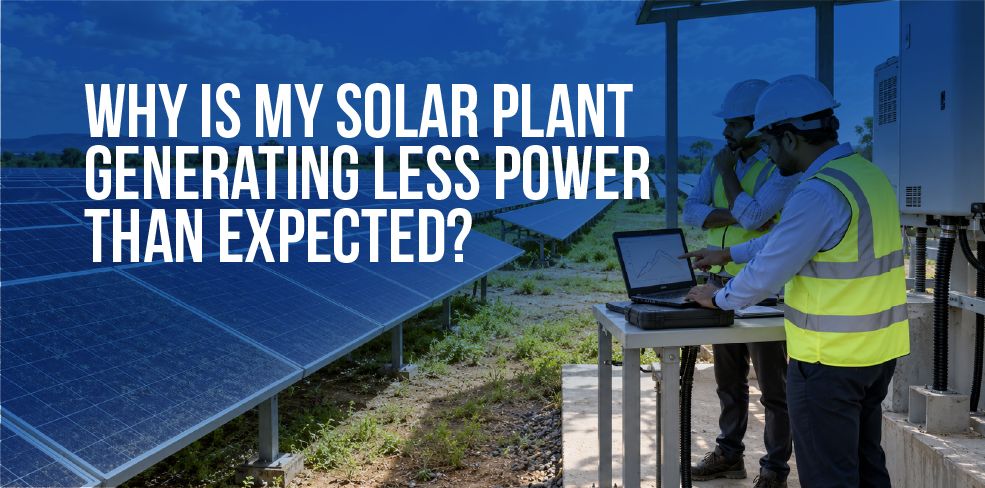
Your solar plant is running. The sun is shining. Yet the generation numbers are lower than promised, and nobody can clearly explain why.
If your solar plant is generating less power than expected, you are not alone. Solar plants rarely stop suddenly. They lose performance slowly, through small problems that stay hidden for weeks or months. By the time anyone notices, the plant may have been underperforming for a long time.
5 Common Reasons Your Solar Plant Loses Power
-
Dirty panels: Dust, dirt, and bird droppings block sunlight, so less reaches the panels.
-
Loose connections: Small electrical faults quietly waste power before it leaves the plant.
-
Weak inverter: The inverter turns solar power into electricity you can use. If it underperforms, your output drops.
-
New shade: A growing tree or a new building nearby can cast shadows on your panels.
-
No regular checks: Without monitoring, none of these problems are seen.
Left unchecked, these issues can leave your plant producing 10-30% less power than expected.
Why These Problems Stay Hidden
Solar plants have no moving parts, no noise, and no warning lights. From the outside, everything looks fine: the panels are shining, and the inverter is humming.
Most owners only see one number, the monthly total, and by then a full month has passed. Without a daily comparison, it’s hard to tell a cloudy week from a real fault.
How to Stop the Loss
The fix is simple: see the problem early and act fast.
-
Daily monitoring shows how much power your plant makes and compares it with what it should make in that day’s weather and sunlight.
-
Instant alerts tell you the moment output drops, so the problem is fixed early.
-
Performance tracking checks two things: how much of the possible power your plant actually delivers (the performance ratio), and how many hours it was up and running (availability).
-
Scheduled upkeep keeps panels clean and equipment serviced, so the plant stays close to its original capacity.
You don’t need to be a technical expert. You only need clear numbers and quick action.
A Simple Check-Up Routine
-
Daily: Compare today’s generation with what was expected.
-
Weekly: Look for alerts, visible dirt, and new shade.
-
Monthly: Compare this month with the same month last year, and check inverter status.
-
Every 3 months: Have a professional inspect connections and equipment.
3 Questions to Test Your Plant Today
Ask whoever looks after your plant:
-
Can you show me yesterday’s generation against what it should have been?
-
How quickly will I be told when output drops?
-
When were the panels last cleaned and the connections last checked?
If nobody can answer within a minute, your plant is running blind.
How Soleos Keeps Your Plant Performing
Our solar asset management services track your plant’s performance, flag drops early, and handle cleaning and servicing, so you always know what your plant is producing and why.
Takeaway:
Most solar plants lose power slowly and silently. The owners who keep their plants performing are the ones who monitor daily and act quickly, instead of waiting for the monthly numbers to show the problem.