
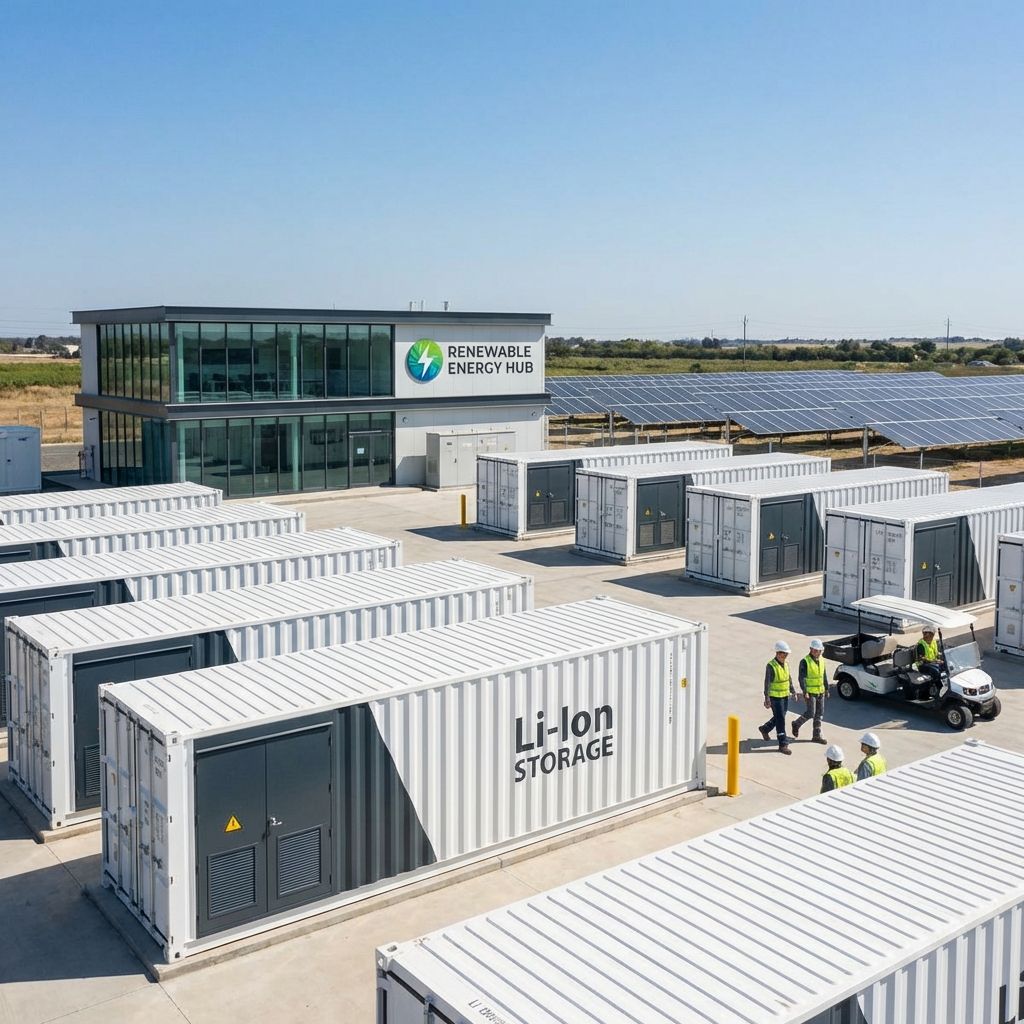
In the global transition toward clean and reliable energy, solar power has emerged as one of the most practical and scalable solutions for commercial and industrial (C&I) applications. While solar panels often steal the spotlight, there is another component that quietly determines how efficiently your entire system performs—the solar inverter.
Often referred to as the brain of a solar power plant, the solar inverter plays a critical role in converting, optimizing, monitoring, and managing the energy generated by your solar panels. For decision-makers in large manufacturing units, understanding solar inverters is not just a technical necessity—it’s a strategic advantage that directly impacts energy savings, operational continuity, and return on investment.
- What Is a Solar Inverter?
- How Does a Solar Inverter Work?
- Why Solar Inverters Are Critical for Industrial & Commercial Solar Projects
- Types of Solar Inverters
- String Inverters
- Central Inverters
- Microinverters
- Hybrid Inverters
- Key Components Inside a Solar Inverter
- Advanced Inverter Technologies Shaping the Future
- Smart Inverters with Advanced Grid-Support Functions
- Grid-Forming & Grid-Following Hybrid Capabilities
- Artificial Intelligence (AI) & Machine Learning Integration
- Multi-MPPT & Advanced Energy Harvesting Algorithms
- Wide-Bandgap Semiconductor Technology (SiC & GaN)
- Hybrid Inverters with Integrated Energy Storage
- IoT-Enabled & Cloud-Connected Inverters
- Digital Twin Technology
- Advanced Thermal Management & Cooling Systems
- Modular & Scalable Inverter Architectures
- Cybersecurity & Secure Communication Protocols
- Compliance with Future Grid Codes & Market Regulations
- The Future of Solar Inverters
- Conclusion
In this in-depth guide, we break down everything you need to know about solar inverters: how they work, their types, selection criteria, technological advancements, and why choosing the right inverter partner is essential for long-term performance.
A solar inverter is essential in a solar power system, functioning to convert the direct current (DC) electricity generated by solar panels into alternating current (AC) electricity, which is necessary for industrial equipment, commercial facilities, and utility grids.
In contemporary solar installations, particularly in commercial and industrial applications, the inverter's role extends beyond mere power conversion. It ensures the DC electricity produced by solar panels, when sunlight activates their photovoltaic cells, is transformed into AC power that is compatible with almost all modern appliances and power grids, thereby making the generated energy usable.
Why a Solar Inverter Matters
Modern solar inverters act as the intelligence center of a solar power plant. They are responsible for:
- Maximizing energy output through Maximum Power Point Tracking (MPPT)
- Ensuring grid compatibility by matching voltage and frequency requirements
- Monitoring system performance in real time
- Protecting equipment and personnel through built-in safety mechanisms
- Enabling smart energy management, including future battery integration
The working principle of a solar inverter can be explained in five key stages:
1. DC Power Generation
When sunlight strikes solar panels, they convert the sunlight into direct current (DC) electricity via the photovoltaic effect. This generated DC power is transported from the solar panels to a solar inverter.
However, most industrial machines and commercial electrical systems are designed to operate on alternating current (AC), which means that the DC electricity produced by the panels must be converted to AC to be usable.
2. DC to AC Conversion
Inside an inverter, advanced power electronics like MOSFETs or IGBTs perform rapid switching of direct current (DC), generating an alternating current (AC) by creating a dynamic electrical pattern.
These components are usually configured in an H-bridge layout, which enables the inverter to reverse the DC direction and produce a pulsating AC waveform. To refine this waveform into a clean sine wave that conforms to the standards required for machinery and power grids, pulse width modulation (PWM) techniques are employed.
3. Maximum Power Point Tracking (MPPT) Maximizes Output
Solar panels' output fluctuates due to sunlight, temperature, and shading. Inverters use Maximum Power Point Tracking (MPPT) algorithms to extract maximum energy from panels.
MPPT continuously measures voltage and current, adjusts operating conditions, and extracts maximum power from panels, boosting efficiency and increasing total energy yield over the system's lifetime.
4. Grid Synchronization
In grid-connected systems, an inverter must match the grid's voltage, frequency, and phase before feeding power back into utility lines.
In grid-tied systems, the inverter must synchronize its output with the grid, ensuring safe and seamless operation of solar power.
5. Monitoring, Safety, and Smart Control
Modern solar inverters act as intelligent control systems that monitor performance, detect faults, and trigger shutdowns to ensure safety.
They protect against overvoltage, short circuits, and grid failures, while enabling remote monitoring and predictive maintenance.
-
Convert Solar Energy into Usable Electricity
Solar panels generate electricity in the form of direct current (DC), whereas industrial machinery, commercial facilities, and utility grids operate on alternating current (AC). Solar inverters perform the essential function of converting DC into AC. -
Maximize Energy Output Through Advanced Optimization
Solar inverters use MPPT technology to continuously optimize power output and maximize energy generation. -
Ensure Power Quality and Operational Stability
High-quality solar inverters regulate voltage and frequency, delivering clean, stable power that prevents fluctuations and minimizes electrical disturbances. -
Enable Safe and Seamless Grid Integration
Solar inverters synchronize solar-generated electricity with the grid by matching voltage, frequency, and phase. -
Protect Equipment, Infrastructure, and Personnel
Solar inverters include overvoltage protection, short-circuit protection, anti-islanding, surge protection, and automatic shutdown mechanisms. -
Enable Real-Time Monitoring and Performance Visibility
Modern solar inverters provide real-time data on energy generation, system health, and performance. -
Reduce Downtime and Maintenance Costs
Advanced diagnostics and predictive maintenance capabilities help identify issues before failures occur. -
Improve Financial Performance and ROI
Higher inverter efficiency and reduced downtime contribute to faster payback periods and better long-term returns. -
Support System Scalability and Future Expansion
Modular inverter architectures allow solar systems to scale easily as energy demand grows. -
Enable Energy Storage and Hybrid Power Solutions
Hybrid and battery-ready solar inverters facilitate seamless integration of energy storage systems.
Engineer solar photovoltaic panels station checks with tablet computer.
Different solar applications require different inverter technologies.
1. String Inverters
String inverters connect a series of solar panels, or a "string," to a single inverter.
Advantages
- Cost-effective
- Simple design and installation
- Proven reliability
Limitations
- Performance of the entire string is affected if one panel underperforms
- Limited flexibility in complex designs
Best For
Medium-scale commercial rooftops with minimal shading and uniform panel orientation.
2. Central Inverters
Central inverters aggregate electricity from multiple strings into a single high-capacity inverter.
Advantages
- High power capacity
- Lower cost per watt
- Centralized maintenance
Limitations
- Single point of failure
- Less granular monitoring
Best For
Large industrial plants, solar parks, and utility-scale projects.
3. Microinverters
Microinverters are installed on each individual solar panel, allowing independent power conversion.
Advantages
- Panel-level optimization
- Better performance under shading
- Detailed monitoring
Limitations
- Higher upfront cost
- More components to manage
Best For
Complex rooftops and installations with varying panel orientations.
4. Hybrid Inverters
Hybrid inverters combine solar generation and battery storage functionality within a single system.
Advantages
- Energy storage integration
- Backup power capability
- Peak shaving and load shifting
Best For
Industrial and commercial facilities seeking energy resilience and future battery integration.
A solar inverter is a carefully engineered system of power electronics, intelligent controls, and safety mechanisms.
Key Components
- DC Input Section & Protection Devices
- MPPT Controller
- DC-DC Converter Stage
- DC Link / DC Bus Capacitors
- Power Semiconductor Devices (IGBTs / MOSFETs)
- Inverter Bridge (DC to AC Conversion Stage)
- Output Filters (Inductors & Capacitors)
- Control Unit (Microcontroller / DSP)
- Grid Synchronization & Anti-Islanding Circuitry
- Cooling System (Thermal Management)
- Monitoring, Communication & Data Interfaces
- Protection & Safety Systems
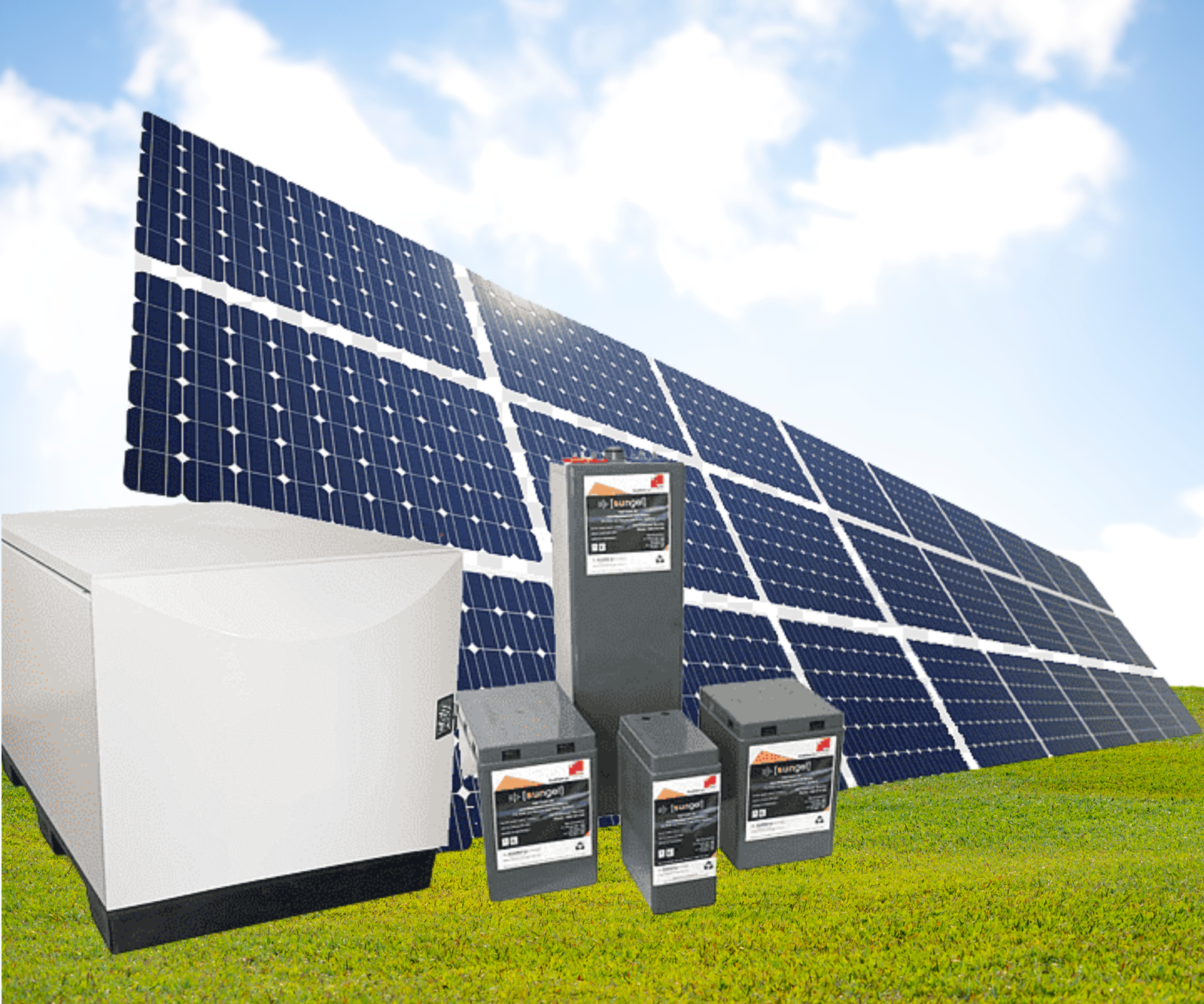
1. Smart Inverters with Advanced Grid-Support Functions
- Active voltage and frequency regulation
- Reactive power control
- Fault ride-through capabilities
- Grid-forming functionality
2. Grid-Forming & Grid-Following Hybrid Capabilities
- Grid-following mode
- Grid-forming mode
- Black-start capability
- Enhanced energy resilience
3. Artificial Intelligence (AI) & Machine Learning Integration
- Predictive maintenance
- Real-time optimization
- Advanced fault diagnostics
- Reduced O&M costs
4. Multi-MPPT & Advanced Energy Harvesting Algorithms
- Multiple MPPT channels
- Dynamic shading response
- Higher energy yield
- Improved DC-to-AC oversizing capability
5. Wide-Bandgap Semiconductor Technology (SiC & GaN)
- Lower switching losses
- Faster switching speeds
- Higher efficiency
- Increased power density
6. Hybrid Inverters with Integrated Energy Storage
- Battery integration
- Peak shaving
- Load shifting
- Backup power
7. IoT-Enabled & Cloud-Connected Inverters
- Real-time monitoring
- Remote diagnostics
- Firmware updates
- Portfolio-level visibility
8. Digital Twin Technology
- Real-time digital replicas
- Predictive planning
- Optimization opportunities
- Improved reliability
9. Advanced Thermal Management & Cooling Systems
- Liquid cooling
- Intelligent airflow management
- Higher power density
- Improved inverter lifespan
10. Modular & Scalable Inverter Architectures
- Easy capacity expansion
- Simplified maintenance
- Built-in redundancy
- Future-ready scalability
11. Cybersecurity & Secure Communication Protocols
- Encrypted communication
- Access control
- Compliance with cybersecurity standards
- Infrastructure protection
12. Compliance with Future Grid Codes & Market Regulations
- Adaptive firmware
- Dynamic grid response
- Global interconnection compliance
- Long-term regulatory readiness
The future of solar inverters is shifting from basic power-conversion devices to intelligent, grid-interactive energy management systems.
Key developments include:
- Grid-forming capabilities
- AI-powered optimization
- Integrated energy storage
- Cloud connectivity
- Real-time analytics
- Enhanced cybersecurity
- Compliance with evolving grid standards
These advancements will make solar power more reliable, flexible, and efficient for industrial and commercial users.
The future of solar inverters is reshaping the way solar power is generated, managed, and delivered. As inverters evolve into intelligent, grid-interactive, and digitally connected systems, they are becoming the backbone of high-performance solar installations.
With capabilities such as AI-driven optimization, seamless energy storage integration, grid-forming functionality, and advanced monitoring, modern solar inverters will play a decisive role in maximizing energy efficiency, ensuring grid stability, and delivering long-term reliability.
For industrial and commercial users, investing in future-ready inverter technology is no longer just a technical choice—it is a strategic move toward operational resilience, cost optimization, and sustainable growth.
Ready to future-proof your solar investment?
Partner with an experienced solar EPC that understands advanced inverter technologies and designs systems built for performance, scalability, and long-term value. Explore smarter solar solutions today and let next-generation solar inverters power your business toward a cleaner, more resilient energy future.