
6000+
Cycle Life
<100ms
Response Time
85-90%
Round-trip Efficiency
15-20
Year Life
The Technology
What is Stand-alone BESS?
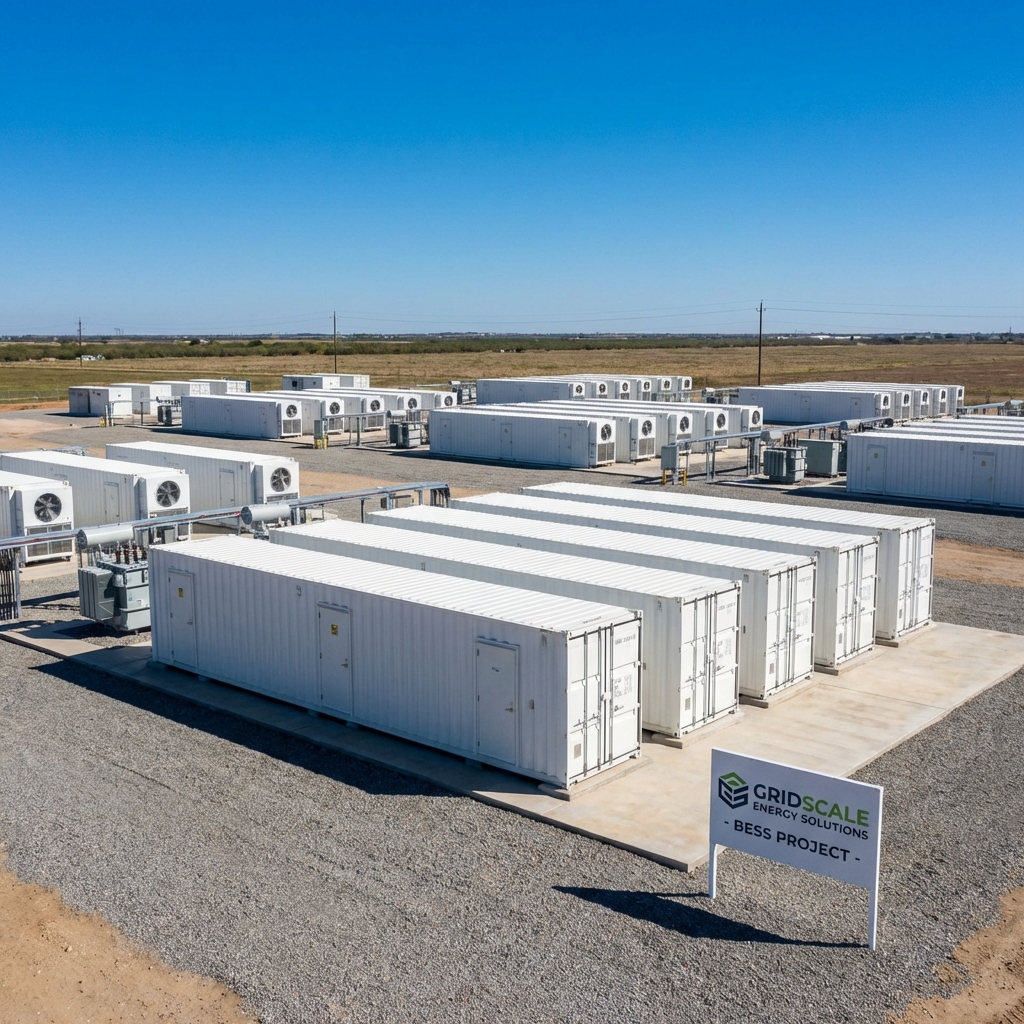
A Battery Energy Storage System (BESS) stores electrical energy in lithium-ion batteries for later use. Stand-alone BESS operates independently from solar, connected directly to the grid or behind the meter at your facility.
How BESS Works
Charge
During off-peak hours when electricity is cheap, or when grid power is available
Store
Energy held in lithium-ion battery modules with minimal losses
Discharge
During peak hours, outages, or when demand charges are highest
Value Proposition
Why Stand-alone BESS?
Peak Shaving
Reduce maximum demand charges by discharging during peak hours. Save 15-30% on electricity bills.
Energy Arbitrage
Charge during low-tariff hours, discharge during peak. Profit from time-of-use rate differentials.
Power Backup
Instant switchover during grid failures. Critical load protection without diesel generators.
Power Quality
Voltage stabilization, frequency regulation, and reactive power support for sensitive equipment.
Load Shifting
Move energy consumption from peak to off-peak periods. Optimize your load curve.
Grid Services
Participate in ancillary services market. Frequency regulation and spinning reserves.
Applications
Ideal Use Cases
Industrial Manufacturing
Challenges
- • High demand charges
- • Power quality issues
- • Production losses during outages
BESS Solution
Peak shaving + backup power with instant switchover
Commercial Buildings
Challenges
- • High electricity bills
- • Elevator/HVAC backup needs
- • Green building compliance
BESS Solution
Load shifting + emergency backup for critical systems
Data Centers
Challenges
- • Zero downtime requirement
- • UPS replacement
- • Cooling load management
BESS Solution
Instant backup (replaces UPS) + peak shaving
Telecom Towers
Challenges
- • Remote locations
- • Diesel dependency
- • 24/7 uptime
BESS Solution
Replace DG with BESS for cleaner, quieter backup
System Design
BESS Components
Battery Modules
Lithium-ion cells (LFP/NMC) in modular rack configuration
Battery Management System
Cell-level monitoring, balancing, and protection
Power Conversion System
Bidirectional inverters for AC-DC conversion
Thermal Management
HVAC or liquid cooling for optimal battery temperature
Energy Management System
Software for dispatch optimization and monitoring
Containerized Housing
Pre-engineered enclosure with all systems integrated
BESS Sizing Guide
| Application | Sizing Approach | Example |
|---|---|---|
| Peak Shaving | 1-2 hours of peak demand | 2 MW peak → 2-4 MWh BESS |
| Backup Power | Critical load × backup hours | 500 kW × 4 hrs = 2 MWh |
| Energy Arbitrage | Based on price differential window | 4-hour discharge = 4C rate |
| Power Quality | Short duration, high power | Seconds to minutes |
Technical Specifications
| Battery Chemistry | LFP (Lithium Iron Phosphate) |
| Cycle Life | 6,000+ cycles @ 80% DoD |
| Round-trip Efficiency | 85-90% |
| Response Time | <100 milliseconds |
| Operating Temperature | -10°C to 50°C |
| Design Life | 15-20 years |
| Scalability | Modular (add containers as needed) |
| Grid Connection | LT/HT as per capacity |
Delivery
Project Process
Load Analysis
Review load profile, demand patterns, tariff structure
Sizing & Design
Optimal capacity, power rating, and use case modeling
Financial Model
ROI analysis, savings projection, payback calculation
Procurement
Battery, PCS, BMS, and container procurement
Installation
Civil, electrical, commissioning, and grid sync
O&M
Remote monitoring, preventive maintenance, warranty