
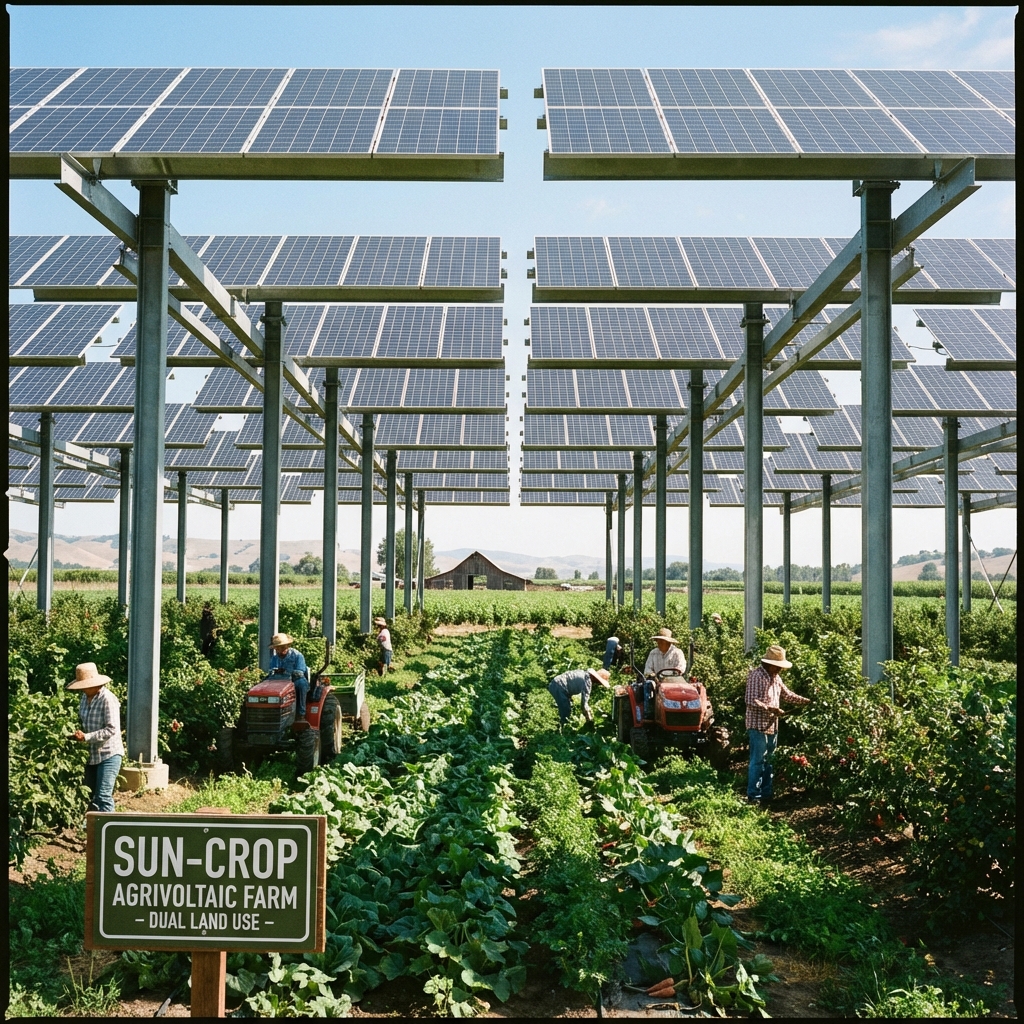
Dual Land Use
Crops + Solar Power
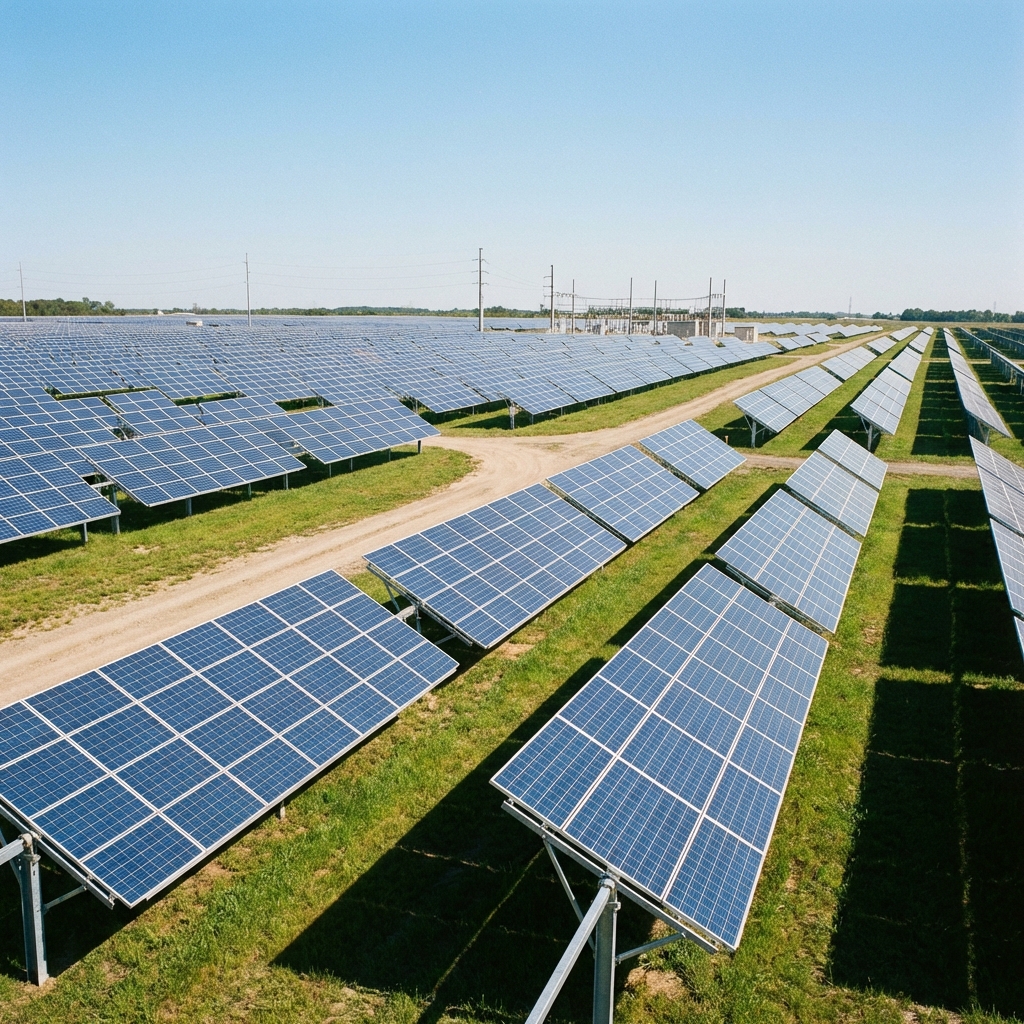
Scale Installation
Agricultural Solar Park
The Concept
One Land, Two Harvests
Agricultural Harvest
Grow shade-tolerant crops with improved microclimate conditions, reduced water needs, and protection from extreme weather.
Energy Harvest
Generate clean solar electricity for self-consumption or export to grid, creating additional revenue stream.
Combined Revenue
Achieve 160%+ land equivalent ratio by generating income from both farming and solar on the same land.
Land Equivalent Ratio (LER)
Solar Only
1.0
Farm Only
1.0
Agrivoltaic
1.6+
Research-Backed
Scientific Evidence & Data
Global research demonstrates significant benefits of agrivoltaic systems across various crops and climates.
14-29%
Irrigation Water Savings
Fraunhofer ISE Study
65-90%
Solar Yield Retained
Elevated Systems
+328%
Farmer Income Increase
vs Traditional Farming
14 GW
Global Installed Capacity
As of 2023
Crop Performance Under Agrivoltaic Systems
| Crop Category | Yield Impact | Water Savings | Notes |
|---|---|---|---|
| Leafy Vegetables | +10 to +40% | 20-30% | Lettuce, spinach benefit from shade |
| Berries | +5 to +20% | 15-25% | Protection from sunburn |
| Herbs | +15 to +30% | 25-35% | Higher essential oil content |
| Grapes (Wine) | -5 to +10% | 20-30% | Improved grape quality |
| Potatoes | -10 to +5% | 15-20% | Depends on climate |
| Pasture/Grazing | +20 to +90% | 30-40% | Sheep grazing very successful |
Additional Environmental Benefits
Biodiversity Boost
Pollinators thrive in the diverse microhabitats. Studies show 2-3x more pollinator activity under agrivoltaic systems.
Soil Health
Reduced soil temperature fluctuation, improved moisture retention, and less erosion from wind/rain.
Reduced Pesticides
Shaded environments reduce pest pressure, potentially lowering pesticide requirements by 20-30%.
Livestock Integration
Sheep grazing under panels provides natural vegetation management while generating additional income.
Government Support
PM-KUSUM and state policies provide subsidies for solar installations on agricultural land.
Panel Efficiency
Cooler panel operating temperatures from crop transpiration can boost solar efficiency by 1-3%.
System Overview
Agrivoltaic System Components
Elevated Structure
High-clearance steel structure designed for agricultural machinery access.
Solar Panels
Semi-transparent or spaced bifacial panels for filtered light transmission.
Panel Spacing
Optimized spacing for desired light penetration based on crop requirements.
Irrigation Access
Drip or sprinkler irrigation systems integrated with panel structure.
Inverter & Grid
Power electronics and grid connection for solar energy export.
Dual Monitoring
Track both solar generation and crop health parameters.
Advantages
Benefits of Agrivoltaics
Dual Income Stream
Earn from crops and solar power simultaneously. Solar revenue provides stable income regardless of crop market fluctuations.
Water Conservation
Reduced evaporation from shaded soil. Studies show 14-29% reduction in water requirements for shade-tolerant crops.
Crop Protection
Shield crops from extreme heat, hail, and UV damage. Partial shading can increase yield in hot climates.
Land Efficiency
Generate power without losing farmland. Land Equivalent Ratio (LER) of 1.6+ means 60% more productivity from same land.
Climate Resilience
Buffer against temperature extremes. Microclimate under panels is 4-6°C cooler, protecting crops during heat waves.
Farmer Income Stability
Fixed solar income provides financial stability during crop failures, droughts, or market downturns.
Options
System Configurations
Elevated Fixed
High-Mount Structure
Panels mounted at 3-5m height for full tractor access underneath.
- Full machinery access
- Wide row spacing
- Traditional farming
- Lower CapEx
Best for: Row crops, orchards
Elevated Tracker
Dynamic Light Control
Tracking panels adjust throughout day for optimal light distribution.
- Light optimization
- Higher solar yield
- Crop-specific settings
- Smart control
Best for: High-value crops
Greenhouse Integrated
Protected Cultivation
Solar panels integrated with greenhouse structure for controlled environment.
- Climate control
- Year-round growing
- Premium quality
- Water recycling
Best for: Vegetables, herbs
Suitable Crops for Agrivoltaics
Leafy Greens
Lettuce, Spinach, Kale, Cabbage
Herbs
Basil, Mint, Coriander, Parsley
Root Vegetables
Potatoes, Carrots, Radish, Beets
Fruits
Berries, Grapes, Tomatoes, Peppers
Pulses
Beans, Lentils, Peas
Other
Mushrooms, Medicinal plants, Pastures
How It Works
Our Process
Land Survey
Soil type, crop history, water access
Crop Study
Light requirements, machinery needs
System Design
Panel height, spacing, layout
Foundation
Minimal footprint foundations
Installation
Structure, panels, irrigation
Farm Integration
Training, planting, monitoring