
24×7
Clean Power
90%+
Self-Consumption
0%
Curtailment
RE100
Compliant
The Technology
What is Solar + Storage?
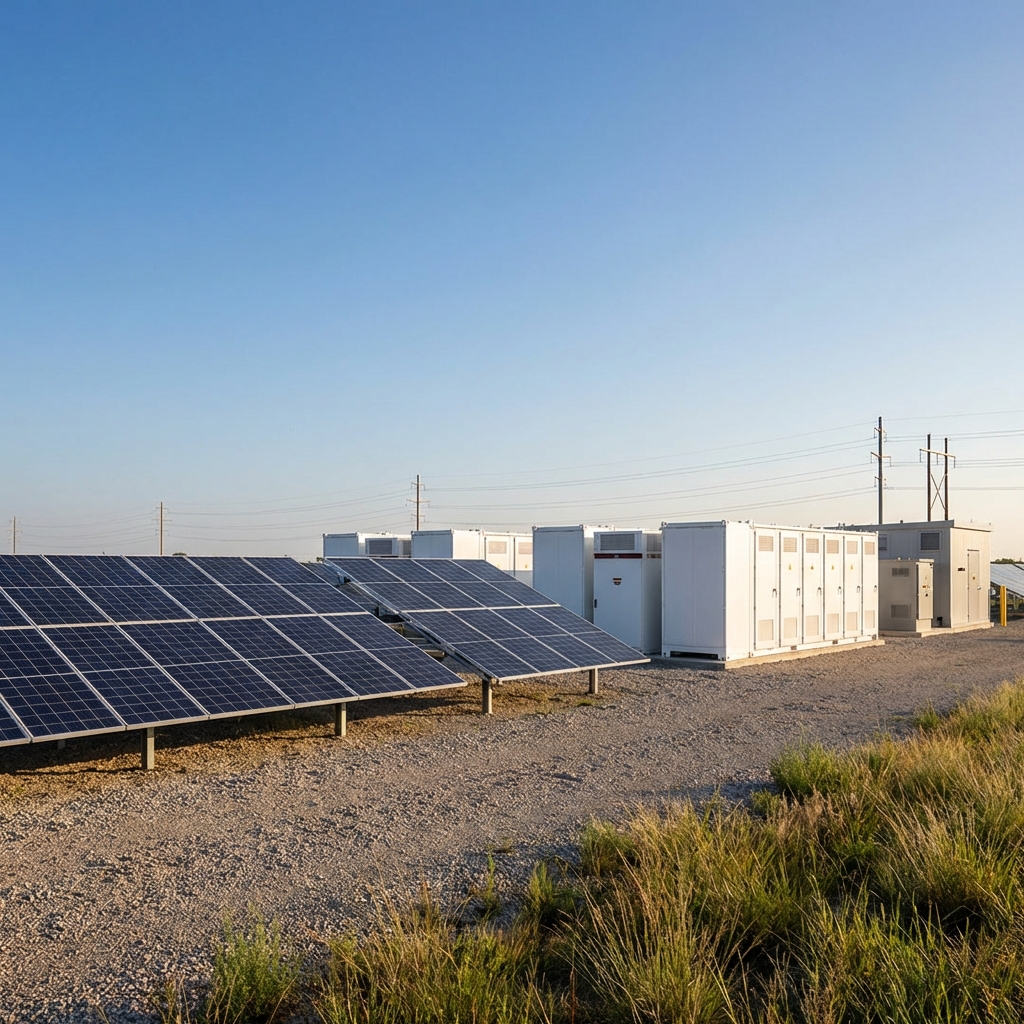
A hybrid system combines solar PV generation with battery energy storage in an integrated plant. Solar generates during daylight, charging the battery. The battery discharges during evening/night or peak demand periods, enabling true round-the-clock renewable power.
Hybrid System Architecture
Value Proposition
Why Solar + Storage?
Round-the-Clock Power
Solar generates during day, battery delivers at night. True 24/7 renewable energy supply.
Maximize Solar Utilization
Store excess solar generation instead of curtailing. Capture 100% of your solar output.
Peak Demand Management
Shave peaks using stored solar energy. Reduce maximum demand charges by 20-40%.
Grid Independence
Reduce reliance on grid power. Backup during outages with zero fuel costs.
Optimize Economics
Combine solar savings with arbitrage gains. Single integrated system, dual revenue streams.
RE100 Compliance
True 24/7 carbon-free energy for net-zero commitments and RE100 goals.
System Design
Hybrid Configurations
AC-Coupled Hybrid
Solar and battery connect separately to AC bus. Best for retrofitting storage to existing solar.
✓ Advantages
- Retrofit-friendly
- Independent sizing
- Multiple vendors
△ Considerations
- Lower efficiency (dual conversion)
- More components
DC-Coupled Hybrid
Solar and battery share common DC bus before inverter. Higher efficiency, lower costs.
✓ Advantages
- Higher efficiency
- Lower BoS costs
- Single inverter
△ Considerations
- Greenfield only
- Matched sizing
Applications
Ideal Use Cases
C&I Behind-the-Meter
Scenario
Factory with high daytime load + evening shift
Hybrid Solution
Solar powers day shift, battery extends to evening. Near-zero grid dependency.
Round-the-Clock PPA
Scenario
Offtaker needs 24×7 renewable power
Hybrid Solution
Hybrid plant delivers firm, dispatchable RE power at fixed tariff.
Grid Services + Merchant
Scenario
Maximize revenue from solar asset
Hybrid Solution
Store when prices low, dispatch when prices high. Ancillary services revenue.
Remote/Off-Grid Sites
Scenario
Mining, telecom, resorts without grid access
Hybrid Solution
Solar+storage replaces diesel generators. 70-90% fuel savings.
Solar Only vs. Solar + Storage
| Feature | Solar Only | Solar + Storage |
|---|---|---|
| Capital Cost | ✓ Lower | Higher (adds battery) |
| Energy Utilization | Daytime only | ✓ 24×7 dispatch |
| Peak Shaving | Limited (if peaks after sunset) | ✓ Full capability |
| Grid Independence | Partial | ✓ High (90%+) |
| Backup Power | None | ✓ Yes (instant) |
| RE100 / 24×7 CFE | Partial credit | ✓ Full compliance |
| Complexity | ✓ Simple | Moderate |
| Payback Period | ✓ 3-5 years | 5-7 years |
System Components
Hybrid Plant Components
Solar Array
Mono-PERC/TOPCon modules with DC optimizer or string inverters
Battery System
LFP batteries in containerized enclosures with integrated BMS
Hybrid Inverter / PCS
Bidirectional inverters managing solar, battery, and grid interface
Energy Management System
AI-powered dispatch optimization for maximum value capture
Grid Interconnection
Metering, protection, and grid synchronization equipment
Technical Specifications
| Solar DC:AC Ratio | 1.2 - 1.4 |
| Storage Duration | 2 - 4 hours typical |
| Round-trip Efficiency | 85-90% |
| System Response | <100 milliseconds |
| Design Life | 25 years (solar), 15-20 years (battery) |
| Coupling | AC or DC coupled |
| Grid Connection | Single point interconnection |
Delivery
Project Process
Load & Resource Analysis
Solar irradiance, load profile, tariff structure
System Design
Optimal solar/storage ratio, coupling type
Financial Modeling
Revenue stacking, IRR, payback analysis
Procurement
Integrated solar + storage package
Installation
Civil, electrical, commissioning
O&M
Unified monitoring, performance optimization